Frequently Asked Questions
What does a web development company do?
A web development company designs, builds and runs websites and web applications: the pages people see, the backend and database behind them, the CMS staff use to edit content, and the integrations with payment, ERP, CRM and other systems. Zyneto also covers quality assurance, hosting setup and support after launch, and keeps the code, domain and hosting accounts in the client's name.
How do I choose the right technology stack for my website?
Choose the stack by the job. A content site that has to rank needs pages rendered ahead of time and an easy CMS, which suits Next.js with a headless CMS, or WordPress. A web app people log in to needs a strong API and an interactive frontend, which suits React or Next.js with Django or Node.js. A store depends on whether merchandising or custom logic is the daily work: a standard platform for the first, a custom build for the second. Decide which job you have before comparing frameworks.
Should I use WordPress or a custom-built website?
Use WordPress when the daily work is publishing and merchandising and your team should change content without waiting on a developer. G4Girl, a fashion brand in India, runs its storefront on WordPress and PHP on AWS for that reason. The cost is that every plugin adds to the security and page weight budget. Choose a custom build, for example Next.js with a headless CMS or Django, when the site carries business logic, integrations or data models a plugin cannot express cleanly.
What is the difference between static, server-rendered and client-rendered pages?
Static pages are built ahead of time and served as files, which is fastest and suits content that rarely changes. Server-rendered pages are built on each request, so they stay fresh and remain readable to search engines. Client-rendered pages are assembled in the browser by JavaScript, which suits logged-in app screens but makes public pages slower to appear and harder to index. Most sites mix all 3, and frameworks such as Next.js let you choose per page.
What are Core Web Vitals and what scores should my website hit?
Core Web Vitals are Google's measures of loading, responsiveness and visual stability. Google's web.dev guidance, updated 31 October 2024, calls a page good when Largest Contentful Paint is 2.5 seconds or less, Interaction to Next Paint is 200 milliseconds or less and Cumulative Layout Shift is 0.1 or less. They are measured at the 75th percentile of real page loads, separately for mobile and desktop, so a fast test on office Wi-Fi does not prove a pass.
How long will my website or web app take to build?
The first step is fixed-fee discovery lasting 2 to 4 weeks, which gives you the integration register, a target architecture for the site and a costed phase 1. After that, most sites and web apps reach a first release real users can try within 10 to 16 weeks, and the cut list is set on day 1. A bigger first phase takes longer: the gym and studio platform Zyneto publishes as an example, member app included, is 1,260 hours across 14 to 22 weeks, and payment gateway certification moves that date more than the code does.
How much does web development cost?
Zyneto publishes its rates: each web role costs $40 to $100 an hour by seniority, blending to $60 to $70 across a mixed web team, and quality assurance appears separately as 20 to 25 percent of build hours. The biggest cost driver is integrations, because each external system brings its own auth, rate limits and failure modes, followed by custom business logic, the number of languages and the volume of content to migrate. Zyneto's published figure for payments is 80 to 200 hours per provider. Expect an hour band for your site on the first call; no fixed price is quoted before discovery.
Which CMS should we use for our website?
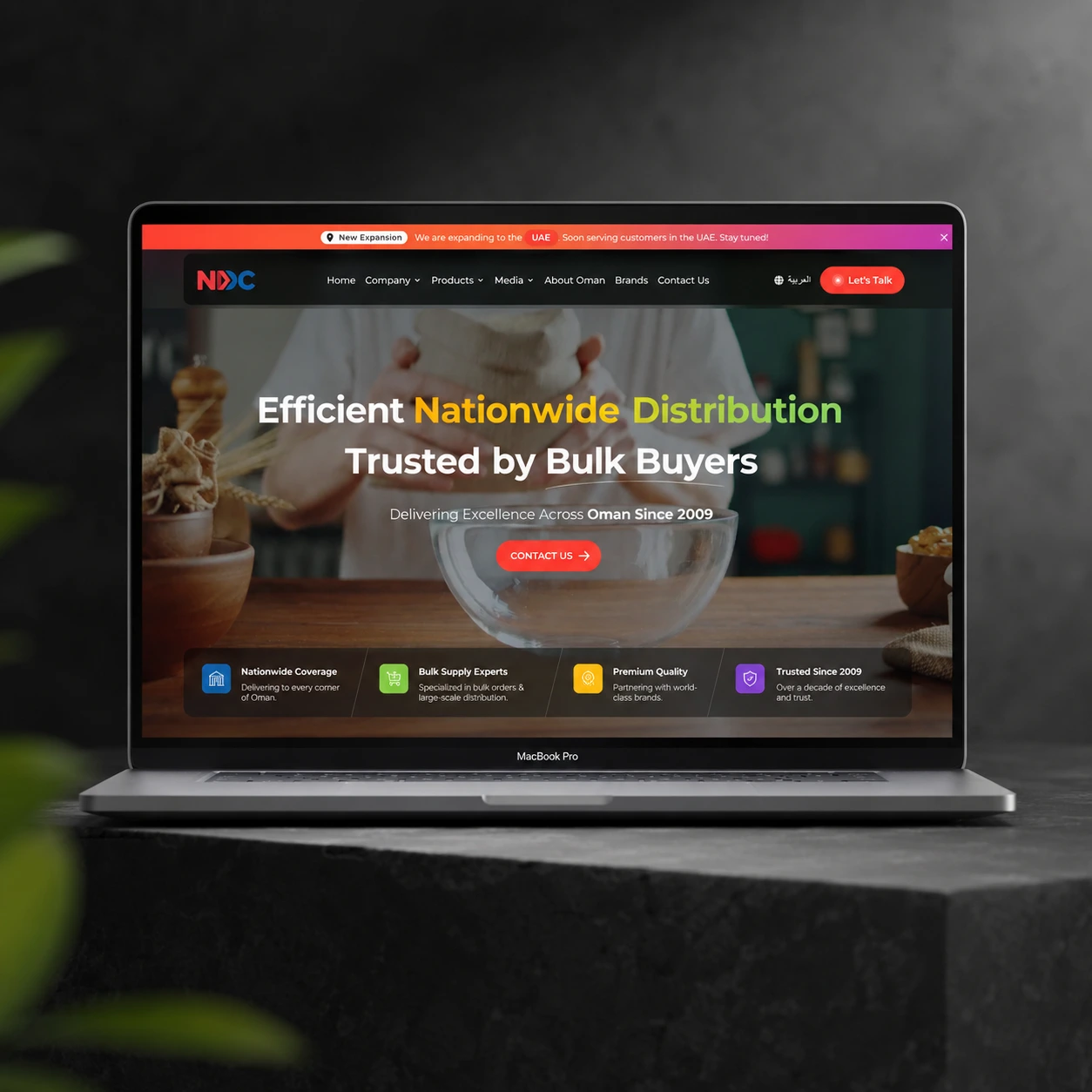
Pick the CMS by who edits what and how often. A marketing team publishing pages and posts is well served by WordPress or a headless CMS behind Next.js. A catalog edited by sales and brand managers needs structured records with required fields and a named owner, as on National Distribution Company's site, where staff edit products, brands and media without a developer. A data-heavy platform often needs a Django admin or a custom back office rather than a CMS at all.
Can you build a bilingual Arabic and English website?
Yes. Zyneto built the bilingual Next.js catalog for National Distribution Company in Oman, with Arabic mirroring. Arabic is build work, not only translation: layouts mirror right to left, brand names in Latin script inside Arabic sentences must be isolated or they reorder under the bidirectional algorithm, and search must normalize alef and taa marbuta variants or Arabic queries return nothing. Retrofitting this after launch costs more than building it in.
Can our website integrate with our ERP, CRM, accounting software or marketplaces?
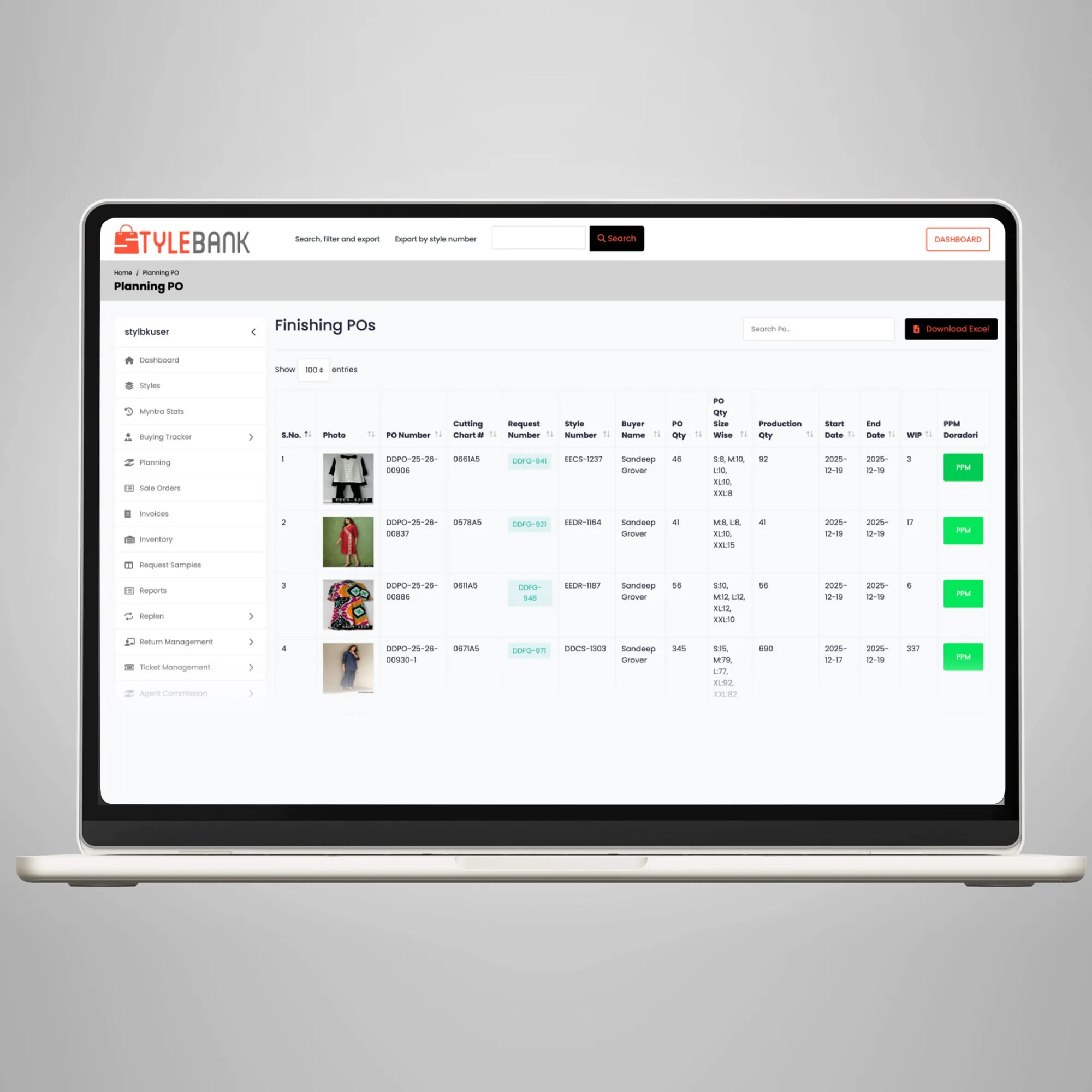
Yes, and integrations usually set the size of the project. Stylebank, a Django platform Zyneto built for 4 apparel businesses, connects 15 external systems, including 5 marketplaces through 1 aggregator, 2 ERPs and Zoho Books, and reconciles them daily. Each system brings its own auth, rate limits and way of failing quietly, so Zyneto's discovery produces an integration register before anyone estimates the build.
Do you build ecommerce websites?
Yes, and the right base depends on the business. G4Girl, a D2C fashion brand in India, trades on a WordPress storefront on AWS, with size runs per style, imagery per colorway and Sentry monitoring on the checkout paths. National Distribution Company in Oman needed the opposite: a trade catalog with no cart and no public prices, because its pricing is contractual. G4Girl's founder reported a fivefold sales increase in a Clutch review; that is the client's statement, not a figure Zyneto measured.
How do you test a website before launch?
Testing is planned into your site from the first sprint and carries its own estimate line, 20 to 25 percent of build hours, which keeps anyone from dropping it quietly as launch day nears. Testing covers user flows, browsers and devices, both languages on a bilingual site, and Core Web Vitals against the agreed targets. After launch, error monitoring such as Sentry reports failures on checkout and other money paths as events instead of customer complaints.
Who owns the website code, domain and hosting?
You do. Every repository and hosting account stays in the client's name. National Distribution Company holds its hosting and domain, and G4Girl holds its AWS account, domain and storefront, with Zyneto setting them up and running them on its behalf. With the accounts in your name and a standard stack underneath, switching web teams later is a matter of contracts, not a migration.
What does website maintenance include?
Website maintenance covers security and dependency updates, hosting and backups, error monitoring, small fixes and changes, and keeping integrations working when the other side changes. Integrations are the part teams underestimate: review sites, marketplaces and payment providers deprecate endpoints and change response shapes, which is a running cost rather than a defect. Zyneto agrees what is covered, who triages errors and how fast before handover, billed at its published hourly rates.
Can you take over or rebuild our existing website?
Yes. A takeover starts with an audit of the code, the hosting and the accounts, plus Core Web Vitals measured from real visits. Tuning comes first: cutting third-party scripts, resizing images and changing how pages render. A rebuild makes sense when the stack no longer fits the job, for example a content site built as a client-rendered app that search engines struggle to read, or a store whose platform cannot model your products.
Should our marketing website and our web app be one build?
Usually not. A marketing site is optimized for search, speed and easy editing, while a web app is optimized for logged-in interaction and data. Separate builds let the marketing team publish without touching app releases, and let the app ship without putting search rankings at risk. They can still share a design system, a domain and a sign-in link.
Which frameworks does Zyneto use for web development?
On the frontend, React and Next.js with TypeScript, as on National Distribution Company and Kroolo. On the backend, Django and Python for data-heavy platforms such as Stylebank and Famepilot, Node.js where the product calls for it, and PHP with WordPress for content-led stores such as G4Girl. Databases include PostgreSQL, MySQL and MongoDB. The framework follows the job, not the other way round.
Is Zyneto SOC 2 or ISO 27001 certified?
No. Zyneto does not hold SOC 2, ISO 27001 or any other certification. Zyneto builds websites and platforms designed to meet the requirements your auditors apply, such as access separated by role, audit logging and data kept in your own accounts, but the compliance obligation stays with you.
What should we prepare before a web project starts?
Bring a brief note on the site's audience and its job, a few sites you admire with the reasons, the systems it has to talk to, the content you already have and who will maintain it, plus 1 person with authority to decide. The systems list matters most, because integrations set more of the cost than page count does. From there, discovery runs for 2 to 4 weeks on a fixed fee.