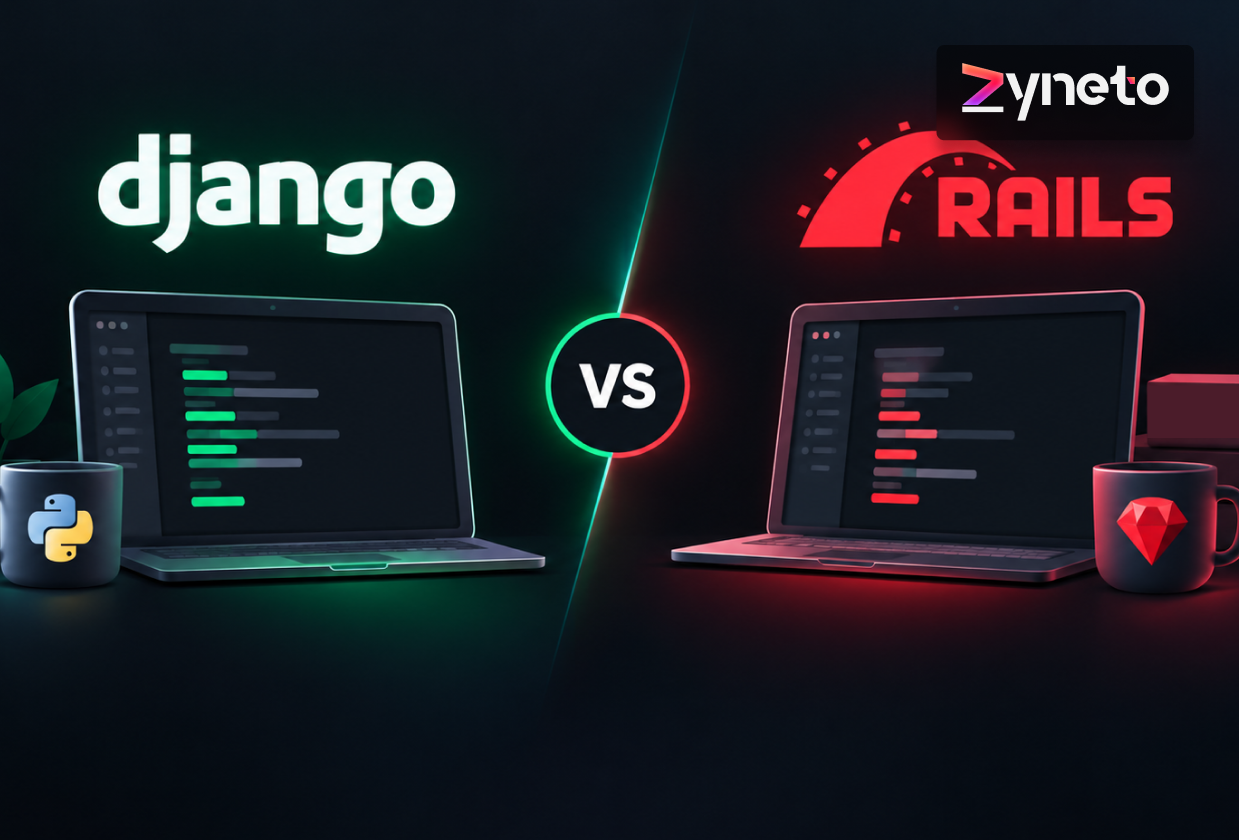
FastAPI vs Django: Which Python Framework Should You Choose in 2025?


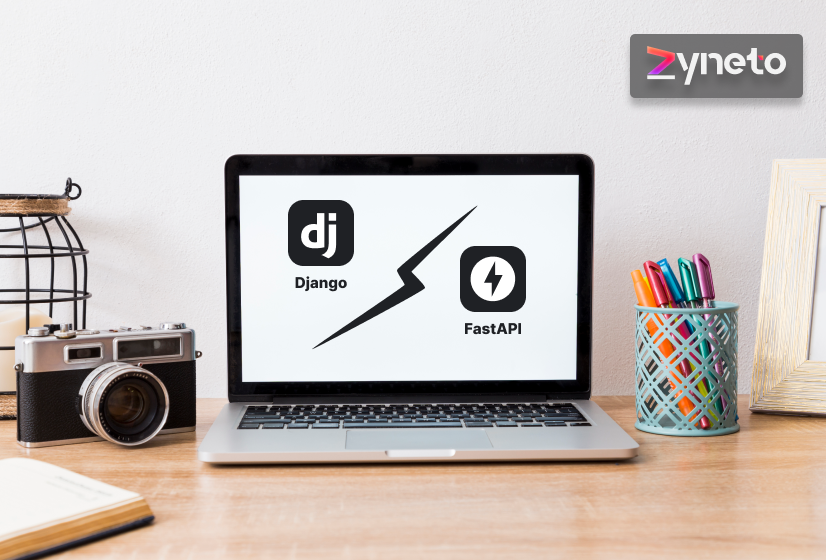
You're standing at a crossroads.
Your next project needs a Python web framework, and you've narrowed it down to two heavyweight contenders: FastAPI and Django.
But here's the thing–choosing the wrong framework can cost you months of development time, thousands of dollars, and countless headaches down the road.
So let's cut through the noise and get real about what each framework brings to the table.
Before we dive deep into the FastAPI vs Django debate, let's be clear about what we're comparing here.
Django has been around since 2005. It's the battle-tested veteran that's powered everything from Instagram to Spotify.
It comes with batteries included authentication, admin panels, ORM, and pretty much everything you need to build a full-stack web application.
FastAPI is the new kid on the block, released in 2018. It's lean, fast, and built specifically for creating APIs with modern Python features. It's all about speed, both in performance and development time.
Think of Django as a fully-equipped kitchen with every appliance you could imagine. FastAPI is more like a professional chef's toolkit streamlined, efficient, and designed for specific tasks.
Let's talk speed.
You've probably heard that FastAPI is faster than Django. And it's true but the story is more nuanced than that.
FastAPI leverages asynchronous programming at its core. This means it can handle multiple requests simultaneously without blocking. For APIs that deal with I/O operations, external API calls, or database queries, this can translate to significant performance gains.
Django, in its traditional form, uses synchronous request handling. It processes one request at a time per worker. However, Django 3.0+ introduced async support, so you can now build async views if you need them.
Here's the reality check you need:
For most applications, the performance difference won't be noticeable. If you're building a standard web application with moderate traffic, both frameworks will serve you well.
But if you're building a high-throughput API that needs to handle thousands of concurrent connections real-time chat, IoT data streams, or microservices architecture. FastAPI's async-first approach gives you a real advantage.
Let's break down what each framework offers out of the box.
Django comes loaded with features. You get an ORM that works with multiple databases, a powerful admin interface, built-in authentication and authorization, form handling, template engine, internationalization support, and a robust security framework.
It's the complete package for building full-stack web applications.
FastAPI takes a different approach. It's focused specifically on building APIs. You get automatic API documentation (Swagger UI and ReDoc), data validation using Pydantic, dependency injection, OAuth2 authentication support, and WebSocket support.
What FastAPI doesn't include is an ORM, admin interface, or template engine. You'll need to bring your own or integrate third-party solutions.
This is where the difference between Django and FastAPI becomes most apparent. Django is a full-stack framework. FastAPI is a specialized API framework.
Let us paint you a picture of when Django is absolutely your best choice.
You're building a content-heavy website with a database-driven backend. Maybe it's a blog platform, an e-commerce site, or a content management system. You need user authentication, an admin panel for content management, and you want to get to market quickly.
Django shines here.
The built-in admin interface alone can save you weeks of development time. You can have a fully functional admin panel for managing your database models with literally zero extra code.
The ORM makes database interactions intuitive. You write Python code, and Django handles the SQL for you. It supports migrations, relationships, and complex queries without you touching a single line of raw SQL.
If your project needs server-side rendered pages with templates, Django's template engine is robust and well-documented. You can build complete web applications without writing a single line of JavaScript if that's your preference.
Django's ecosystem is massive. There are packages for almost everything. Django Rest Framework for APIs, Celery integration for background tasks, django-allauth for social authentication, and thousands more.
The documentation is exceptional. If you can't find an answer in the official docs, the community around Django is so large that someone has probably solved your exact problem before.
Now let's flip the script.
You're building a modern API that will serve a mobile app or a JavaScript frontend. You need automatic documentation for your team. You want type hints and automatic data validation. Performance matters because you're expecting high traffic volumes.
FastAPI was built for exactly this scenario.
The automatic API documentation is genuinely game-changing. Every endpoint you create automatically appears in the interactive Swagger UI and ReDoc documentation. Your frontend team can test endpoints directly in the browser. No more maintaining separate API documentation that gets outdated.
Type hints aren't just for show in FastAPI. They power the entire framework. Define your data models with Pydantic, and FastAPI automatically validates incoming data, serializes responses, and generates OpenAPI schemas. You catch bugs before they hit production.
The FastAPI vs Django difference really shows in development speed for APIs. With FastAPI, you can create a fully documented, validated API endpoint in literally five lines of code. There's almost no boilerplate.
Dependency injection is built into the framework. This makes your code more testable and maintainable. You can easily inject database connections, authentication dependencies, or any other shared logic across your endpoints.
Here's something nobody talks about enough: how quickly can you actually become productive?
Django has a steeper initial learning curve. There's more to understand the ORM, the template system, the admin interface, the project structure. But once you grasp Django's philosophy, you can build complete applications remarkably quickly.
The Django way of doing things is opinionated. There's usually one "right" way to accomplish a task. This can feel restrictive at first, but it means less decision fatigue and more consistency across projects.
FastAPI's learning curve is gentler if you already understand Python type hints and async/await. If these concepts are new to you, you'll need to invest time in understanding them first.
FastAPI is less opinionated. You have more freedom in how you structure your application. This flexibility is powerful but means you need to make more architectural decisions yourself.
Here's my honest take: if you're newer to web development, Django's structure and conventions will guide you better. If you're an experienced developer who knows what you need, FastAPI's flexibility lets you build exactly what you want.
You might be wondering where Flask fits into all this.
Flask has been the go-to lightweight Python framework for years. It's minimal, flexible, and has a massive ecosystem.
But FastAPI has been eating Flask's lunch lately, especially for new API projects.
Why? FastAPI gives you everything Flask does, plus automatic documentation, built-in data validation, async support by default, and better performance. The developer experience is simply superior for modern API development.
Flask still makes sense if you need maximum flexibility, have existing Flask knowledge you want to leverage, or are working with a legacy codebase. But for new projects? FastAPI is the more future-proof choice.
Let's get practical with some real-world scenarios.
You're creating a SaaS platform with user authentication, subscription management, a dashboard, and an API for mobile apps.
Django wins here. You need the full-stack capabilities. The admin interface will save you months building internal tools. Django Rest Framework (DRF) can handle your API needs while sharing the same models and authentication as your main application.
You're building a microservices system where each service handles a specific domain and communicates via APIs.
FastAPI is your champion. Each microservice can be a lightweight FastAPI application. The async capabilities help when services need to communicate with each other. The automatic documentation makes it easier for different teams to understand and integrate with each service.
You've trained an ML model and need to deploy it as an API that handles predictions.
FastAPI absolutely dominates this space. It's become the de facto choice for ML model deployment. The async support handles multiple prediction requests efficiently. The data validation ensures inputs are correct before hitting your model. The performance keeps latency low.
You're building an online store with product catalogs, user reviews, order management, and payment processing.
Django is built for this. The ORM handles complex product relationships easily. The admin interface becomes your order management system. Django's template engine renders your product pages. Add Django Rest Framework for a mobile app, and you've got everything covered.
If you're considering hiring external help, understanding the ecosystem matters.
A FastAPI development company will typically be experienced with modern Python development, microservices architecture, and API-first design. They'll likely have expertise in containerization, cloud deployment, and asynchronous programming.
FastAPI specialists tend to focus on backend API development, integrating with modern frontends like React or Vue, and building scalable, high-performance systems.
The FastAPI ecosystem is newer, so the pool of specialists is smaller but highly skilled. You're looking at developers who are comfortable with cutting-edge tools and practices.
Django agencies, on the other hand, are more numerous. They can handle full-stack development, from database design to frontend implementation. They're great for traditional web applications, content management systems, and MVP development.
Let's talk money because that's what really matters to your bottom line.
The cost to implement FastAPI depends on several factors: project complexity, team expertise, infrastructure requirements, and whether you're building from scratch or integrating with existing systems.
For a basic FastAPI project, you might spend anywhere from $5,000 to $15,000 for a simple API with a few endpoints. Mid-complexity projects with authentication, multiple services, and database integration could run $20,000 to $50,000. Enterprise-level implementations with high performance requirements, complex business logic, and extensive integrations can easily exceed $100,000.
Django project costs follow a similar range, though you might see higher costs for full-stack applications because there's simply more to build the frontend, admin customization, and all the user-facing features.
Here's the thing about costs: FastAPI projects often require more specialized expertise, which can increase hourly rates. However, development can be faster due to the framework's efficiency, potentially lowering total costs.
Django projects benefit from a larger talent pool, which can mean lower hourly rates. But you might spend more time on boilerplate and configuration.
The real cost factor isn't the framework it's your team's familiarity with it. A team experienced with Django will deliver faster and cheaper with Django, regardless of whether FastAPI might technically be better for the use case.
Django's ORM is one of its killer features.
You define your models as Python classes, and Django handles everything else. SQL generation, migrations, query optimization, and relationships. It supports PostgreSQL, MySQL, SQLite, and Oracle out of the box.
The migration system is excellent. Change your models, run makemigrations, and Django tracks every change to your database schema. Roll forward, roll back, it all just works.
FastAPI doesn't include an ORM. You bring your own.
Most developers pair FastAPI with SQLAlchemy, which is arguably more powerful than Django's ORM but requires more configuration. You'll also use Alembic for migrations.
Alternatives include Tortoise ORM (designed to work like Django's ORM but with async support), SQLModel (created by FastAPI's author, combining SQLAlchemy and Pydantic), or even going ORMless with raw SQL or query builders.
This flexibility is great if you have specific needs or preferences. It's extra decision-making if you just want to build something quickly.
Security isn't optional, and both frameworks take it seriously.
Django includes authentication out of the box. User registration, login, logout, password reset it's all there. The permission system lets you control access at the object level. CSRF protection, SQL injection prevention, and XSS protection are baked in.
Django's security track record is excellent. The framework receives regular security updates, and the team takes vulnerabilities seriously.
FastAPI handles authentication through dependency injection. You'll implement OAuth2, JWT tokens, or other schemes yourself, though the framework provides utilities to make this easier. For API authentication, this approach is actually more flexible than Django's session-based authentication.
Security features like CORS middleware, SQL injection prevention (when using parameterized queries), and data validation through Pydantic are built in or easily added.
The Django vs FastAPI security story really comes down to whether you want everything configured for you (Django) or want to implement exactly what you need (FastAPI).
Let's talk about the day-to-day developer experience.
Django comes with a testing framework built in. Write your tests using Django's TestCase classes, and you get automatic test database creation, fixtures, and assertion helpers. Running tests is simple: python manage.py test.
The development server automatically reloads when you change code. The error pages are detailed and helpful. The shell lets you interact with your models and test queries interactively.
FastAPI's testing story is equally strong. It integrates beautifully with pytest, the modern Python testing framework. The TestClient makes testing your API endpoints straightforward. You write async tests for async endpoints, and everything is type-checked.
Hot reloading works with uvicorn (the ASGI server typically used with FastAPI). The interactive API docs mean you can test endpoints manually without writing a single curl command.
Both frameworks support test-driven development well. Neither has a clear advantage here it's more about which testing style you prefer.
Getting your application into production is where the rubber meets the road.
Django applications typically deploy behind WSGI servers like Gunicorn or uWSGI, with Nginx handling static files and acting as a reverse proxy. This setup is well-understood and documented extensively.
Django applications scale vertically and horizontally. Add more workers, put a load balancer in front, cache with Redis or Memcached, and you can handle serious traffic.
FastAPI applications run on ASGI servers like Uvicorn or Hypercorn. You'll typically still use Nginx as a reverse proxy. The async nature means you often need fewer workers to handle the same load, which can reduce infrastructure costs.
Both frameworks containerize beautifully with Docker. Both work great with Kubernetes. Both deploy easily to cloud platforms like AWS, Google Cloud, or Azure.
The FastAPI vs Django deployment story is fairly equal. FastAPI might give you a slight edge in resource efficiency due to async handling, but we're talking marginal differences for most applications.
Community size matters more than you might think.
Django's community is enormous. There are thousands of third-party packages. Django packages exist for almost every use case payment processing, social authentication, CMS functionality, REST APIs, GraphQL, real-time features, and more.
The Django documentation is legendary. It's comprehensive, well-written, and kept up-to-date. Stack Overflow has over 300,000 Django questions answered. Finding help is easy.
DjangoCon happens annually in the US and Europe. Local Django meetups exist in most major cities. The community is welcoming and helpful.
FastAPI's community is smaller but growing rapidly. It's one of the fastest-growing Python projects on GitHub. The documentation is excellent possibly even better than Django's in terms of clarity and examples.
The package ecosystem is newer. You won't find as many FastAPI-specific packages, but FastAPI works with most standard Python packages, so you have plenty of options.
FastAPI's creator, Sebastián Ramírez, is actively involved in the community and incredibly responsive. The GitHub issues and discussions are active and helpful.
Understanding the philosophy behind each framework helps you choose correctly.
Django follows the "batteries included" philosophy. Everything you need to build a complete web application comes in the box. Django makes decisions for you. how to structure projects, where files go, and how routing works. This opinionated approach means less decision fatigue and more consistency.
Django emphasizes the "don't repeat yourself" (DRY) principle. You define something once, and the framework uses it everywhere. Define a model, and Django automatically creates database tables, admin interfaces, and forms.
FastAPI embraces modern Python features. Type hints aren't optional they're central to how the framework works. The philosophy is "use Python features, don't reinvent them."
FastAPI is less opinionated about project structure. You organize your code however you want. This flexibility is powerful but requires more architectural decision-making.
Here's the bottom line.
Choose Django if you're building a traditional web application, need a full-stack framework, want everything included out of the box, prefer convention over configuration, need a mature ecosystem with thousands of packages, or are building an MVP quickly.
Choose FastAPI if you're building an API-first application, need high performance and async support, want automatic API documentation, prefer flexibility in architecture, are building microservices, or are deploying machine learning models.
Here's the thing nobody tells you: you can use both.
Many teams use Django for their main application and FastAPI for specific high-performance APIs or microservices. This isn't cheating it's being pragmatic.
Looking ahead matters for long-term projects.
Django continues to evolve. Async support is improving with each release. The roadmap includes better async ORM support, improved performance, and modern JavaScript integration.
Django isn't going anywhere. It's maintained by the Django Software Foundation, used by massive companies, and has a proven track record of longevity.
FastAPI is rapidly gaining adoption. More companies are choosing it for new API projects. The ecosystem is growing, and the framework is maturing quickly.
FastAPI's async-first approach positions it well for modern cloud-native applications, serverless architectures, and high-performance APIs.
Both frameworks have bright futures. The difference between Django vs FastAPI isn't about which will survive both will thrive. It's about which better fits your specific needs.
Let us share what I'm seeing in the wild.
For startups building MVPs quickly, Django is still the favorite. The speed of development and built-in features let you validate ideas fast.
For companies building mobile-first products with separate frontend and backend, FastAPI is increasingly the default choice. The API-first design and automatic documentation make team collaboration smoother.
For established companies with existing Django codebases, they're staying with Django. The switching cost isn't worth it when Django works fine for their needs.
For new microservices projects, FastAPI is winning. The async support and lightweight nature make it ideal for distributed systems.
Data scientists deploying models almost exclusively choose FastAPI now. It's become the standard in the ML deployment space.
Here's a strategy not enough people consider: using both frameworks in the same project.
Run Django as your main application handling user-facing features, the admin interface, and traditional web pages. Deploy FastAPI services for specific high-performance needs real-time features, heavy computation, or public APIs.
This hybrid approach gives you the best of both worlds. You get Django's productivity for standard features and FastAPI's performance for specialized needs.
The frameworks can share a database. They can communicate via REST APIs or message queues. You're not locked into one or the other.
Let us save you from some painful lessons.
Don't choose FastAPI just because it's newer or "cooler." If your project needs a full-stack framework and you pick FastAPI, you'll spend weeks building what Django gives you for free.
Don't stick with Django for API-only projects just because you know it well. Django Rest Framework is excellent, but FastAPI will give you a better developer experience and better performance for pure API work.
Don't underestimate the importance of team expertise. The best framework is the one your team can be most productive with.
Don't over-engineer. Start simple. You can always refactor or switch later if you really need to.
You've made it through this comprehensive look at the FastAPI vs Django difference.
Now it's decision time.
Think about your specific project requirements. Are you building a complete web application or just an API? Do you need the features Django provides out of the box, or would you rather build a leaner, more customized solution?
Consider your team's experience. What frameworks do they know? How quickly do they need to be productive?
Think about your timeline. Are you racing to market, or can you afford to learn something new?
Consider your performance requirements. Are you building something that will handle thousands of concurrent connections, or is standard web traffic more likely?
The truth is, both FastAPI and Django are excellent frameworks. You can build amazing things with either one. The difference between Django vs FastAPI isn't about which is better in absolute terms it's about which is better for your specific situation.
Choose based on your needs, not on hype or popularity. Both frameworks will still be here in five years, powering millions of applications.
And remember: the framework you choose matters less than the quality of the code you write and the value you deliver to your users.
Your project will succeed or fail based on execution, not on whether you picked FastAPI or Django.
Now stop overthinking it and start building something awesome.
Making the FastAPI vs Django decision doesn't have to be overwhelming when you have the right partner.
Zyneto brings deep expertise in both frameworks to your project. We don't push you toward one framework because it's trendy we analyze your specific requirements and recommend what actually fits.
As a leading FastAPI development company, we've built high-performance APIs for startups and enterprises alike. We've also delivered countless Django applications that power everything from e-commerce platforms to SaaS products.
Our team starts with a discovery session. We ask about your goals, timeline, budget, and technical requirements. We evaluate your existing infrastructure and team capabilities.
Then we give you honest recommendations.
If FastAPI makes sense for your project, we'll build a scalable, well-documented API that performs beautifully. If Django better serves your needs, we'll leverage every built-in feature to get you to market faster.
We've made these decisions dozens of times. Let our experience guide your choice and then execute it flawlessly.
The FastAPI vs Django debate isn't about declaring a winner.
Both frameworks excel at what they're designed for. Django remains unbeatable for full-stack web applications that need everything out of the box. FastAPI dominates the API-first, high-performance space with its modern approach and developer experience.
Your choice comes down to your specific needs, not framework popularity.
Are you building a complete web platform? Choose Django. Building a blazing-fast API? FastAPI is your answer. Need both? Use them together.
The frameworks will continue evolving, but your project's success depends on making smart decisions today and executing them well.
Stop second-guessing yourself.
Pick the framework that matches your requirements, assemble a skilled team, and focus on delivering value to your users.
The perfect framework is the one that helps you ship great products whether that's FastAPI, Django, or both working together.
Now go build something incredible.
Yes. Use Django for main application features and FastAPI for high-performance APIs or microservices. They can share databases and communicate effectively.
FastAPI excels at handling concurrent I/O operations. For typical applications with moderate traffic, performance differences are negligible. Choose based on actual needs.
Django is more beginner-friendly with comprehensive documentation, built-in features, and clear conventions. FastAPI requires understanding modern Python features like type hints.
Django offers more job opportunities currently due to its maturity. FastAPI demand is growing rapidly, especially at tech-forward companies. Learning both maximizes opportunities.
Migration costs range from $10,000 to $200,000+ depending on complexity. Often, adding new FastAPI services alongside Django is smarter than migrating everything.

Vikas has around fifteen years of experience building software and now builds generative AI systems at Zyneto. His work covers retrieval augmented generation, agentic AI, knowledge graphs, AI memory, and the evaluation and guardrails that decide whether any of it is safe to put in front of customers. He has shipped enterprise copilots, document AI, chatbots and predictive analytics for e-commerce, fintech and marketing teams, and works day to day in Python, JavaScript and SQL. He follows multimodal models, business process automation and enterprise AI security closely, and mentors engineers moving into AI. He writes about architecture, inference cost and the failure modes that only show up at production scale.
Share your details and we will talk soon.
Be the first to access expert strategies, actionable tips, and the trends actually shaping the digital world. No fluff - just practical insights delivered straight to your inbox.
Dive into our blog and stay ahead of the curve with expert perspectives, future-ready trends, and tech tips written for decision-makers and doers alike.