Frequently Asked Questions
What is an AI chatbot?

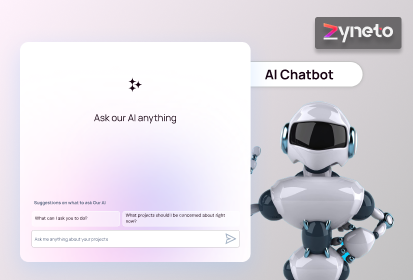
A conversational system that understands questions in natural language and answers them, ideally grounded in your documented content and able to perform actions in your systems. Modern bots differ from the older decision-tree kind in that they interpret what was meant rather than matching against a fixed script, which is why they cope with how people actually write.
What is the difference between deflection and resolution?
Deflection counts conversations that did not reach a human. Resolution counts conversations where the customer's problem was actually handled. They diverge sharply: a customer who gives up in frustration counts as deflected and as a failure. Reporting on deflection is the most common reason chatbot programmes look successful internally while damaging satisfaction externally.
What share of our support volume can a chatbot handle?
It depends heavily on your mix, but for most businesses a meaningful share of contacts are repeat questions with a documented answer, and another portion are simple transactions. Both are automatable. The reliable way to size it is to read a sample of your own tickets and categorise them, which we do during scoping rather than quoting an industry average that may not describe you.
What should a chatbot never handle?
Anything where being wrong is expensive or where the person needs to feel heard. Complaints, cancellation requests, medical, legal and financial advice, and anything involving a distressed customer. We scope these out explicitly and route them straight to a person, because attempting them is where the reputational damage in this category comes from.
How do you handle customers who just want a human?
By giving them one. The request is honoured immediately and the transcript travels with them. Some companies obstruct this to protect containment figures, which reliably converts a mild irritation into a complaint. The customers who ask earliest are usually those with the least patience remaining, and they are exactly the ones worth not antagonising.
How do you stop it inventing answers?
Grounding in your own content, with the bot required to cite what it used and to say it does not know when retrieval returns nothing relevant. This matters more for chatbots than most AI applications, because an invented policy stated to a customer is a commitment you then have to either honour or retract publicly.
Can it do things, or only answer questions?
It can act, and that is where most of the value is. Order status, returns, address updates, appointment changes and subscription management can all be completed in your systems. The difference between explaining how to do something and doing it is most of what customers actually perceive as helpfulness.
Which channels can it work on?
Web, in-app, WhatsApp and the common messaging platforms. The same underlying system serves all of them but behaviour should differ by channel, because expectations differ: messaging tolerates delay and prefers short replies, while web chat implies immediacy. We tune per channel rather than shipping identical behaviour everywhere.
Can it support multiple languages?
Yes, and it is one of the strongest arguments for a modern bot, since serving a market no longer requires staffing it. The constraint to plan for is escalation: if the bot answers in a language your agents do not speak, you need a defined path for that conversation. We design that boundary rather than discovering it when a customer is stranded.
How long does chatbot development take?
A focused bot covering your highest-volume intents with real integration typically reaches production in eight to twelve weeks. Grounding content and system integration take most of that; the conversational layer is rarely the slow part. We prefer a narrow launch with measured resolution over a broad one, because a bot that fails publicly in week one is difficult to reintroduce.
How much does an AI chatbot cost?
The build depends mainly on how many systems it needs to act in and how much help content requires structuring. Running cost is per conversation and scales with volume, which is straightforward to model against your current cost per contact. That comparison is the business case, and it is worth doing before the build rather than after.
How do we know if it is working?
Resolution rate first. Then escalation rate broken down by cause, satisfaction compared between bot-handled and escalated conversations, and abandonment points. Escalation causes are the most actionable of these, because they tell you precisely what content or capability to add next. We would treat a rising deflection rate with flat satisfaction as a warning sign, not a success.
Why choose Zyneto for chatbot development?
We measure resolution rather than deflection, design the escalation path before the answers, and honour requests for a human immediately. We ground every answer in your documented policy with citations, integrate so the bot can actually complete tasks, and define clearly what it will never attempt. Most of that is judgment about what to leave alone, which is the part the category consistently gets wrong.