How to Create a Fantasy Sports Website: A Complete Guide for 2026


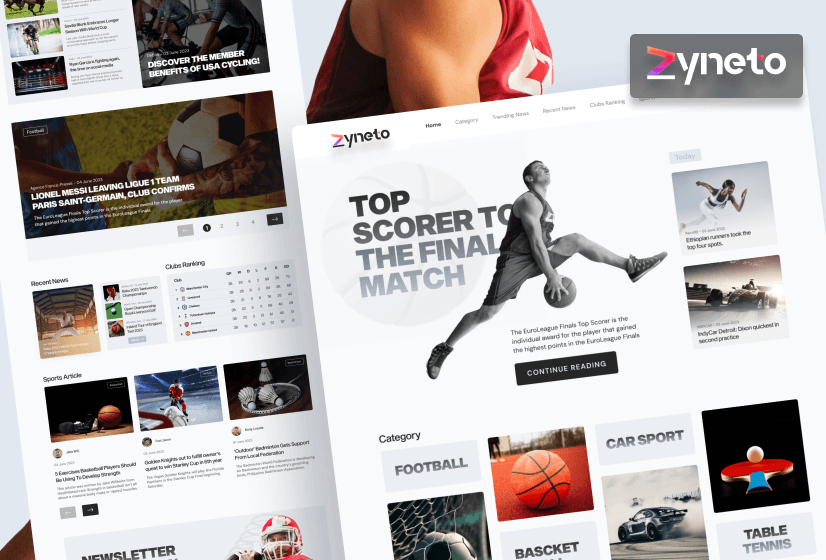
Fantasy sports have transformed the way fans engage with their favorite games.
Instead of simply watching matches, millions of users now build teams, compete with friends, join contests, and test their sports knowledge in real time.
This growing popularity has created a massive opportunity for entrepreneurs, startups, and sports businesses looking to enter the fantasy sports market.
If you've been wondering how to create a fantasy sports website, now is one of the best times to get started.
With advancements in real-time data integration, AI-driven recommendations, secure payment systems, and mobile-friendly experiences, building a feature-rich fantasy sports platform is more achievable than ever.
However, creating a successful fantasy sports website involves much more than designing a few web pages.
You need the right business model, engaging features, a reliable technology stack, legal compliance, and a strategy for attracting and retaining users.
Before investing time and money to create a fantasy sports website, you need to know the market is real. Fantasy sports more than qualify.
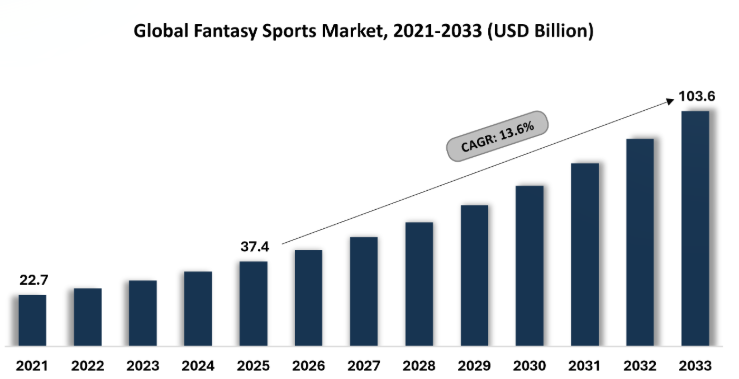
If you want to create a fantasy sports website, then increased smartphone penetration, cheaper data, sports media expansion, and growing comfort for fantasy sports to thrive globally. Working with your mobile app development company can help you build a scalable platform that meets evolving user expectations.
A fantasy sports website is only as good as the features it offers. Users expect speed, accuracy, and a seamless experience across every touchpoint.
Here are the must-have features your platform needs to compete:
Simple sign-up via email, Google, or social login. Each user should have a profile page showing their teams, league history, win/loss record, and achievements. For real-money platforms, identity verification and compliance checks may be required based on local regulations.
Users need to create public or private leagues, set custom rules (scoring format, roster size, trade policies), and manage season-long or daily contests.
Admins, often called commissioners, need tools to manage their leagues effectively.
The draft is the emotional heart of fantasy sports.
Your draft room needs to support snake drafts, auction drafts, and auto-pick, with real-time pick tracking, a live countdown timer, and a player queue.
It must handle simultaneous users without lag.
A comprehensive, searchable player database with real-time stats, injury updates, news feeds, and historical performance data.
Users make decisions based on this data; if it's incomplete or delayed, they'll leave.
Points must update in real time as games are played.
A reliable scoring engine ingests live data from sports data providers, calculates fantasy points based on league rules, and displays updated standings instantly.
An intuitive lineup submission interface where users can set starting lineups before match deadlines. Includes waiver wire pickups, trade proposals, and drop/add tools.
A browsable list of available contests filtered by sport, entry fee, prize pool size, and contest type. Users should be able to enter multiple contests and manage lineups for each independently.
Weekly and season-long leaderboards at both league and platform level. Real-time updates during live games are essential for engagement.
For real-money platforms: a secure wallet where users deposit funds, enter contests, and withdraw winnings. Integrates with secure payment gateways such as Stripe, PayPal, and major credit/debit card processors.
Lineup lock reminders, injury alerts, score updates, trade notifications, and promotional messages. Timely notifications keep users engaged throughout the season.
League message boards, trade chat, and social features that build community. Fantasy sports is inherently social the platform that facilitates the banter wins.
Backend tools for your team: user management, contest creation, fraud detection, revenue reporting, customer support ticketing, and platform analytics.
A built-in referral program that rewards users for inviting friends. Fantasy sports grow through word of mouth, making it easy and rewarding.
The fantasy sports website development process comprises a multi-phase project. Here's a clear development roadmap:
Start with a product brief. Define your target sport(s), your contest format (season-long vs. DFS vs. both), your target geography, and your revenue model.
Decide whether you'll build from scratch or use a white-label solution. The clearer your scope, the more accurate your timeline and budget will be.
Before development begins, understand the regulatory landscape in your target market. In the US, review state-by-state fantasy sports laws.
In the US, review state-by-state DFS laws. For real-money platforms anywhere, draft terms of service, a privacy policy, and a responsible gaming policy with legal counsel.
Work with a UI/UX designer to create wireframes for every key screen: homepage, dashboard, draft room, contest lobby, player profile, lineup builder, and wallet.
User-test these wireframes before development begins; changes are cheap at the design stage and expensive after.
Select your frontend framework, backend language, databases, and cloud infrastructure (covered in detail in the next section).
Also, identify and contract your sports data provider; this is a long-lead-time decision.
Develop the core features first: user auth, league creation, player database integration, lineup submission, scoring engine, and leaderboards.
Launch with a closed beta before opening to the public. Get real users playing real contests and collect feedback aggressively.
For real-money platforms, integrate your payment gateway (Razorpay, Stripe, etc.), build the wallet system, and set up withdrawal flows with KYC verification.
Payment reliability is non-negotiable; test extensively.
Run load tests to simulate peak traffic (draft day, big game nights). Conduct security penetration testing on payment and user data systems.
Fix everything before launch; a buggy launch in fantasy sports is extremely hard to recover from.
Execute your go-to-market plan. Target commissioners, partner with sports communities, run referral programs, and publish content that ranks in search.
Offer free contests or bonus deposits to incentivize first-time users.
Track retention, lineup submission rates, contest fill rates, and revenue per user. Build a feedback loop with your most active users.
Ship improvements rapidly and communicate changes to your community.
If you are considering web development services, the cost to develop a fantasy sports website typically ranges from $10,000 to $50,000+, depending on the features, design complexity, third-party integrations, and scalability requirements.
If speed-to-market is your priority, white-label fantasy sports platforms can get you live for $10,000–$25,000. You get a pre-built product you can customize with your branding and rules. The tradeoff is limited differentiation and less control over the codebase.
Building a focused MVP typically costs $25,000–$30,000. This covers user management, league tools, a scoring engine, basic player data, and a mobile-responsive frontend.
A complete platform with DFS contests, real-time scoring, native mobile apps (iOS + Android), payment integration, and an admin dashboard typically costs $30,000–$50,000+, depending on team size and location.
Plan for a total first-year investment of approx. $50,000 for a custom platform built to compete seriously in the market.
Choosing the right technology stack determines your platform's performance, scalability, and long-term maintainability.
Build a fantasy sports website with different monetization models. This way, you cannot only cover your development costs but also achieve a good ROI.
Here are some options you can consider:
For real-money DFS contests, the platform takes a percentage, typically 8–15% of the total entry fee pool, before distributing prizes.
This is the primary revenue model for DraftKings and FanDuel. At scale, the numbers are extraordinary: if your platform processes $100,000 in entry fees per day, a 10% rake generates a good amount daily.
Offer a free tier for casual players and a paid premium tier ($4.99–$14.99/month) for serious players who want more advanced features.
Premium memberships can include advanced analytics, expert lineup recommendations, trade-grade tools, injury intelligence, and priority customer support.
This model delivers extra value to dedicated users while creating a predictable stream of recurring revenue for your fantasy sports platform.
Sports-adjacent advertisers, betting operators, sports streaming services, sports gear brands, and energy drinks will pay well to reach your engaged, sports-passionate audience.
Banner ads, sponsored sections, and branded content are all viable. Keep ad load low to protect the user experience.
Brands pay to sponsor contests where they fund the prize pool in exchange for branding visibility within the contest.
A sports brand paying thousands to sponsor a weekend contest gets their name in front of thousands of engaged users, an efficient marketing spend for them, pure revenue for you.
Partner with sports betting operators, merchandise stores, sports streaming platforms, and sports nutrition brands.
Earn commissions when your users sign up or make purchases through your referral links. Done well, this can generate 15–25% of total revenue.
At scale, your platform generates valuable aggregated data, player ownership trends, lineup patterns, contest entry behavior.
Sports media companies, broadcasters, and sports analytics firms will pay for access to this data.
Virtual items like lineup locks, score boosters, or exclusive analysis reports can be sold as one-time purchases within the app, a model borrowed successfully from gaming.
Building a fantasy sports website is a significant technical and business undertaking. Getting the architecture wrong, underestimating compliance requirements, or shipping a poor draft room experience can set you back months and cost you your early user base.
As a top fantasy sports website development company, we have deep experience building sports technology products from real-time data pipelines and scoring engines to payment-integrated contest platforms.
We've worked with sports technology businesses across the US and global markets, and we understand both the technical demands and the regulatory nuances of this industry.
Here's what we offer:
Whether you're starting from scratch, looking to rebuild a legacy platform, or evaluating white-label vs. custom development, we'd love to have a conversation. Reach out to our team and let's explore what we can build together.
The fantasy sports industry is at an inflection point. Mobile penetration is at an all-time high, sports viewership continues to grow, and the appetite for interactive, engaging sports experiences has never been stronger.
The platforms that capture this moment, with great products, loyal communities, and smart monetization, will be the defining brands of the next decade in sports entertainment.
Knowing how to develop a fantasy sports website requires more than just an idea.
It requires careful planning, the right technology choices, legal awareness, and relentless focus on the user experience. But for founders and developers willing to do the work, the opportunity is enormous.
Start focused. Pick one sport, one format, one community. Build something they love. Then scale.
The next great fantasy sports platform is waiting to be built. It might as well be yours.
Building a fantasy sports website typically costs $10,000–$50,000+, depending on features, design complexity, third-party integrations, scalability requirements, and platform functionality.
Free-to-play platforms need minimal licensing. Real-money contests require licenses that vary by country and state; always consult a gaming lawyer first.
Common models include contest rake (5–15%), premium subscriptions, display advertising, brand-sponsored tournaments, and affiliate commissions from sports betting or streaming partners.
Sportradar suits most sports globally. SportsDataIO is budget-friendly for US sports. For cricket-focused platforms.
White-label platforms launch in 4–8 weeks. Custom MVPs take 4–6 months. Full-featured platforms with real-money contests and mobile apps require 9–18 months.

Vikas has around fifteen years of experience building software and now builds generative AI systems at Zyneto. His work covers retrieval augmented generation, agentic AI, knowledge graphs, AI memory, and the evaluation and guardrails that decide whether any of it is safe to put in front of customers. He has shipped enterprise copilots, document AI, chatbots and predictive analytics for e-commerce, fintech and marketing teams, and works day to day in Python, JavaScript and SQL. He follows multimodal models, business process automation and enterprise AI security closely, and mentors engineers moving into AI. He writes about architecture, inference cost and the failure modes that only show up at production scale.
Share your details and we will talk soon.
Be the first to access expert strategies, actionable tips, and the trends actually shaping the digital world. No fluff - just practical insights delivered straight to your inbox.
Dive into our blog and stay ahead of the curve with expert perspectives, future-ready trends, and tech tips written for decision-makers and doers alike.