Music App Development Explained: A Business-Focused Guide


Music app development is no longer just about streaming songs; it’s about creating immersive audio experiences that keep users engaged, loyal, and coming back for more. From on-demand streaming and curated playlists to podcasts, live audio, and social sharing, music apps have become powerful digital products that blend entertainment with business value.
Looking for a team to build one? See how we work as a music streaming app development company.
If you’re exploring how to create a music app, the journey goes far beyond choosing features or designing an interface.
It requires a clear understanding of your target audience, licensing considerations, monetization strategies, and scalable technology architecture. Whether you’re a startup entering the audio space or a business expanding into digital entertainment, the right approach can define your success.
This guide to music application development is designed to help you think strategically. It breaks down the essentials, why music apps matter, how they generate revenue, and what it takes to build a competitive, future-ready platform that aligns with your business goals.
Music application development has become one of the most famous opportunities in the tech industry.
The global music streaming market is worth billions and continues growing every year.
People spend hours daily listening to music, discovering artists, and building playlists. This creates massive potential for businesses ready to enter this space.
Building a music app involves more than just great design. You need robust backend infrastructure to handle massive audio libraries.
Real-time streaming without buffering issues. Cross-platform compatibility so users can switch between devices seamlessly.
And features like personalized recommendations that keep listeners engaged.
The business model works too.
Subscription plans, advertising revenue, and premium features generate consistent income.
Whether you're targeting a niche genre or building a full-scale streaming platform, success depends on execution.
Partnering with the right mobile app development company ensures your vision becomes reality without technical headaches.
Before you build a music app, you need to decide what type fits your business goals.
Each category serves different user needs and requires unique features.
Understanding these options helps you identify where the best opportunities lie for your target audience.
Let's explore the main types of music apps dominating the market today.
These platforms offer unlimited access to massive music libraries through subscription models.
Users pay monthly fees to stream millions of songs on-demand, create playlists, and download tracks for offline listening.
The model requires extensive music licensing agreements and significant infrastructure to handle concurrent streams.
Revenue comes primarily from premium subscriptions and ad-supported free tiers that convert users to paid plans over time.
These apps focus on helping users find new music based on their tastes and listening habits.
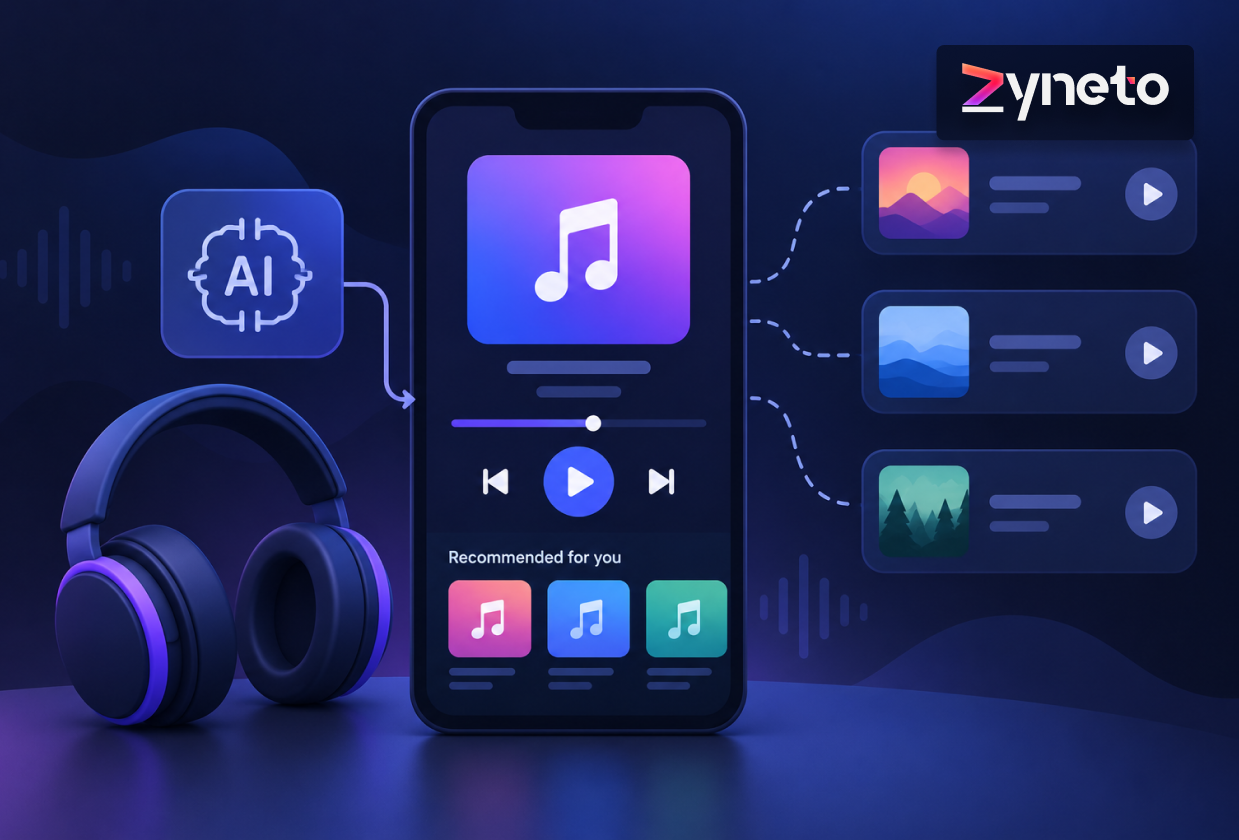
They use AI algorithms to analyze preferences, create personalized playlists, and suggest artists users might enjoy.
Features include mood-based recommendations, genre exploration, and collaborative filtering.
The goal is to solve music discovery fatigue by surfacing hidden gems. Monetization typically combines subscriptions with affiliate links to streaming services or artist partnerships.
Designed for musicians and content creators, these apps provide tools to record, edit, and produce audio directly on mobile devices.
Features include multi-track recording, audio effects, mixing capabilities, and instrument simulations.
Users range from professional musicians creating demos to podcasters recording episodes.
Revenue models include one-time purchases, subscription access to premium features, or freemium models with in-app purchases for additional tools and sound libraries.
These platforms specialize in delivering spoken-word content like podcasts, audiobooks, and radio shows.
Users can subscribe to shows, download episodes, and receive notifications for new content.
Features include speed controls, chapter navigation, and sleep timers. The rise of podcast popularity makes this category extremely viable.
Monetization includes subscriptions for ad-free listening, exclusive content access, and advertising revenue from sponsored content integrated into episodes.
These apps combine music streaming with social networking features, letting users share tracks, create collaborative playlists, and see what friends are listening to.
Features include activity feeds, music messaging, and community discussions around songs and artists.
The social element increases engagement and retention significantly.
Revenue comes from premium subscriptions, brand partnerships, and featured artist promotions that leverage the platform's social dynamics effectively.
These platforms stream live concerts, virtual festivals, and exclusive performances directly to users' devices.
Features include multi-camera angles, interactive chat, virtual meet-and-greets, and ticketed access to premium events. The pandemic accelerated the adoption of this model significantly.
Revenue comes from ticket sales, artist partnerships, merchandise integration, and subscription access to recorded concert libraries. This model bridges physical and digital entertainment experiences.
With types being clear, let’s get to know the features you need to develop a music streaming app.
The right music app features make the difference between an app users love and one they delete after a week.
When you build a music streaming app, every feature must serve a purpose.
Some features are absolute necessities, the foundation your app can't function without.
Others are competitive advantages that set you apart from established players.
Let's break down what users expect and what keeps them coming back.
These are the non-negotiables when you make a music app that actually works.
User Registration and Profile Management
Your users need seamless account creation with multiple sign-up options email, social media, or phone number.
Profile management lets them customize their experience, track listening history, and manage subscription details. Include password recovery, email verification, and profile editing capabilities.
A smooth onboarding process reduces friction and increases conversion rates. Remember, every extra step in registration increases your abandonment rate significantly.
Music Library and Catalog Management
This is your app's heart the system organizing millions of tracks, albums, and artists efficiently.
Users must browse by genre, artist, album, release date, or popularity without performance issues.
Include metadata management for album artwork, artist bios, and track information. Your catalog needs regular updates with new releases and proper categorization.
Backend scalability here determines whether your app handles 1,000 or 1 million users smoothly.
Search and Filter Capabilities
Users expect instant results when searching for songs, artists, or albums across your entire catalog.
Implement autocomplete suggestions, voice search, and filters for genre, mood, decade, or language.
Handle typos gracefully and offer "did you mean" suggestions for misspellings. Advanced filters let users narrow results by duration, popularity, or release year.
Fast, accurate search is what separates frustrating apps from indispensable ones.
Playlist Creation and Management
Let users curate their perfect listening experience by creating unlimited custom playlists.
Features should include drag-and-drop reordering, collaborative playlists with friends, and the ability to make playlists public or private.
Users should easily add, remove, or rearrange tracks within seconds. Include playlist covers, descriptions, and sharing options. This feature drives engagement because users invest time building collections they don't want to abandon.
Offline Listening Mode
Nothing frustrates users more than losing access during commutes or flights without internet.
Offline mode lets premium subscribers download songs, albums, or entire playlists for playback without connectivity.
Implement smart download management that tracks storage usage and allows quality selection. Include automatic downloads for favorite playlists and easy management of downloaded content.
This single feature often justifies premium subscriptions entirely.
These features transform a basic app into something users can't live without.
AI-powered recommendations analyze listening patterns, favorite genres, and skip behaviors to suggest new music that users actually enjoy.
Create algorithm-driven playlists like "Discover Weekly" or "Daily Mix" that feel personally curated. Use collaborative filtering and machine learning to improve suggestions continuously.
The more accurate your recommendations, the more time users spend discovering music in your app. This feature drives both engagement and perceived value tremendously.
Let users share favorite tracks on social media, see what friends are listening to, and create collaborative playlists together.
Include activity feeds, music messaging, and the ability to follow other users or artists. Social features increase stickiness because users build communities around music discovery.
Integration with Instagram, Facebook, and Twitter extends your app's reach organically. Community engagement reduces churn significantly.
Users switch between phones, tablets, desktops, and smart speakers constantly throughout their day.
Real-time sync ensures playlists, listening history, and queue position follow them seamlessly across all devices.
Cloud-based synchronization happens instantly without manual intervention. Users can start listening on their phone and continue on their laptop without missing a beat. This convenience factor dramatically improves user experience.
Audiophiles and casual listeners alike notice sound quality differences across streaming services.
Offer multiple quality tiers, standard for data saving and lossless or HD for premium subscribers. Adaptive bitrate streaming adjusts quality based on connection speed automatically.
Support formats like FLAC or Hi-Res Audio for discerning listeners. Superior audio quality becomes a key differentiator and retention driver for serious music fans.
Real-time, synchronized lyrics that scroll as songs play enhance the listening experience significantly.
Users love singing along, understanding foreign language songs, or catching clever wordplay they missed.
Include genius-style annotations explaining song meanings and references. Let users search songs by lyrics when they can't remember titles.
This feature increases engagement time and makes your app more valuable than competitors without it.
Your monetization strategy needs flexible implementation supporting free tiers, premium subscriptions, and one-time purchases.
Include free trials that convert users to paid plans, family subscription options, and student discounts.
Process payments securely through multiple gateways and support various currencies globally.
Clear upgrade prompts that highlight premium benefits without being intrusive work best. Your revenue model sustainability depends on seamless, friction-free payment experiences.
Building a successful music app requires more than just a great idea. You need a systematic approach that covers every phase from concept to launch.
Let's walk through the proven process that turns your vision into reality.
Before you develop a music app, understanding your market landscape is absolutely critical. Analyze existing players like Spotify, Apple Music, and niche competitors to identify gaps they're not filling.
Study their pricing models, feature sets, user reviews, and pain points customers mention repeatedly. Look at download numbers, retention rates, and monetization strategies that work in your target market.
Research your ideal user demographics, age groups, listening habits, spending capacity, and platform preferences. Examine emerging trends like podcast integration, social features, or AI recommendations gaining traction.
This research reveals opportunities where you can differentiate and compete effectively without going head-to-head with giants on their strengths.
Your success hinges on answering one question: why would someone choose your app over established alternatives? Define what makes your offering different and valuable to a specific audience segment.
Maybe you're focusing on independent artists, regional music genres, superior audio quality, or innovative discovery features.
Your value proposition should solve a real problem that current solutions ignore or handle poorly. Be specific "better music discovery" is vague, but "AI-powered mood-based playlists for workout enthusiasts" is compelling.
This clarity guides every decision throughout development, from features to marketing messaging. A strong value proposition attracts early adopters who become your most valuable evangelists and help you gain initial traction.
Design determines whether users stay or leave within the first minute of opening your app.
Start with wireframes that map out user flows, how someone discovers music, creates playlists, or manages subscriptions. Focus on intuitive navigation that requires zero learning curve for common actions.
Your UI should be visually appealing while prioritizing functionality and speed over flashy elements that slow performance. Consider thumb-friendly layouts for mobile, clear visual hierarchy, and consistent design patterns throughout.
Test color schemes that work in both light and dark modes since music apps are often used in varied lighting conditions.
Prototype your designs and conduct user testing before development starts—fixing design issues costs exponentially more after coding begins.
Deciding how to build a music app impacts your timeline, budget, and final product quality significantly.
Native development for iOS and Android delivers the best performance and user experience, but requires separate codebases and higher costs.
Cross-platform frameworks like React Native or Flutter let you build once and deploy everywhere, reducing development time by 30-40% while maintaining good performance.
Consider using a music app builder for rapid prototyping, though customization limitations may restrict your unique features.
Evaluate whether to build in-house, hire freelancers, or partner with an established development agency based on your technical requirements, budget constraints, and timeline urgency.
Your choice here affects maintenance costs and feature flexibility long-term.
Build your Minimum Viable Product, focusing exclusively on core features that prove your concept works. Include essential functionality—streaming, search, playlists, and basic user accounts while saving advanced features for later iterations. This approach gets your app to market faster and validates assumptions with real users before a major investment.
Conduct rigorous testing across devices, operating systems, and network conditions to ensure stability and performance. Test audio quality across various bitrates, verify offline mode reliability, and stress-test your backend infrastructure with simulated user loads.
Address critical bugs and performance bottlenecks that impact core functionality. Remember, your MVP doesn't need perfection—it needs to work reliably for its intended purpose and gather valuable user feedback.
Release your beta version to a controlled group of early adopters who represent your target audience. These users provide invaluable insights about feature preferences, usability issues, and bugs your internal testing missed.
Implement analytics to track how beta users actually interact with your app which features they use most, where they get stuck, and what causes them to abandon sessions.
Create feedback channels through in-app surveys, email, or dedicated community forums where users share experiences candidly. Pay special attention to recurring complaints or feature requests that signal real pain points.
Use this phase to refine your monetization strategy by testing different pricing tiers or ad placements. Beta feedback often reveals surprising insights that reshape your priorities before full launch.
When you're ready to launch a new music app, your marketing strategy determines initial traction and long-term growth.
Optimize your app store listings with compelling descriptions, screenshots, and keywords that improve discoverability.
Build pre-launch buzz through social media campaigns, influencer partnerships, and press coverage in music and tech publications.
Consider launch promotions like extended free trials or discounted annual subscriptions to incentivize early adoption. Implement referral programs rewarding users who bring friends, creating viral growth potential.
Develop content marketing around playlists, artist features, or music discovery tips that attract organic traffic. Plan your customer acquisition strategy across paid ads, organic search, and strategic partnerships with complementary brands or artists looking to reach new audiences.
So, this is how to build a music streaming app, but this is not it… There is more to it.
Choosing the right tech stack in music streaming app determines performance, scalability, and user experience quality. Your technology decisions impact everything from development speed to long-term maintenance costs. Let's break down the essential components you need.
Now that you understand the technology foundation, let's talk about what really matters to most businesses: the investment required to create a music app and bring your vision to life.
How much does it cost to develop a music streaming app?
For a basic music streaming app with essential features, expect to invest between $50,000 to $80,000.
A mid-range app with advanced features like AI recommendations and social sharing typically costs $80,000 to $150,000.
A fully-featured, enterprise-level music streaming platform similar to Spotify can run $200,000 to $500,000+, depending on complexity.
These figures cover design, development, testing, and initial deployment but the real cost depends on several variables specific to your project.
Platform choice impacts budget significantly; native iOS and Android development costs more than cross-platform solutions.
Feature complexity drives costs up fast: basic streaming functionality is affordable, but AI-powered recommendations, social features, and offline mode add substantial development hours.
Your team composition matters too; hiring local developers costs more than offshore teams, though quality and communication may vary.
Design sophistication, backend infrastructure requirements, music licensing integration, and third-party API connections all influence final pricing.
Don't forget ongoing costs like server hosting, CDN bandwidth, maintenance updates, and licensing fees that continue after launch.
The smartest approach? Start with an MVP featuring core functionality, validate market demand, then invest in advanced features based on actual user feedback and revenue potential.
When you decide to build a music streaming app, you're signing up for more than just coding and design work.
The music streaming space comes with unique obstacles that can derail even well-funded projects.
Understanding these challenges upfront helps you plan better and avoid costly mistakes.
Let's tackle the biggest hurdles you'll face and how to overcome them.
You can't just upload any song and start streaming. Every track requires proper licensing agreements with record labels, publishers, and performance rights organizations.
Without these legal foundations, you're facing lawsuits and potential shutdown before you gain traction.
Licensing negotiations are complex, time-consuming, and expensive, especially for startups without leverage or industry connections.
The Solution: Start by partnering with music licensing aggregators like 7digital or SourceAudio that provide pre-cleared catalogs.
Consider focusing on independent artists and Creative Commons music initially to bypass major label complications.
Build relationships with PROs (ASCAP, BMI, SESAC) early and budget 15-20% of revenue for ongoing royalty payments. For niche markets, direct artist partnerships often work better than traditional licensing routes.
Music apps deal with terabytes of audio files that need instant access across millions of users simultaneously.
Poor file management leads to slow load times, buffering issues, and frustrated users abandoning your app. Storage costs skyrocket quickly, and inefficient architecture can't scale as your user base grows exponentially.
The Solution: Implement cloud storage solutions like AWS S3 with intelligent tiering that automatically moves rarely-accessed files to cheaper storage classes. Use CDNs to cache popular content closer to users geographically. Compress audio files with modern codecs
like Opus that maintain quality while reducing bandwidth by 30-40%. Build smart caching that predicts what users might play next and preloads accordingly.
Nothing kills user engagement faster than constant buffering or playback interruptions.
When you develop a music app, network conditions vary wildly, users switch between WiFi and mobile data, move through dead zones, or deal with congested networks.
Your app needs flawless performance across all scenarios, or users will switch to competitors immediately.
The Solution: Implement adaptive bitrate streaming (HLS or DASH) that automatically adjusts quality based on connection speed.
Build a robust offline mode so users can download favorites for uninterrupted listening. Use progressive download that starts playback while the rest of the file loads. Test extensively across different network conditions and devices to identify bottlenecks before launch.
Spotify, Apple Music, and YouTube Music dominate with massive budgets, extensive catalogs, and loyal user bases. When you create a music streaming app, you're fighting for attention in an incredibly crowded market where users already have entrenched habits and existing subscriptions they're reluctant to abandon.
The Solution: Don't compete directly, find your niche instead. Focus on underserved audiences like specific genres (jazz, classical, indie), regional music markets, or unique features (superior audio quality, artist-focused platforms, social discovery).
Build a community around your differentiator and target users dissatisfied with mainstream options. Offer compelling reasons to switch through exclusive content, better artist revenue sharing, or innovative features that giants can't or won't implement.
Your users listen to everything from budget smartphones to high-end headphones and smart speakers. Audio that sounds great on one device might be terrible on another. Inconsistent quality damages your brand reputation and drives audiophiles away, while file sizes that work on WiFi murder mobile data plans.
The Solution: Offer multiple quality tiers, standard (128kbps), high (256kbps), and lossless (FLAC) options. Let users choose quality based on their device, connection, and preferences. Test audio output across dozens of device types during development. Implement automatic quality adjustment based on device capabilities and network conditions. Educate users about quality options without overwhelming them with technical jargon.
So, these are some challenges that you may face in music streaming app development. Let’s get to know some trends to attract users from day 1.
The evolving trends in music app innovation are changing how users experience digital audio. As user expectations rise, music app development is shifting toward personalization, interactivity, and premium experiences. Let’s get to know the trends:
AI-driven recommendations are becoming central to music streaming app development.
By analyzing listening behavior, preferences, and moods, AI helps platforms deliver curated playlists and smarter discovery.
This approach improves engagement, increases session time, and ensures your app feels personal to every listener.
Voice interaction is gaining momentum as users adopt hands-free technology.
Integrating voice commands during music app development allows users to search, play, and manage music effortlessly.
This feature enhances accessibility and improves user experience across mobile devices, smart speakers, and connected cars.
Social interaction is a key trend in music app experiences.
Features like shared playlists, collaborative queues, and live listening rooms encourage users to connect through music.
When you build a music streaming app with social elements, it increases engagement and strengthens community loyalty.
Audio quality is becoming a major differentiator in music streaming app development.
Adaptive streaming ensures smooth playback across different network conditions while delivering high-fidelity sound.
This trend appeals to both casual listeners and audiophiles seeking premium listening experiences.
Modern music app development is focusing on empowering creators.
Features such as fan subscriptions, exclusive content, and direct support options help artists monetize effectively.
These models also attract users who value unique content and deeper connections with their favorite artists.
Music apps don’t just stream songs; they run on smart business models designed to turn listening into long-term revenue.
Whether you’re planning a startup or scaling an existing product, understanding how monetization works is essential before you move ahead with how to build a music app that actually generates profit.
Below are the different monetization models commonly used in successful music apps today:
This is the most popular approach. Users pay a monthly or yearly fee for ad-free listening, offline downloads, and premium features. It creates predictable revenue and helps you build a loyal user base over time.
Users access basic features for free while ads play between tracks. Premium plans remove ads and unlock extras. This model works well when your goal is rapid user growth followed by gradual conversions.
Brands pay to display audio, video, or banner ads inside the app. The more active users you have, the higher the ad revenue. Smart ad placement ensures monetization without hurting user experience.
Users can buy add-ons like exclusive tracks, early releases, custom playlists, or high-quality audio packs. This model works well alongside subscriptions.
Artists and labels pay to promote songs, albums, or playlists. Sponsored recommendations feel native and generate revenue without disrupting listeners.
Music apps can sell artist merchandise, concert tickets, or partner products directly within the app, earning commissions on every sale.
Choosing the right mix of monetization models ensures your music app stays profitable while delivering real value to users.
Imagine launching a music streaming platform that doesn’t just play songs, but creates unforgettable listening experiences and drives real business growth. That’s where Zyneto comes in.
As a reliable music streaming app development company, Zyneto helps you turn your vision into a powerful, market-ready product. We focus on building feature-rich, high-performance apps that deliver seamless streaming, personalized recommendations, and intuitive user journeys. Our team carefully aligns technology with your business goals, whether it’s user acquisition, retention, or monetization.
From concept validation and UI/UX design to cloud-based architecture, third-party integrations, and post-launch support, Zyneto handles the entire development lifecycle. We prioritize scalability, security, and future upgrades so your platform can grow without limitations.
With Zyneto, you don’t just build an app; you create a competitive music streaming ecosystem designed for long-term success.
Music app development has evolved into a strategic business opportunity rather than just a technical project.
From choosing the right app type and features to handling licensing, scalability, and monetization, every decision directly impacts long-term success.
As competition grows, building a music streaming app requires a clear value proposition, user-centric design, and future-ready technology that adapts to changing trends like AI personalization and social listening.
Whether you are a startup exploring how to create a music app or an established business expanding into digital audio, the right planning and execution make all the difference.
By focusing on performance, user experience, and sustainable revenue models, you can create a platform that not only attracts users but keeps them engaged, loyal, and invested in your music ecosystem.
To create a music app, start by defining your target audience, choosing the right app model (streaming, download-based, or social), and securing music licensing. Partnering with an experienced development team helps you build scalable features, smooth playback, and reliable monetization from day one.
Music app development costs depend on features, platforms (iOS, Android, or both), integrations, and scalability requirements. A basic app costs less, while advanced features like AI recommendations, offline mode, and social sharing increase investment.
To build a music streaming app, development typically takes 4–6 months. Timelines vary based on app complexity, third-party integrations, licensing, and custom features such as playlists or recommendations.
Key features include user registration, music search, playlists, offline listening, recommendations, and secure payment gateways. These features ensure smooth performance and strong user engagement.
A professional music streaming app development company ensures technical excellence, compliance with licensing standards, scalable architecture, and faster go-to-market helping you avoid costly mistakes and maximize business growth.

Vikas has around fifteen years of experience building software and now builds generative AI systems at Zyneto. His work covers retrieval augmented generation, agentic AI, knowledge graphs, AI memory, and the evaluation and guardrails that decide whether any of it is safe to put in front of customers. He has shipped enterprise copilots, document AI, chatbots and predictive analytics for e-commerce, fintech and marketing teams, and works day to day in Python, JavaScript and SQL. He follows multimodal models, business process automation and enterprise AI security closely, and mentors engineers moving into AI. He writes about architecture, inference cost and the failure modes that only show up at production scale.
Share your details and we will talk soon.
Be the first to access expert strategies, actionable tips, and the trends actually shaping the digital world. No fluff - just practical insights delivered straight to your inbox.
Dive into our blog and stay ahead of the curve with expert perspectives, future-ready trends, and tech tips written for decision-makers and doers alike.