How to Develop an App Like Spotify?


If you’ve ever caught yourself thinking, “What if I build the next Spotify?”, you’re not alone.
Music streaming apps have become part of everyday life, and users expect more than just a play button.
They want personalized playlists, smart recommendations, offline access, and a smooth, addictive experience that keeps them coming back.
If you’re planning to develop an app like Spotify, you’re not just building a music app; you’re creating a digital habit for your users.
Developing an app like Spotify means combining powerful streaming technology, AI-driven personalization, and a user-first design to deliver a seamless music experience your audience will love.
The good news? You don’t need to reinvent the wheel. With the right strategy, features, and development approach, you can build a scalable, user-loved music streaming app that stands out in a crowded market.
Let’s break down Spotify-like app development step by step so you know exactly where to start and how to do it right.
Spotify is more than just a music streaming platform; it’s a complete digital music ecosystem designed around how you listen, discover, and connect with audio content.
It gives you instant access to millions of songs, podcasts, and playlists, all wrapped in a clean, intuitive interface that feels effortless to use.
What makes Spotify stand out is its deep focus on personalization.
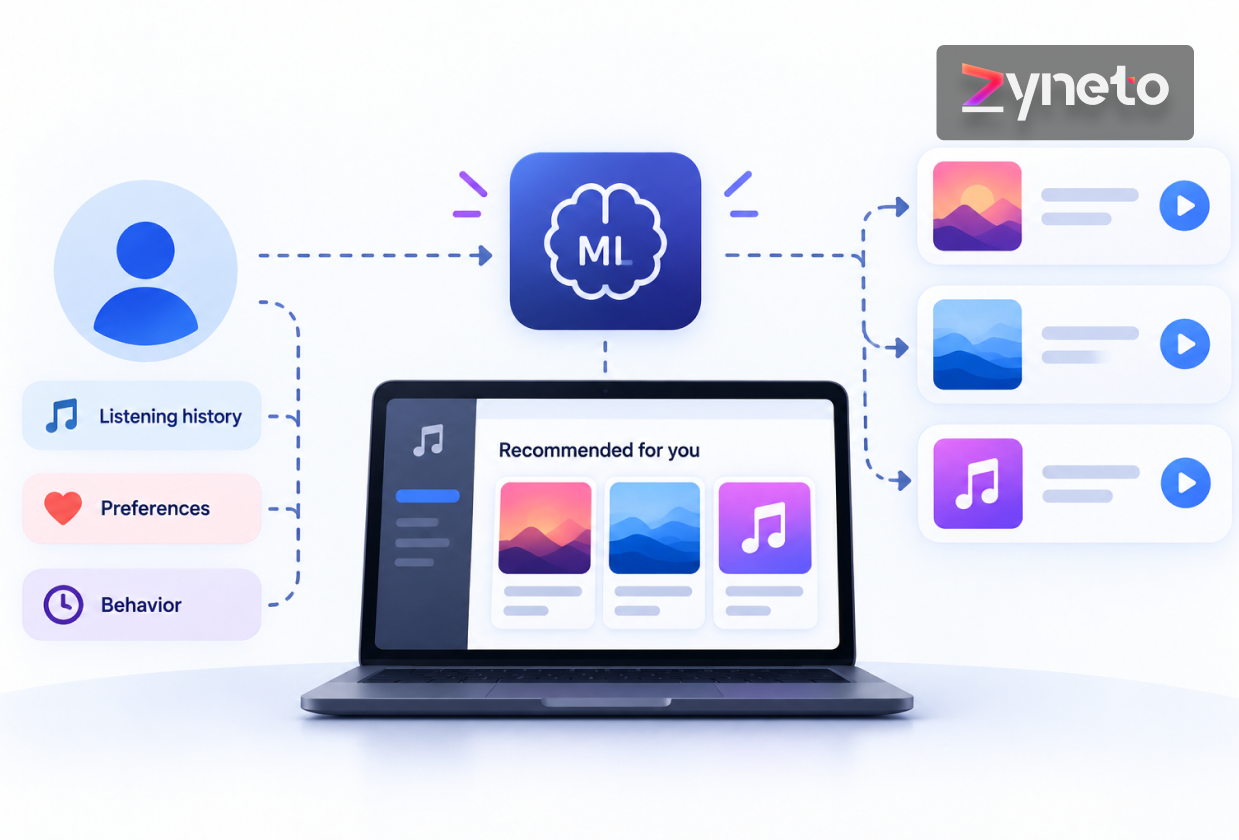
Features like Discover Weekly, Daily Mixes, and Release Radar use AI and machine learning to understand your listening behavior and serve content that actually matches your taste.
Add offline listening, cross-device syncing, social sharing, and high-quality streaming, and the experience feels smooth and addictive.
Spotify also balances free and premium models smartly, keeping users engaged while driving revenue.
To truly understand its success, you need to develop an app like Spotify by studying its architecture, personalization engine, monetization strategy, and user-first design, all in depth.
Once you get to know all about this music streaming app, it's time to know about its working:
When you open the app, you first sign in or create an account. Based on your profile, preferences, and listening history, the app starts shaping your music experience right away.
As you search for a song or tap play on a playlist, the app doesn’t download the entire track at once. Instead, it streams audio in small chunks from cloud servers, ensuring smooth playback even on slower networks.
Every action you take: skipping a song, liking a track, replaying a playlist, is tracked. This data feeds into AI and machine learning models that analyze your behavior and generate personalized recommendations just for you.
If you go offline, downloaded tracks are stored securely on your device with usage rules applied.
Behind the scenes, licensing systems manage artist payouts, while analytics tools monitor performance, engagement, and app health in real time.
One of the biggest factors attracting both users and investors is Spotify’s seamless performance.
This smooth, reliable experience is exactly why many investors are eager to replicate its success through Spotify-like app development.
Spotify-like apps thrive because they blend smart technology with scalable business strategies.
If you’re exploring how to create an app like Spotify, understanding what drives its commercial success can help you build a platform that attracts users, retains them, and delivers consistent revenue growth.
Successful platforms don’t rely on just one income stream. Ads, subscriptions, exclusive content, and partnerships work together to fuel growth.
Many founders choose to create a music streaming app with flexible monetization so revenue scales alongside the user base, making the model appealing to long-term investors.
One key reason Spotify dominates the market is personalization.
When businesses aim to develop an app like Spotify, AI-driven recommendations and smart playlists become essential.
These features increase engagement, reduce churn, and turn everyday listeners into loyal, long-term users.
Lowering the entry barrier is a proven growth tactic.
Companies that build an app like Spotify often use a freemium model to attract users quickly.
Free access encourages exploration, while premium upgrades naturally convert active users into paying subscribers over time.
Behind every successful platform are strong analytics.
Brands that plan to make an app like Spotify rely heavily on user data to refine content strategy, improve recommendations, and personalize marketing, ensuring smarter decisions and higher returns on investment.
Now that the reasons behind its popularity are clear, let’s move on to understanding the steps involved.
A winning music streaming app is built, not copied.
With Spotify clone app development, success depends on how well you combine strategy, user experience, and scalable technology.
Each step below plays a crucial role in turning your idea into a platform that captures attention, drives engagement, and stands tall in a highly competitive market.
Before writing a single line of code, you need clarity.
When you plan to create a music streaming app like Spotify, start with market research, audience analysis, and competitor insights.
Identify user pain points, content preferences, and pricing expectations.
This step helps you define your app’s unique value, decide essential features, and align business goals with user needs, reducing risks and improving your chances of long-term success.
A great idea fails without great usability.
To build a music streaming app like Spotify, focus on intuitive features such as smart search, playlists, recommendations, and offline listening.
Pair these with a clean UI, smooth navigation, and fast response times.
Strong UI/UX design services ensure users enjoy exploring music instead of struggling with the interface, directly impacting retention and engagement rates.
Technology decisions shape performance.
Teams looking to develop a music streaming app like Spotify must select scalable cloud infrastructure, reliable APIs, and secure databases.
Your backend should support high-quality streaming, personalization algorithms, and real-time data processing.
The right tech stack helps maintain speed, stability, and flexibility as your app grows in users and content volume.
Content availability defines your platform’s value.
To legally make a music streaming app like Spotify, you must secure proper music licenses and manage royalty payments accurately.
This step involves working with record labels, distributors, or aggregators.
A strong content management system also helps organize tracks, albums, playlists, and metadata, ensuring smooth discovery and compliance.
Smooth playback is non-negotiable.
This step focuses on optimizing servers, caching, and audio delivery to prevent buffering.
Efficient backend architecture supports fast loading, adaptive streaming, and seamless performance across devices.
The goal is to make streaming feel instant, even on slower networks, while handling thousands of concurrent users without performance drops.
Revenue keeps the app alive.
Implement freemium models, subscriptions, ads, and premium features strategically.
Secure payment gateways, flexible pricing plans, and smooth upgrade flows encourage conversions.
A well-designed monetization strategy balances user satisfaction with profitability, ensuring steady income without disrupting the listening experience.
Before launch, thorough testing is essential. Test for performance, security, usability, and compatibility across devices.
After launch, monitor analytics, gather user feedback, and roll out updates regularly.
Continuous improvement helps you refine features, fix issues quickly, and stay competitive in an evolving music streaming market.
Now that you’ve seen what it takes to create a Spotify-like experience, let’s dive into the features that made it a massive hit.
With the right mobile app development company, you can bring these features to life and create a music app users love.
When you're planning to build a music streaming platform, features make or break the experience.
Users don't just want music; they want control, convenience, and personalization wrapped in a smooth interface.
The right features to have in an app like Spotify can turn casual listeners into loyal fans who keep coming back every single day.
Let's walk through the must-have features that'll make your app feel intuitive, addictive, and built for real music lovers.
Your users need to find music fast, without digging through endless menus. A powerful search feature lets them look up songs, artists, albums, or even lyrics instantly.
Add filters for genre, mood, or release date to make discovery easier. Smart suggestions as they type save time and improve the overall experience.
When search feels effortless, users explore more, which keeps engagement high and creates opportunities for them to discover new favorites they wouldn't have found otherwise.
Nobody wants to spend hours building playlists when AI can do it better. Use machine learning to analyze listening habits, favorite genres, and skip patterns.
Then create custom playlists like "Daily Mix" or "Discover Weekly" that feel handpicked. Recommendations should evolve as user tastes change, staying fresh and relevant.
This kind of personalization hooks users emotionally, making them feel understood by the app, which dramatically boosts retention and turns your platform into a daily habit they can't quit.
Not everyone has unlimited data or reliable internet all the time.
Letting users download songs, albums, or playlists for offline playback is a game-changer.
It keeps them engaged during flights, commutes, or areas with weak connectivity.
Make sure downloaded content is stored securely with proper licensing rules applied.
Offline mode adds serious value to premium plans, giving users a reason to upgrade while ensuring they never have to stop listening, no matter where they are or what's happening with their connection.
Your users switch between phones, tablets, laptops, and smart speakers constantly. They expect their playlists, favorites, and listening history to follow them everywhere.
Real-time syncing across devices creates a seamless experience that feels almost magical. Whether they start a song on their phone and finish it on their laptop, everything should just work.
This feature builds loyalty because it makes your app the go-to music hub in their life, reducing friction and making it nearly impossible for them to switch to a competitor.
Sound quality matters more than most people think, especially to serious listeners.
Offer multiple streaming quality options standard, high, and lossless so users can choose based on their connection or preference.
Adaptive streaming adjusts quality automatically based on bandwidth, preventing annoying buffering.
Audiophiles will appreciate the option for premium sound, while casual users stay happy with smooth playback.
Great audio quality separates your app from low-effort competitors and positions your platform as one that truly respects the music and the listening experience.
Music is meant to be shared, and users love showing off their taste.
Let them share tracks, albums, or playlists directly to social media or messaging apps.
Collaborative playlists take it further friends can build shared playlists together in real time.
Add features like listening activity feeds or friend recommendations to create a sense of community.
Social features increase engagement, drive organic growth through word-of-mouth, and make your app feel less like a tool and more like a shared experience with friends.
Sometimes users want to sing along, and other times they want to learn something new.
Display real-time synced lyrics so listeners can follow along as the song plays.
Add podcast support to diversify your content library beyond music alone.
Podcasts are booming, and integrating them keeps users in your app longer.
Whether they're commuting, working out, or relaxing, having music and podcasts in one place makes your platform more versatile, valuable, and sticky for daily use.
Give users a space that feels like their own inside your app. Let them customize profiles, view listening stats, and track their most-played songs or artists.
Show listening history so they can revisit tracks they heard days or weeks ago. Year-end summaries like "Spotify Wrapped" create shareable moments that users love.
Personalized profiles make the experience feel intimate and data-driven, giving users insight into their own habits while creating viral marketing moments when they share their stats with the world.
With the features being done, let’s get to know cost to develop a music app like Spotify.
The cost to develop an app like Spotify isn’t fixed; it depends on what you build, how complex it is, and who builds it for you.
The overall cost to build a music streaming app like Spotify can go from $30,000 to $150,000+.
A basic MVP with core streaming features will cost far less than a full-scale platform with AI recommendations, offline mode, and advanced analytics.
Factors such as app design, platform choice (iOS, Android, or both), backend infrastructure, music licensing, and third-party integrations all affect the final budget.
Honestly, the best way to reduce the overall cost to make a music streaming app like Spotify is to start lean and scale gradually, which is often the smartest approach.
|
Component |
Estimated Cost Range |
|
UI/UX Design |
$5,000 – $15,000 |
|
Frontend Development |
$10,000 – $30,000 |
|
Backend & Database Development |
$15,000 – $40,000 |
|
Music Streaming & APIs |
$5,000 – $20,000 |
|
AI Recommendations & Analytics |
$10,000 – $35,000 |
|
Testing & Quality Assurance |
$5,000 – $10,000 |
|
Licensing & Legal Setup |
Variable |
|
Maintenance & Updates (Annual) |
15–20% of the total cost |
So, this is how much it costs to build a music streaming app like Spotify. Let’s get to know the overall time for a Spotify-like app.
The time required to launch a music streaming platform depends on how ambitious your vision is.
If you aim to build an app like Spotify, timelines will vary based on features, platforms, and technical complexity.
A simple MVP with core streaming, search, and playlists can be developed relatively fast.
However, adding AI-powered recommendations, offline mode, real-time syncing, and advanced analytics naturally extends the development cycle.
Team size, development approach, and third-party integrations also influence delivery speed.
Cross-platform development may save time, while custom designs and complex backend logic demand more effort.
On average, building a Spotify-like app can take anywhere from a few months to nearly a year, especially if scalability and performance are long-term priorities rather than afterthoughts.
|
Development Phase |
Estimated Time |
|
Market Research & Planning |
2–3 Weeks |
|
UI/UX Design |
3–5 Weeks |
|
Backend Development |
8–12 Weeks |
|
Frontend Development |
6–10 Weeks |
|
Streaming & API Integration |
4–6 Weeks |
|
Testing & Quality Assurance |
3–5 Weeks |
|
App Launch & Deployment |
1–2 Weeks |
Spotify-like apps don’t just make money from one source; they combine multiple smart monetization strategies.
This mix keeps users happy while driving steady revenue.
If you’re looking to develop an app like Spotify, knowing how these platforms earn can help you design a business model that grows sustainably without disrupting the listening experience.
Premium subscriptions are the biggest revenue driver.
Users pay monthly or yearly for ad-free listening, offline downloads, and better audio quality. This model creates predictable income while encouraging long-term user commitment.
Free users listen with ads between songs or playlists.
Audio, display, and video ads generate revenue while keeping the platform accessible. It’s a powerful way to attract users and later convert them into paid subscribers.
The freemium model lets users enjoy basic features for free while premium tools stay locked.
Once users get hooked on the experience, they’re more likely to upgrade for uninterrupted music and advanced controls.
Spotify-like apps collaborate with brands for sponsored playlists, exclusive launches, or promotional campaigns.
These partnerships add revenue without disrupting the user experience and boost brand visibility.
Artists and labels pay to promote tracks, albums, or playlists within the app.
This model helps musicians reach targeted audiences while creating an additional income stream for the platform.
Exclusive podcasts and original content attract loyal audiences.
Monetization comes through ads, sponsorships, or premium access, helping diversify revenue beyond music streaming alone.
If you’re looking at trends while creating an app like Spotify, keeping an eye on emerging patterns can give your platform an edge.
The music streaming industry is evolving fast, and integrating these trends can help you attract more users, keep them engaged, and stay ahead of the competition.
Here are some future trends you should consider:
Users love it when the app “gets them.” AI can analyze listening habits, moods, and preferences to suggest tracks, playlists, or podcasts they’re likely to enjoy.
By integrating machine learning, you can make music discovery smarter, more fun, and highly addictive. Personalized experiences are no longer optional; they’re expected.
Voice assistants are becoming a key way people interact with apps.
By enabling voice commands, you let users play, pause, skip, or search for music hands-free.
This makes the experience more convenient, especially for multitasking users or smart-home setups, giving your app a futuristic touch.
Music is social, and users want to share playlists, tracks, or listening activity with friends.
Features like collaborative playlists or in-app social feeds create community and increase engagement. Let your users connect over music; it makes your app more sticky and fun.
Audio quality matters.
Offering lossless streaming, spatial audio, or even AR/VR experiences can set your app apart.
Audiophiles and casual listeners alike appreciate richer sound, and immersive experiences make your platform feel premium and modern.
Podcasts and exclusive shows are exploding in popularity.
By adding original content, you not only diversify your library but also give users a reason to stay longer.
Exclusive shows and behind-the-scenes content can become a signature feature of your app.
Artists want data on how their music performs.
Integrating analytics dashboards helps creators track streams, demographics, and engagement.
By supporting creators, you attract better content and strengthen your app’s ecosystem.
Turning your music app idea into reality can be challenging, but with the right partner, it becomes much easier.
Zyneto, a leading music streaming app development company, specializes in creating platforms that combine smooth performance, smart personalization, and user-friendly design.
We handle everything from intuitive UI/UX, backend architecture, and AI-driven recommendations to seamless streaming, offline access, and social sharing features.
Licensing, payment integration, and security are also fully managed, ensuring your app is reliable and compliant.
Whether you want a lean MVP or a full-featured music platform, Zyneto delivers end-to-end solutions tailored to your vision.
With our expertise, you can launch a Spotify-like app that keeps users engaged, delights artists, and makes a mark in the competitive streaming landscape.
Turning your idea into a Spotify-like music app is an exciting journey that combines creativity, technology, and strategy.
Success comes from understanding what users want, offering personalized experiences, and ensuring smooth, reliable streaming.
Every feature, from playlists and offline mode to social sharing, plays a role in keeping listeners engaged.
By staying ahead of trends like AI-powered recommendations, voice control, and exclusive content, you can make your app feel fresh and modern.
With the right planning, execution, and continuous updates, your music streaming app can grow into a favorite destination for users, creating a loyal audience that keeps coming back for more.
The cost varies depending on features, platforms, and complexity. A basic MVP can start around $30,000, while a full-featured music streaming app with AI recommendations, offline mode, and analytics can go up to $150,000 or more.
Development time depends on the scope and complexity. A simple MVP may take 4–6 months, while a fully featured platform with AI, cross-device syncing, and premium features can take 9–12 months.
Popular models include subscription plans, ad-supported streaming, freemium upgrades, brand partnerships, artist promotions, and exclusive podcast or content access. Combining multiple models often maximizes revenue.
It depends on your target audience. Starting with a single platform can reduce initial costs and development time. Cross-platform development using frameworks like React Native or Flutter can help you reach both audiences faster.
Key features include smart search, personalized playlists, offline listening, cross-device syncing, high-quality audio streaming, social sharing, lyrics & podcast support, and personalized user profiles. These features drive engagement and retention.

Vikas has around fifteen years of experience building software and now builds generative AI systems at Zyneto. His work covers retrieval augmented generation, agentic AI, knowledge graphs, AI memory, and the evaluation and guardrails that decide whether any of it is safe to put in front of customers. He has shipped enterprise copilots, document AI, chatbots and predictive analytics for e-commerce, fintech and marketing teams, and works day to day in Python, JavaScript and SQL. He follows multimodal models, business process automation and enterprise AI security closely, and mentors engineers moving into AI. He writes about architecture, inference cost and the failure modes that only show up at production scale.
Share your details and we will talk soon.
Be the first to access expert strategies, actionable tips, and the trends actually shaping the digital world. No fluff - just practical insights delivered straight to your inbox.
Dive into our blog and stay ahead of the curve with expert perspectives, future-ready trends, and tech tips written for decision-makers and doers alike.