Music Streaming App Development Cost (2026)


In an era where our heartbeats are often synced to a digital playlist, the allure of building the next Spotify or Apple Music is more electric than ever.
We’ve moved past the days of bulky hardware and physical discs into a world where millions of tracks live in our pockets, ready to stream at a tap.
But beneath the sleek interface and seamless transitions lies a complex web of high-end infrastructure, licensing labyrinths, and sophisticated algorithms.
If you are looking to claim your stake in the audio revolution, the big question isn't just "how" to build it, but "how much" it will truly cost to turn a melody of an idea into a functional, scalable reality.
From cloud architecture to UI/UX harmony, let’s pull back the curtain on the financial symphony required to develop a world-class music streaming app.
So, let’s explore the overall cost of developing a music streaming app through this blog.
Short Answer: Yes, Absolutely!
Think of your budget as the sheet music for your entire project. Without it, you’re just making noise, and in the tech world, noise gets expensive fast.
When you sit down to calculate your music app development cost, you aren't just looking at a price tag; you’re defining the boundaries of your dream.
A solid budget keeps you from over-investing in "cool" features that users might not even need, allowing you to focus your resources on the core experience that actually keeps people listening.
By setting a budget early, you can decide where to splurge and where to save.
Maybe you want to invest heavily in a high-end recommendation engine but keep the initial UI clean and minimal.
A budget gives you the power to make those strategic choices, ensuring you have enough "runway" to not only launch the music app but also market it and keep the servers humming once the users start flooding in.
Before you dive into development, it is important to understand that not all music apps are built the same.
The architecture, features, and ultimately the music app development cost will shift depending on which "vibe" you’re going for.
Whether you want to be the next big library for audiophiles or a niche platform for live creators, choosing the right category is your first step toward a successful launch.
This is the gold standard of the industry.
These apps give you total control, allowing you to search for any song and play it instantly.
Because they require massive databases, high-end recommendation algorithms, and complex licensing, these are usually at the higher end of the cost to develop a music streaming app spectrum.
You’re building a platform where "everything, everywhere, all at once" is the expectation.
Think of this as the digital evolution of the traditional FM station.
Instead of picking specific tracks, you choose a genre or "mood," and the app takes over the DJ duties.
These are often more budget-friendly to develop because they focus on continuous streams rather than individual track fetches, making the backend slightly less intensive.
If you want to focus on the "here and now," live streaming is the way to go.
These apps are designed for virtual concerts, real-time DJ sets, or "Clubhouse" style listening rooms.
The tech stack here is specialized; you’ll need ultra-low latency so that the music doesn't lag, ensuring your audience stays in sync with the performer.
These apps act like a private locker in the sky.
Instead of providing a library, you provide the space for users to upload and stream their own personal collections.
This is a great niche if you want to avoid heavy licensing fees, as the focus is on storage and cross-device syncing rather than content ownership.
Why choose just one? Many modern platforms are merging music with long-form spoken content.
By integrating podcasts, you increase user "stickiness" and session time.
While this adds to the cost to build a music streaming app due to the different hosting requirements for audio files versus RSS feeds, it’s a powerful way to build a complete entertainment hub.
Let’s get to know the overall cost to create a music streaming app.
If you’re planning to launch a Spotify-like platform, the first question on your mind is obvious: how much does it cost to build a music streaming app?
Total Estimated Cost:
The answer depends on multiple factors, including app complexity, features, platforms, design quality, and backend infrastructure.
A basic music streaming app with essential features like user login, music playback, and playlist creation costs significantly less. This type of app is ideal if you’re starting with an MVP and want to validate your idea without a heavy upfront investment.
On average, the overal cost to build a music streaming app ranges from a few thousand dollars for an MVP to a six-figure investment for an enterprise-level solution.
|
Feature / Component |
Description |
Estimated Cost (USD) |
|
UI/UX Design |
App layout, user flow, visual design |
$3,000 – $7,000 |
|
User Authentication |
Sign-up, login, social login |
$2,000 – $4,000 |
|
Music Streaming Engine |
Audio playback, buffering, streaming |
$5,000 – $12,000 |
|
Search & Playlist Management |
Search, create & manage playlists |
$3,000 – $6,000 |
|
Offline Music Mode |
Download & offline playback |
$4,000 – $8,000 |
|
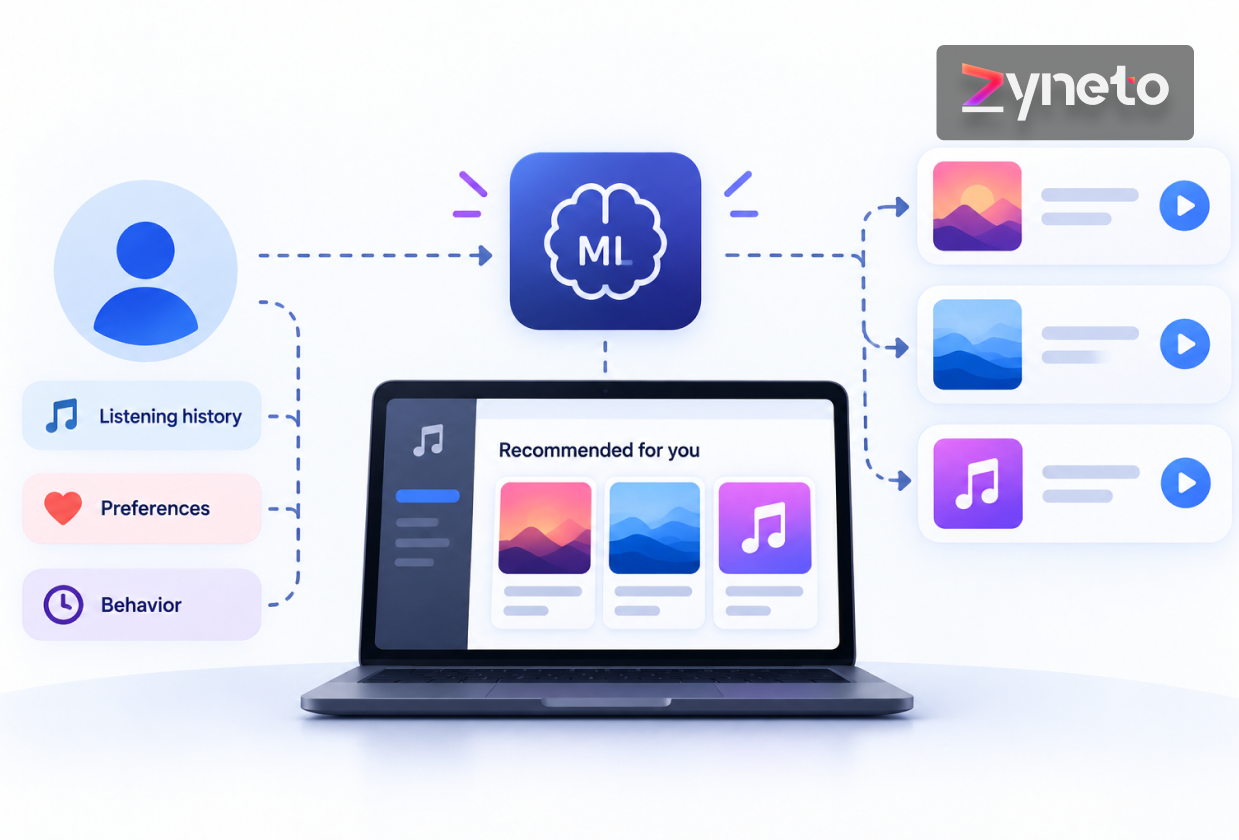
Recommendation System |
AI-based music suggestions |
$6,000 – $15,000 |
|
Admin Panel |
Content, users, analytics management |
$3,000 – $6,000 |
|
Backend Development |
APIs, database, cloud infrastructure |
$6,000 – $12,000 |
|
Third-Party Integrations |
Payment, analytics, music APIs |
$2,000 – $5,000 |
|
Testing & QA |
Performance, security, bug testing |
$2,000 – $4,000 |
Now, we are going to check out the proper development cost breakdown:
When you plan to build a music streaming app, understanding costs at each development phase helps you budget smarter and avoid surprises.
From discovery to launch, every phase contributes differently to the total investment required to build a music streaming app that scales.
This phase sets the foundation of your music streaming app. It includes market research, feature planning, competitor analysis, and technical feasibility checks.
A strong discovery phase helps avoid costly rework later and ensures your app aligns with business goals.
Estimated Cost: $2,000 – $5,000
Great UI/UX keeps users hooked and makes music discovery effortless. This stage focuses on wireframes, user journeys, app visuals, and interactive prototypes.
A well-designed interface directly impacts retention and engagement in music streaming apps.
Estimated Cost: $3,000 – $7,000
Frontend development brings your app’s design to life. It includes building responsive screens, music player interfaces, playlist management, and smooth animations for Android, iOS, or both platforms, ensuring a fast and enjoyable user experience.
Estimated Cost: $6,000 – $15,000
The backend is the engine of your music streaming app.
It handles user data, audio streaming, content management, recommendations, APIs, and cloud infrastructure. A scalable backend ensures smooth playback even as your user base grows.
Estimated Cost: $8,000 – $20,000
QA ensures your app performs flawlessly across devices.
This phase includes functional testing, performance testing, security checks, and bug fixing to deliver a stable, crash-free music streaming experience before launch.
Estimated Cost: $2,000 – $5,000
Deployment involves app store submission, server configuration, final checks, and go-live support.
A smooth launch ensures your music streaming app meets platform guidelines and reaches users without delays or technical issues.
Estimated Cost: $1,000 – $3,000
The platform you choose defines how users experience your music streaming app and how scalable it becomes over time.
Each option comes with its own technical approach, user expectations, and development considerations.
For a music streaming app targeting Apple users, iOS app development emphasizes performance, security, and a polished interface.
Features like smooth audio playback, offline listening, Siri support, and seamless integration with Apple devices play a key role in shaping the overall experience.
When building a music streaming app for a diverse user base, Android app development offers flexibility across devices and screen sizes.
It focuses on background playback, adaptive UI design, efficient streaming, and compatibility with multiple Android versions and hardware types.
A music streaming web app allows users to enjoy content directly from their browsers without downloads.
Web app development prioritizes responsive layouts, fast streaming, secure audio delivery, and consistent performance across desktop and mobile browsers.
If speed and consistency are priorities, cross-platform development enables you to launch a music streaming app on both iOS and Android using a shared codebase.
This approach simplifies feature updates while maintaining a unified user experience across platforms.
With these points being cleared, let’s get to know the different factors affecting the overall cost to create a music streaming app:
Understanding the cost to build a music streaming app isn’t just about features, it’s about strategic choices.
From app complexity and platform selection to licensing, infrastructure, and long-term maintenance, multiple factors shape the final budget.
Below are the key elements that directly influence the overall cost:
The more advanced your features, the higher the cost to develop a music streaming app.
Basic apps focus on login, streaming, and playlists, while advanced versions include AI recommendations, offline mode, social sharing, and smart search.
Each added feature increases development time, testing effort, and backend complexity.
Your platform strategy directly impacts the cost to make a music streaming app.
Building for a single platform is more affordable, while developing for both iOS and Android requires additional resources.
Cross-platform solutions can reduce costs but may involve performance or customization trade-offs.
The cost of music streaming app development varies based on your development team’s location and expertise.
Partnering with a mobile app development company in North America or Europe usually involves higher costs compared to outsourcing to regions like Asia
Larger teams accelerate delivery but increase expenses, while smaller teams offer cost efficiency with longer timelines.
Integrating payment gateways, analytics tools, push notifications, and recommendation engines impacts the cost to build a music streaming app.
While third-party services speed up development, customization, API usage fees, and security compliance can add to the overall project budget over time.
Music licensing is one of the biggest contributors to the cost to make a music streaming app.
Fees depend on artist agreements, record labels, streaming volume, and geographic reach.
Whether you license directly or through aggregators, these recurring costs significantly affect long-term profitability.
Post-launch support adds to the cost of music streaming app development over time.
Regular updates, bug fixes, security patches, feature enhancements, and OS compatibility upgrades are necessary to keep the app competitive. Ignoring maintenance can lead to performance issues and user drop-offs.
If you’re planning to build a music app without burning your budget, smart decisions matter more than big spending.
Optimizing your music app development cost isn’t about cutting corners; it’s about building strategically.
With the right approach, you can launch faster, scale smarter, and still deliver a great user experience your audience loves.
Start small, but think smart.
When you focus on an MVP, you validate your idea without overspending.
By launching only core features first, you directly control your music app development cost while learning what users actually want.
This approach helps you avoid unnecessary features and invest only where real value exists.
Why build twice when you don’t have to? Cross-platform frameworks let you target iOS and Android with a single codebase.
This reduces development time, simplifies maintenance, and keeps your cost to build a music app under control while still delivering a consistent experience across platforms.
Open-source tools can be a game-changer for your budget. By using reliable open-source libraries, you cut down on licensing fees and development effort.
This smart choice helps lower your cost to create a music app while still allowing flexibility and customization for your app’s unique features.
Outsourcing doesn’t mean compromising quality; it means being smart with resources.
Partnering with skilled teams in cost-efficient regions can significantly reduce your cost to build a music app.
You get access to experienced developers, faster delivery, and scalable talent without the overhead of an in-house team.
Cloud resources should scale with your users, not drain your budget.
By choosing the right cloud services and optimizing usage, you manage traffic spikes efficiently.
This approach helps you keep your music app development cost predictable while ensuring smooth streaming and reliable performance.
Think long-term, not all at once.
Phased development lets you release features in stages based on user feedback and ROI.
This strategy keeps your cost to make a music app aligned with growth, ensuring every new feature is backed by real demand and measurable business value.
So, these are some ways through which you can reduce the overall cost of developing a music streaming app.
Behind every successful music streaming app is a well-planned monetization strategy.
Music apps don’t rely on a single revenue stream; instead, they mix and match models based on user behavior, market trends, and growth goals.
To get to know how these apps make money, read below:
The freemium model attracts users by offering basic features for free while reserving premium benefits for paid users.
You let users stream music with limitations like ads or restricted skips, then encourage upgrades.
This approach builds a large user base quickly and converts engaged listeners into paying customers over time.
Subscriptions are the backbone of most successful music apps.
You charge users a recurring monthly or yearly fee for ad-free listening, offline downloads, and high-quality audio.
This model creates predictable revenue and improves long-term retention, especially when paired with exclusive content or personalized music recommendations.
Ads help you monetize free users without forcing them to pay upfront.
You earn revenue through audio ads, display banners, or video ads placed between songs.
While ads can affect user experience, careful placement ensures steady income while nudging heavy users toward premium subscriptions.
With this model, users pay to download individual songs or albums instead of subscribing.
It works well for niche audiences or exclusive content releases.
Although less popular today, it still generates revenue from users who prefer ownership over streaming access.
If you’re looking for a reliable music streaming app development company that understands both technology and cost control, Zyneto has you covered.
We focus on building smart, scalable music apps without unnecessary complexity or bloated budgets.
From MVP planning to full-scale deployment, we help you prioritize features that actually drive user engagement and revenue.
Our team uses cost-efficient tech stacks, reusable components, and flexible development models to keep expenses in check.
Whether you want a simple streaming app or a feature-rich platform with subscriptions and ads, we tailor the solution to your budget and growth goals.
Plus, with transparent pricing, agile development, and post-launch support, you always know where your investment is going.
The result? A high-quality music streaming app that’s ready to scale, without overspending.
Building a successful music streaming app is all about balancing vision, technology, and smart budgeting.
From understanding development costs and platform choices to exploring monetization models like subscriptions, ads, and freemium access, every decision shapes your app’s long-term success.
The key is to start with clear goals, focus on features users actually value, and scale gradually as your audience grows.
With the right strategy, even startups can compete in the crowded music streaming space without overspending.
Partnering with an experienced team helps you avoid common pitfalls, control costs, and launch faster with confidence.
Whether you’re planning an MVP or a full-featured platform, a well-executed approach ensures better ROI, stronger user engagement, and sustainable growth in the ever-evolving music streaming market.
The cost depends on app features, platform choice, design complexity, and licensing requirements. A basic music streaming app costs less, while advanced apps with AI recommendations, offline mode, and subscriptions require a higher investment.
A basic music streaming app usually takes 3–4 months to develop. More advanced apps with custom features, integrations, and scalability requirements may take 6–9 months or longer.
Core features include user login, music streaming, search, playlists, and basic recommendations. Advanced features like offline downloads, AI-driven suggestions, and subscriptions help improve engagement and monetization.
Music streaming apps earn revenue through subscriptions, advertisements, freemium upgrades, paid downloads, or hybrid monetization models. Most apps combine multiple revenue streams to maximize profitability.
Native apps offer better performance and deeper platform integration, while cross-platform apps reduce development time and cost. The right choice depends on your budget, timeline, and target audience.

Vikas has around fifteen years of experience building software and now builds generative AI systems at Zyneto. His work covers retrieval augmented generation, agentic AI, knowledge graphs, AI memory, and the evaluation and guardrails that decide whether any of it is safe to put in front of customers. He has shipped enterprise copilots, document AI, chatbots and predictive analytics for e-commerce, fintech and marketing teams, and works day to day in Python, JavaScript and SQL. He follows multimodal models, business process automation and enterprise AI security closely, and mentors engineers moving into AI. He writes about architecture, inference cost and the failure modes that only show up at production scale.
Share your details and we will talk soon.
Be the first to access expert strategies, actionable tips, and the trends actually shaping the digital world. No fluff - just practical insights delivered straight to your inbox.
Dive into our blog and stay ahead of the curve with expert perspectives, future-ready trends, and tech tips written for decision-makers and doers alike.