Cost of Smart Contract App Development in 2026
7 min read

20 Apr 2026

Vikas Choudhary

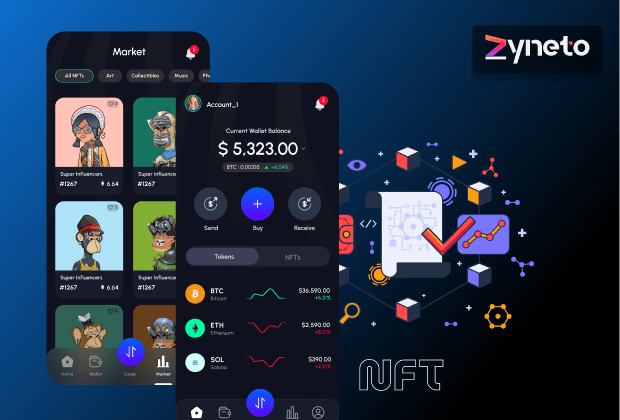
So you want to build a smart contract in 2026? Great idea. But here's the question nobody wants to answer directly: how much is it actually going to cost you?
The truth is, smart contract app development costs in 2026 can range anywhere from $25,000 to well over $200,000, and the gap is huge for a reason.
A simple token contract? Affordable. A full-scale DeFi protocol with audits, integrations, and cross-chain functionality? That's a serious investment.
And yet, most people jump into blockchain development without a clear picture of what drives these costs.
And, end up either overspending on things they didn't need or underspending on things they absolutely couldn't afford to skip (like security audits).
This guide is here to change that.
If you're a founder validating your first blockchain idea or an enterprise team ready to build at scale, understanding smart contract app development costs in 2026 is step one.
Because when you know where the money goes, you make smarter decisions, build leaner products, and launch with confidence.
Let's break it all down.
Before you get a quote from any blockchain development agency, you need to understand what’s actually driving the price.
The cost of developing a smart contract doesn’t follow a one-size-fits-all formula; it’s shaped by several variables that can push your budget up or down significantly.
A basic token contract? That’s relatively affordable.
But a multi-layered DeFi protocol with staking, governance, and cross-chain capabilities? That’s a whole different ballgame.
The more business logic your smart contract needs to handle, the more time developers spend writing, structuring, and testing it.
Complexity is one of the biggest cost drivers in the expense of contract development in 2026. Always map out your features before asking for a quote.
Not all blockchains are built equal, and neither are their development costs.
Building on Ethereum, Solana, BNB Chain, or Polygon, each comes with its own developer ecosystem, tools, and pricing dynamics.
Ethereum remains the most in-demand, which means Ethereum developers often charge a premium.
The platform you choose directly impacts the cost of smart contracts development and the talent you’ll need to hire. Choose wisely based on your use case.
This is non-negotiable, and it should never be skipped to cut costs. A smart contract without a proper security audit is an open invitation for exploits.
Audits from top firms can range from $5,000 to $50,000+, depending on the contract’s complexity.
Yes, it adds to your cost of developing a smart contract, but it’s the kind of investment that protects your users, your reputation, and your entire project from being drained in minutes.
A senior blockchain developer in the US or Western Europe will cost significantly more per hour than an equally skilled developer from Eastern Europe or Southeast Asia.
But don’t just chase the cheapest rate; experience with developing a smart contract, DeFi protocols, and past audit records matters enormously.
The expense of contract development in 2026 varies widely based on who’s building it. Vet your team carefully; this is code that handles real money.
Smart contracts are immutable once deployed. That means bugs don’t get patched; they get exploited.
Thorough testing, including unit tests, integration tests, and test-net deployments, is essential and adds to your overall cost. Skipping QA to save money is one of the most dangerous shortcuts you can take.
Smart contract QA isn’t just a formality; it’s your last line of defense before real funds are at stake.
Your smart contract rarely lives in isolation. It usually connects to a frontend dApp, an admin dashboard, wallets, APIs, or off-chain data sources via oracles like Chainlink.
The cost of smart contracts development goes up when you factor in the UI/UX design, web3 wallet integrations (MetaMask, WalletConnect), and backend services.
The full-stack picture is almost always more expensive than just the contract itself.
Many teams forget this part. Smart contracts need monitoring, gas optimization updates, and sometimes proxy-based upgrade mechanisms if you want to add features later.
Ongoing maintenance, bug bounties, and contract upgradability all factor into the true long-term cost of developing a smart contract.
Budget for post-launch support from day one; it’s not optional if you want your product to stay competitive and secure.
Depending on your industry, finance, healthcare, or real estate, your smart contract may need to comply with KYC/AML standards, data privacy laws, or jurisdiction-specific regulations.
Building compliance into your contract architecture takes extra time, legal consultation, and specialized expertise.
This is an often-overlooked cost factor in smart contract development that can significantly impact both your timeline and your budget if not planned early.
Now that you know what drives costs up, let’s talk about what you can actually do to keep your smart contract deployment cost under control, without sacrificing quality or security.
You don’t need every feature on day one. Define the core functionality your contract must have at launch, and build everything else in phases.
A lean MVP approach dramatically reduces your initial smart contract deployment cost and lets you validate your concept before scaling.
Many successful DeFi and NFT projects launched with minimal features and expanded based on real user feedback. Start small, move fast, grow smart.
Why reinvent the wheel? Frameworks like OpenZeppelin offer battle-tested, audited smart contract templates for tokens (ERC-20, ERC-721), access control, and more.
Starting with these well-established libraries instead of writing everything from scratch can cut development time significantly.
It reduces both your development hours and audit scope, which directly lowers your overall smart contract deployment cost without compromising on security.
Gas fees aren’t just a user concern; they’re a design concern. Poorly written contracts that consume unnecessary gas make your dApp expensive to use, which hurts adoption.
Build gas optimization into your development process from the start, not as an afterthought.
On chains like Ethereum, inefficient code translates directly into higher operational costs for your users. Efficient contracts = happier users = better retention.
Ethereum is powerful, but it’s not always the most cost-efficient choice.
Layer 2 solutions like Arbitrum, Optimism, or Polygon can offer dramatically lower deployment and transaction costs while still benefiting from Ethereum’s security.
Match your blockchain choice to your actual needs and budget. If your users don’t need mainnet Ethereum, there’s no reason to pay mainnet prices , optimize accordingly.
Security audits are priced partly based on the lines of code reviewed. The more modular and focused your contract architecture, the smaller and cheaper your audit can be.
Avoid audit scope creep by finalizing your contract logic before engaging an auditor. Getting multiple contracts audited together under one engagement often comes with better pricing than auditing each one separately. Plan your audit early and strategically.
Hiring generalist developers to build smart contracts is a recipe for expensive mistakes.
Specialized blockchain teams bring pre-built tooling, testing frameworks, and real-world deployment experience that saves time and reduces rework.
Yes, their rates might seem higher upfront, but the total cost of ownership is almost always lower. The right team doesn’t just build faster; they build smarter, helping you avoid costly missteps.
If you’re looking for a smart contract app development company that actually gets it, the technology, the business side, and the budget reality, Zyneto is built for exactly that.
Zyneto offers specialized smart contract development services that work with startups, scale-ups, and enterprises to design, build, audit, and deploy smart contracts that are secure, efficient, and tailored to your goals.
What sets Zyneto apart? Transparent pricing with no hidden surprises. A team that speaks both blockchain and business. End-to-end support, from ideation and architecture to deployment and post-launch maintenance.
If you’re launching a DeFi protocol, an NFT marketplace, a tokenized real estate platform, or a DAO governance system, Zyneto helps you get there without blowing your budget.
As a trusted development company, Zyneto doesn’t just hand you code and walk away.
They become your long-term tech partner, helping you scale, adapt, and stay ahead in an ever-evolving blockchain landscape.
Ready to build something real? Zyneto is the team to do it with.
Smart contracts are one of the most powerful tools in modern technology, but only if you build them right.
The smart contract app development cost in 2026 isn’t something you should guess at or underestimate.
It’s shaped by complexity, platform, security requirements, team expertise, and long-term maintenance, and every one of those factors deserves serious attention.
The good news? With the right knowledge and the right partner, you can build a high-quality, production-ready smart contract without burning through your entire runway.
If you’re exploring the idea or ready to kick off development, understanding what goes into smart contract app development costs gives you the clarity to plan smarter, ask better questions, and make decisions that actually hold up over time.
The blockchain space rewards those who move with intention, not just speed. Take the time to plan your project properly, choose your partners wisely, and never compromise on security to save a few dollars upfront.
The cost of doing it wrong is always higher than the cost of doing it right. Now you know what it takes; go build something great.
It varies widely. A simple smart contract (like a basic ERC-20 token) can cost anywhere from $3,000 to $10,000. A complex DeFi protocol with multiple contracts, security audits, and frontend integration can run $50,000 to $200,000 or more. The best approach is to scope your project clearly and get detailed quotes from specialized teams.
Absolutely non-negotiable if you’re handling real funds or user assets. Security audits typically range from $5,000 to $50,000+, depending on contract complexity and the auditing firm. Think of it this way: a $15,000 audit that prevents a $1M exploit is the best ROI you’ll ever see. Skip the audit, and you’re not saving money; you’re creating an enormous, unquantifiable risk.
Layer 2 networks like Polygon, Arbitrum, and Optimism offer significantly lower deployment and transaction costs compared to the Ethereum mainnet. Solana and BNB Chain are also cost-effective alternatives. The “cheapest” isn’t always the best; choose based on your security needs, user base, ecosystem maturity, and use case requirements.
A simple contract can be built and tested in 2–4 weeks. A complex multi-contract system with audits, frontend integration, and thorough testing can take 3–6 months or more. Rushed timelines are one of the biggest reasons smart contract projects fail or get exploited. Build in realistic timelines from the start, your users (and your budget) will thank you.
By default, smart contracts are immutable once deployed; that’s actually part of their security model. However, with proxy upgrade patterns (like OpenZeppelin’s upgradeable contracts), you can build in upgrade capabilities. This adds complexity and cost upfront, but gives you the flexibility to fix bugs or add features post-launch. It’s worth considering for long-term products where adaptability matters.

Vikas Choudhary is a visionary tech entrepreneur revolutionizing Generative AI solutions alongside web development and API integrations. With over 10+ years in software engineering, he drives scalable GenAI applications for e-commerce, fintech, and digital marketing, emphasizing custom AI agents and RAG systems for intelligent automation. An expert in MERN Stack, Python, JavaScript, and SQL, Vikas has led projects that integrate GenAI for advanced data processing, predictive analytics, and personalized content generation. Deeply passionate about AI-driven innovation, he explores emerging trends in multimodal AI, synthetic data creation, and enterprise copilots while mentoring aspiring engineers in cutting-edge AI development. When not building transformative GenAI applications, Vikas networks on LinkedIn and researches emerging tech for business growth. Connect with him for insights on GenAI-powered transformation and startup strategies.
Share your details and we will talk soon.
Be the first to access expert strategies, actionable tips, and cutting-edge trends shaping the digital world. No fluff - just practical insights delivered straight to your inbox.
Dive into our blog and stay ahead of the curve with expert perspectives, future-ready trends, and tech tips that empower decision-makers and doers alike.