Understanding AI in Cybersecurity: Use Cases, Benefits, and Real-World Risks


Cyber threats no longer follow fixed patterns. Attackers change their methods quickly, which makes it harder for IT security teams to depend only on manual checks and fixed rules.
As systems grow across cloud platforms, mobile apps, and connected devices, security teams need smarter ways to stay ahead. This is where artificial intelligence in cybersecurity fits in.
Today, the role of AI in cybersecurity extends beyond detection and helps teams respond faster while keeping daily security operations manageable.
This blog defines how artificial intelligence supports modern security programs, where it is used in real environments, and what organizations should consider before adopting it. The blog will cover the importance of AI in cybersecurity, while focusing on its practical use cases and the challenges teams often face during implementation.
Traditional cybersecurity systems were built for predictable environments and known risks. Firewalls, antivirus software, and rule-based monitoring worked well when threats followed familiar patterns.
Today, attackers change their methods often, which makes these systems less effective and harder to rely on.
Most legacy tools depend on signatures and predefined rules. They look for threats that match earlier incidents. When attackers use new techniques or small variations, these tools often fail to detect them.
This is one of the reasons organizations are now looking for advanced solutions so that they can identify unusual behavior instead of waiting for known signatures.
Modern IT environments generate large amounts of security data every second. Cloud workloads, remote access tools, APIs, and third-party integrations all add to the noise.
Traditional systems flag anything that looks different, even when it poses no real risk. This leads to alert fatigue and slows down response times.
Rule-based systems usually detect issues after suspicious activity has already taken place. By the time a threat gets reviewed, attackers may have accessed sensitive data or moved across systems, increasing recovery time and business impact.
Artificial intelligence in cybersecurity is helping overcome such traditional cybersecurity challenges in innovative ways.
It refers to the use of intelligent systems that can analyze data, recognize patterns, and make decisions with limited human input.
Instead of relying only on fixed rules, these systems learn from past activity and adjust as new data comes in. This approach helps security tools keep up with changing attack methods.
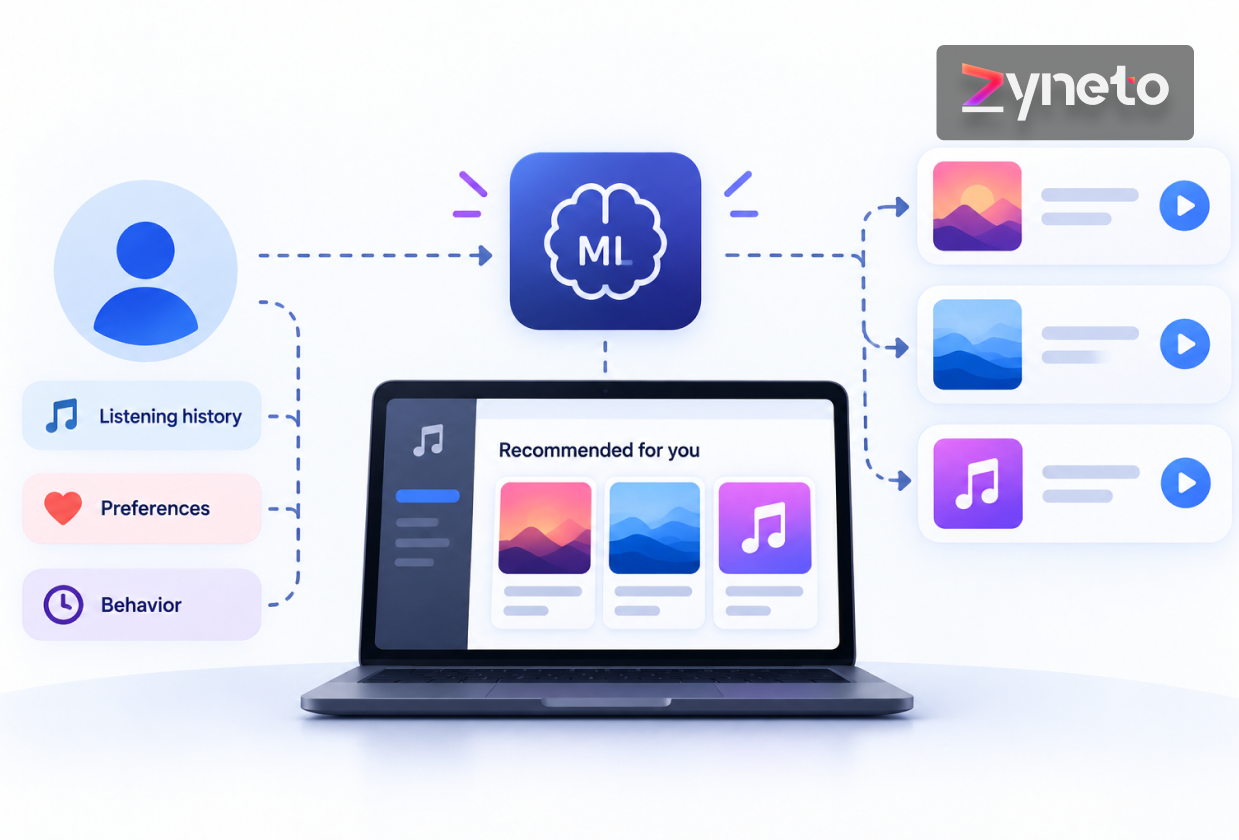
In simple terms, artificial intelligence in cybersecurity looks at how users, devices, and applications normally behave. When something falls outside that pattern, the system flags it for review or takes action based on predefined logic. This makes detection more flexible compared to traditional tools.
The role of AI in cybersecurity also includes helping teams prioritize risks. Rather than treating every alert the same, AI-based systems rank threats based on impact and likelihood. This allows security teams to focus their time on issues that matter most while routine checks run in the background.
In practice, teams apply different ways to use AI in cybersecurity, such as behavior analysis, anomaly detection, automated response, and risk prioritization across systems.
Modern security systems generate more data than any team can review manually. Network logs, user activity, application events, and cloud workloads create a constant stream of information.
Security teams need a way to process this data quickly and accurately. This is where AI-driven cybersecurity supports daily defense operations practically and measurably.
AI-based systems monitor activity as it happens instead of relying only on scheduled scans or predefined alerts. They review login attempts, data access patterns, and traffic behavior across systems.
When activity suddenly changes, such as repeated failed logins or unusual data movement, the system flags it immediately. This allows teams to identify threats that do not match known attack patterns.
Traditional tools depend on static rules that need regular updates. AI takes a different approach by learning how users, devices, and applications normally behave.
Once a baseline is established, AI can detect small changes that point to compromised accounts, insider misuse, or unauthorized access. This is how AI is transforming cybersecurity and reducing dependence on manual rule creation, and keeping detection relevant as systems change.
Time plays a critical role during security incidents. AI-powered tools can automate specific actions such as locking accounts, isolating devices, or blocking suspicious connections.
These actions follow predefined policies, which keep humans in control while reducing response delays. This balance helps teams contain threats early without slowing down operations.
Security teams often deal with alert overload. AI helps by ranking alerts based on risk level, context, and potential impact. Instead of reviewing every alert equally, teams can focus on the most serious issues first.
This highlights the importance of AI in cybersecurity for managing workloads without adding pressure on security staff.
Attack methods change regularly. AI systems update their understanding as new data becomes available. This allows detection models to improve over time and adapt to new threat patterns.
As environments grow and change, AI-powered cybersecurity continues to support defense mechanisms without constant manual tuning.
AI-based security systems rely on multiple techniques to address different security challenges. Each technique plays a defined role and supports a specific part of the security process.
Together, they explain how intelligent security tools operate in real environments instead of remaining theoretical or abstract.
Machine learning forms the foundation of many security tools. It analyzes historical and real-time data to understand normal system behavior.
Once trained, models detect patterns linked to suspicious activity. Supervised learning identifies known threats, while unsupervised learning helps spot unusual behavior without relying on predefined rules.
Deep learning builds on machine learning by processing complex data through layered models. It works well with large volumes of network traffic and system logs.
In security environments, deep learning helps identify advanced malware and phishing attempts that hide within normal-looking activity and are difficult to detect manually.
Natural language processing focuses on analyzing written content. In security use cases, it scans emails, messages, and documents for phishing attempts or sensitive data exposure.
NLP also helps analyze threat reports and attacker communication, which provides additional context and improves understanding of potential security risks.
Behavioral analytics tracks how users, devices, and applications behave over time. By establishing a baseline of normal activity, systems can flag actions that fall outside expected patterns.
This approach helps detect insider misuse, stolen credentials, and unusual access behavior without relying on known attack signatures.
Cyber threats change constantly in how they appear and spread. Attackers adjust techniques to bypass fixed rules and known signatures, which makes detection difficult for traditional tools.
This reflects the importance of AI in cybersecurity, as it focuses more on behavior, context, and real-time activity instead of relying only on past attack data.
Here are some of the key threats that AI can prevent.
Modern malware often avoids detection by changing its structure or running directly in memory. Ransomware attacks move fast and aim to encrypt data before teams can respond. AI systems monitor how files and processes behave after execution.
Phishing attacks target users rather than systems. Messages often copy trusted brands, internal formats, or familiar writing styles. AI models analyze email content, sender behavior, and how users interact with messages.
Insider threats involve users with valid access, which makes detection more complex. Actions may look normal at first. AI tracks behavior over time to understand access patterns, data usage, and working hours.
Zero-day attacks exploit unknown flaws with no existing signatures. AI systems detect these threats by monitoring abnormal system behavior, unexpected process activity, and unusual network communication.
Different industries face different security risks, but they share a common challenge. They all manage large volumes of sensitive data across connected systems. This is where AI-powered cybersecurity supports industry-specific needs by adapting to how each environment operates.
The following industry examples also reflect broader AI app use cases, where intelligent systems adapt to industry-specific risks instead of applying generic security controls.
Financial institutions handle payment data, customer identities, and transaction records that attract constant attack attempts.
AI systems monitor transaction behavior in real time to identify unusual patterns such as sudden payment spikes, repeated login failures, or access from unexpected locations. These systems also help detect account misuse by comparing current activity with historical behavior.
In trading platforms and banking apps, artificial intelligence supports fraud detection while reducing false alerts that slow down investigations.
Healthcare organizations manage patient records, medical devices, and internal systems that often remain connected around the clock.
AI helps protect this data by monitoring access to electronic health records and identifying abnormal usage patterns. For example, if a user accesses patient data outside normal working hours or downloads large volumes of records, the system flags the activity.
The use of AI in healthcare also supports email security by detecting phishing attempts that target healthcare staff, which helps prevent credential theft and data exposure.
Enterprises rely heavily on cloud platforms, third-party integrations, and remote access tools. This creates a complex security environment where manual monitoring becomes difficult.
AI systems analyze cloud logs, API activity, and user behavior to identify risks such as unauthorized access or misconfigured resources. In large organizations, such AI implementation helps manage security across multiple cloud environments by prioritizing alerts based on risk and impact.
In large-scale deployments, collaboration between security teams and a mobile app development company helps develop mobile systems in which security controls integrate smoothly into applications without affecting performance or usability.
As systems expand across cloud platforms, applications, and connected devices, the role of AI in everyday business extends beyond protection and supports stability, efficiency, and risk awareness.
AI supports teams by improving speed, accuracy, and consistency while keeping security processes manageable. Here are some of the key benefits of AI in cybersecurity:
Traditional security tools often identify threats after suspicious activity has already taken place. AI systems analyze activity as it happens and compare it with established behavior patterns.
When login behavior, data access, or network traffic changes unexpectedly, the system flags it immediately. By analyzing activity in real time, AI for cybersecurity allows teams to detect threats earlier and reduce the time attackers remain active inside systems.
Security teams frequently deal with a high volume of alerts, many of which do not require action. AI reduces this burden by adding context to each alert. It evaluates user roles, access history, and system behavior together before raising concerns.
By filtering out low-risk events, AI-powered cybersecurity helps teams focus attention on incidents that actually pose a threat.
AI systems improve accuracy as they learn from previous incidents and ongoing activity. Over time, detection becomes more reliable because models recognize patterns linked to genuine threats. Instead of relying on static rules, AI focuses on behavior changes.
This strengthens the system by reducing missed threats and improving confidence in alert quality across different environments.
As organizations grow, security data increases quickly across users, applications, and cloud workloads. Manual reviews and frequent rule updates struggle to keep up.
AI handles large data volumes continuously without slowing down. This allows teams to maintain consistent protection as systems scale, without needing to increase staffing or complexity.
AI brings clear benefits to security operations, but it also introduces risks that teams need to understand and manage carefully. Using AI without proper oversight can create blind spots instead of improving protection.
This is why the role of AI in cybersecurity works best when combined with human judgment and clear controls. Here are some of the risks and challenges of using AI that need to be considered.
AI systems depend heavily on the data used to train them. If the data does not represent current threat behavior or lacks diversity, models may produce inaccurate results. This can lead to missed attacks or unnecessary alerts that slow down response.
Security teams must review model performance regularly and update training data as attack methods change. Without ongoing tuning, AI may lose accuracy over time.
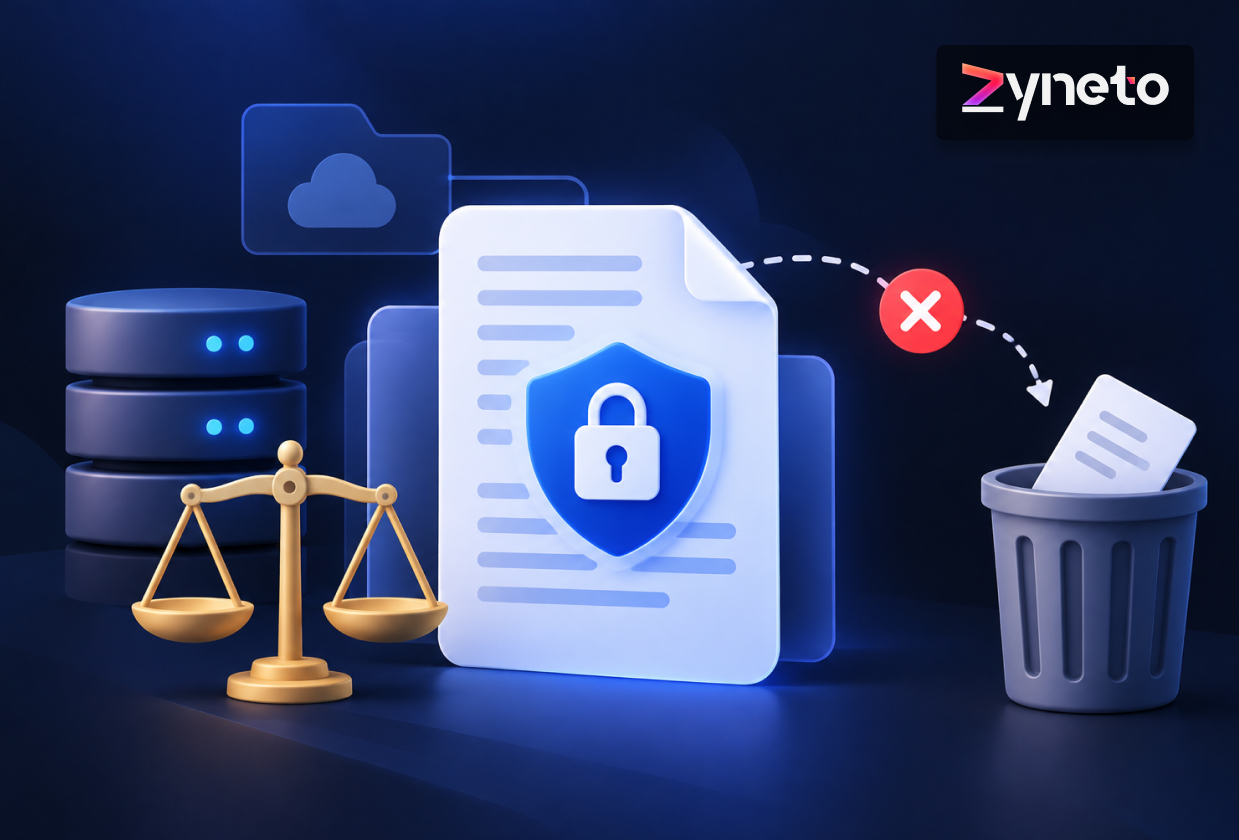
AI-based security tools process large volumes of data, including user activity, access logs, and network behavior. This raises privacy concerns, especially in industries with strict compliance requirements.
Poor data handling can expose sensitive information or violate regulations. Organizations need clear data usage policies, strong access controls, and proper encryption to protect user data.
Attackers have started targeting AI systems directly. In adversarial attacks, threat actors manipulate input data to confuse models and avoid detection. Small changes in behavior can cause AI systems to misclassify threats.
To reduce this risk, teams must test models against manipulated inputs and monitor detection results closely. This highlights the need for ongoing oversight when deploying AI-driven cybersecurity solutions.
Security teams often compare automated security systems with human-led processes when planning defense strategies. In reality, both approaches serve different purposes.
A clear comparison helps organizations understand where automation adds efficiency and where human expertise remains necessary for control and decision-making.
|
Area |
AI-Led Cybersecurity |
Human-Led Cybersecurity |
|
Threat Detection Speed |
Detects unusual behavior in real time across systems |
Depends on manual review and investigation time |
|
Data Handling Capacity |
Processes large volumes of logs, traffic, and events continuously |
Limited by team size and available working hours |
|
Pattern Recognition |
Strong at identifying recurring patterns and anomalies |
Relies on experience and past incident knowledge |
|
Accuracy Over Time |
Improves with training data and ongoing learning |
Improves with hands-on experience and exposure |
|
Context Awareness |
Understands technical behavior, not business impact |
Understands business priorities and operational risk |
|
Decision Making |
Follows predefined logic and thresholds |
Applies judgment in uncertain or high-risk situations |
|
Consistency |
Applies the same logic without fatigue |
Can vary based on workload and pressure |
|
Adaptability to New Attacks |
Needs retraining or tuning for new patterns |
Can adapt immediately using reasoning and intuition |
AI works best where speed, scale, and consistency matter. It handles continuous monitoring and data-heavy tasks efficiently, which makes AI valuable for modern cybersecurity environments with constant activity.
Human-led security remains essential for investigation, response planning, and decisions that affect business operations. When used together, automation supports efficiency while human expertise ensures control and accountability.
Cloud and network environments change frequently due to scaling, remote access, and system integrations. Static security controls struggle to keep up, which is where AI adds practical support.
Many cloud security issues begin with small configuration errors, such as excess permissions or exposed storage. AI systems monitor cloud logs, access behavior, and configuration changes in real time.
When permissions change unexpectedly, or a resource becomes public, alerts are raised. By learning normal access patterns, AI enables teams to detect misuse early without requiring manual checks.
Modern networks handle traffic from remote workers, cloud services, mobile apps, and connected devices. AI-driven monitoring focuses on traffic behavior rather than fixed thresholds.
It learns normal data flow and flags unusual transfers, repeated access attempts, or unexpected connection paths. This allows teams to detect unauthorized access or lateral movement early without increasing manual workload.
As organizations handle more data across cloud platforms, third-party tools, and remote systems, meeting compliance requirements has become harder to manage manually.
Regulations demand clear visibility into access, data usage, and risk controls. This is where the role of AI in cybersecurity extends beyond threat detection and supports structured risk management.
Compliance frameworks require organizations to track who accesses sensitive data, how systems are configured, and whether security controls work as intended.
AI systems analyze access logs, policy settings, and user activity to identify gaps that could lead to compliance issues. When access permissions exceed defined limits or policies are misapplied, alerts get raised early, allowing teams to address issues before audits or regulatory reviews.
Compliance does not remain static. Systems change as new users, services, and integrations get added. AI supports ongoing monitoring by reviewing configuration changes and activity patterns in real time.
Instead of relying only on periodic audits, teams gain continuous visibility into risk exposure. When changes increase compliance risk, alerts appear immediately. This approach helps maintain consistent compliance without adding extra operational workload.
Security models continue to change as systems spread across cloud platforms, remote devices, and third-party services. Organizations now focus on faster response and better risk assessment in environments that change frequently.
These changes are driven by top AI ideas focused on automation, predictive analysis, and adaptive security controls.
Autonomous security systems handle routine actions with limited human involvement. They detect suspicious behavior, assess risk, and respond using predefined rules.
Actions such as restricting access or isolating resources happen automatically. Security teams define policies and review outcomes without managing every low-risk incident manually.
Zero-trust models assume no user or device is trusted by default. AI supports this approach by evaluating behavior continuously.
Access decisions adjust in real time based on device health, location, and usage patterns, which helps maintain control in environments where access conditions change often.
Predictive threat analysis focuses on identifying risks before an incident occurs. By analyzing historical incidents and current activity, AI systems highlight patterns linked to potential attacks.
This allows teams to address weak points early instead of responding after systems or data get affected.
Adaptive security policies change controls based on real-time risk levels. When behavior shifts, access rules and monitoring intensity adjust automatically.
This flexibility helps security controls stay aligned with current conditions instead of relying on static rules that may no longer apply.
Introducing AI into security operations works best when teams follow a clear, step-by-step approach. Rushing implementation or relying on automation without preparation often leads to poor results.
The steps below outline a practical way to adopt AI-based security solutions while keeping control and clarity intact.
Start by evaluating existing security processes. This helps identify where AI can provide real support, such as detecting unusual behavior faster or reducing alert overload. At this stage, teams should also review data quality, logging coverage, and system readiness.
Before adoption, teams should clearly identify where AI for cybersecurity can provide measurable value, such as alert reduction, faster response, or improved visibility.
AI delivers better results when applied to specific problems. Instead of attempting full automation, focus on a few high-impact use cases like anomaly detection, phishing analysis, or user behavior monitoring.
At this stage, teams often struggle with clarity around how to create an AI app that aligns with security goals and existing infrastructure without adding unnecessary complexity.
AI-based tools rely heavily on accurate and consistent data. Before deployment, teams should clean logs, normalize data sources, and remove gaps that could affect results.
Strong access controls and encryption must be in place to protect sensitive information. This step improves reliability and reduces the risk of biased or misleading outcomes.
New AI systems should connect smoothly with current platforms such as SIEM, SOAR, and endpoint protection tools. Integration allows alerts and insights to flow into familiar workflows.
This reduces disruption and helps teams act on AI-driven insights without changing their entire process.
During early adoption, AI systems should support decision-making rather than act independently. Security teams need time to validate alerts, understand model behavior, and adjust thresholds.
Human review builds trust and ensures responses align with operational priorities.
After deployment, teams must track performance closely. Reviewing false positives, updating models, and adjusting logic keep systems effective as environments and threats change.
Continuous improvement ensures AI remains a reliable part of the security strategy rather than a static tool.
Adopting AI-based security tools requires careful preparation to avoid unreliable results and operational issues.
Teams need to focus on data readiness and system compatibility before relying on automation.
This approach helps organizations realize the benefits of AI in cybersecurity without losing control over security decisions.
Get to know some benefits below:
AI systems depend on accurate and consistent data to function properly. Security teams should ensure logs from networks, endpoints, cloud platforms, and applications remain complete and structured. Gaps or poor-quality data reduce accuracy and increase unnecessary alerts.
Model training should not stop after deployment. As environments change and attackers adjust their methods, models need updated data to stay relevant. Regular reviews of training inputs help reduce bias and improve detection quality.
AI tools work best when they support existing workflows instead of replacing them abruptly. Integration with SIEM, SOAR, endpoint protection, and identity systems allows teams to use AI insights within familiar processes. This helps security teams act faster while keeping oversight in place.
Testing integrations ensures alerts, logs, and automated actions move correctly between systems, which strengthens trust in AI-powered cybersecurity outputs during active security operations.
Organizations often hesitate to invest in AI-based security solutions because the costs appear high at first glance. A clear decision becomes easier when businesses break down actual expenses and evaluate returns using measurable outcomes instead of assumptions.
When teams evaluate security budgets, the cost to build an AI app often depends on factors such as data volume, model complexity, integration effort, and long-term maintenance requirements.
For small to mid-sized organizations, AI-enabled security platforms typically cost $40,000 to $150,000 per year. This includes licensing, cloud processing, data storage, and integration with existing tools such as SIEM and endpoint security.
Larger enterprises with complex environments, custom requirements, or higher data volumes may spend $200,000 to $300,000+ annually. One-time setup costs may also include short-term consulting and team training.
Here are some of the key indicators that justify the ROI from AI investments in cybersecurity:
- Reduction in Security Operations Cost
AI reduces the number of alerts that require manual review. Many teams see a 30–50% drop in false positives, which directly saves analyst time and lowers operational workload.
- Faster Incident Detection and Response
Early detection limits how long attackers stay active. Faster containment reduces downtime, system recovery costs, and business disruption.
- Lower Breach Impact and Recovery Costs
Preventing or limiting breaches helps avoid expenses tied to data loss, legal action, and regulatory penalties. Even a single avoided incident can offset annual costs.
- Scalability Without Proportional Hiring
As systems grow, automation handles higher data volumes without requiring large increases in staff, which stabilizes long-term security spending.

Building and deploying AI-based security solutions requires strong technical execution and a clear understanding of real-world risks. Our team works closely with organizations to design security systems that align with existing infrastructure, compliance needs, and operational goals.
As an AI app development company, we focus on practical implementation rather than one-size-fits-all solutions. We support businesses at every stage, from identifying the right use cases to integrating intelligent security features into applications, cloud platforms, and enterprise systems.
Our approach emphasizes secure architecture, clean data pipelines, and controlled automation so teams retain visibility and decision-making authority. Whether the goal is threat detection, behavior analysis, or security monitoring, we help teams move from concept to deployment with confidence.
For organizations exploring implementation paths, we also provide guidance on AI solutions that fit security, scalability, and performance requirements without adding unnecessary complexity.
Cyber threats will continue to grow in scale and complexity as digital systems expand across cloud platforms, applications, and connected devices. This ongoing shift reinforces that AI is transforming cybersecurity into a core capability rather than a supporting layer.
Security teams can no longer rely only on manual processes or fixed rules to manage this risk. Intelligent systems now play a central role in helping organizations detect threats earlier, respond faster, and manage security operations more effectively.
The real value lies in using AI as a support layer rather than a replacement for human expertise. When applied thoughtfully, AI-driven cybersecurity helps organizations balance speed, accuracy, and control while adapting to changing attack methods and business needs.
The future of security depends on this balance between automation and informed decision-making.
There are diverse ways to use AI in cybersecurity to improve defense mechanisms. From analyzing large volumes of system activity to identifying unusual behavior in real time. Instead of relying only on fixed rules, intelligent systems learn normal patterns and flag deviations early. This accelerates threat detection and reduces the burden of manual monitoring.
No. AI supports security teams but does not replace them. Automated systems handle repetitive tasks like monitoring and alert prioritization, while humans investigate incidents, apply context, and make response decisions. The most effective security programs combine automation with human expertise.
The key benefits of AI in cybersecurity include faster threat detection, fewer false alerts, improved accuracy, and the ability to scale security operations as systems grow. These benefits help teams manage risk more effectively without increasing workload.
Yes. Many AI-based security tools scale based on usage and data volume, which makes them accessible to smaller organizations. Automation helps smaller teams monitor systems continuously without needing a large security staff.
Organizations should assess data quality, integration with existing tools, privacy requirements, and the level of human oversight needed. Clear use cases and gradual adoption help ensure AI-based security delivers reliable and practical results.

Vikas has around fifteen years of experience building software and now builds generative AI systems at Zyneto. His work covers retrieval augmented generation, agentic AI, knowledge graphs, AI memory, and the evaluation and guardrails that decide whether any of it is safe to put in front of customers. He has shipped enterprise copilots, document AI, chatbots and predictive analytics for e-commerce, fintech and marketing teams, and works day to day in Python, JavaScript and SQL. He follows multimodal models, business process automation and enterprise AI security closely, and mentors engineers moving into AI. He writes about architecture, inference cost and the failure modes that only show up at production scale.
Share your details and we will talk soon.
Be the first to access expert strategies, actionable tips, and the trends actually shaping the digital world. No fluff - just practical insights delivered straight to your inbox.
Dive into our blog and stay ahead of the curve with expert perspectives, future-ready trends, and tech tips written for decision-makers and doers alike.