AI Physiotherapy App Development Guide


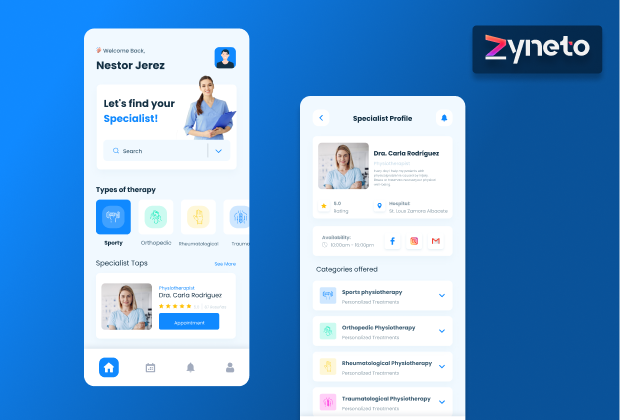
Healthcare is changing fast.
And if you’re thinking about building a smarter rehab solution, AI Physiotherapy App Development is exactly where the future is heading.
Patients today don’t just want clinic visits.
They want guided exercises at home, real-time posture correction, and progress tracking, as well as instant feedback.
That’s where AI steps in.
With computer vision, motion tracking, and personalized recovery plans, you can offer users a virtual physiotherapist right inside their phone.
Imagine your app analyzing body movements through the camera and correcting posture instantly.
Sounds powerful, right?
In 2026, AI-driven rehab apps won’t be optional; they’ll be expected.
If you want to build something that truly improves patient recovery while scaling your healthcare business, this guide will walk you through exactly what you need to know.
Let’s get started.
So, what does it really take to create an AI app for physiotherapy?
It’s more than just adding exercise videos.
When you develop an AI physiotherapy app, you’re building an intelligent system that understands movement, tracks performance, and adapts recovery plans automatically.
Your app can use computer vision to analyze joint angles. Machine learning to personalize exercise intensity. And data analytics to show measurable recovery progress.
The goal?
Make users feel like they have a personal physio in their pocket.
You’ll also need secure patient data management, smooth UI/UX, wearable integration, and cloud-based storage.
But here’s the exciting part: AI makes your platform smarter over time.
The more it learns from user data, the better the recommendations become. That’s how you move from a basic health app to a truly intelligent digital rehabilitation solution.
Let’s be honest.
People don’t want to travel to clinics three times a week anymore. They want a recovery that fits into their schedule.
That’s exactly why more healthcare startups and clinics are choosing to build an AI Physiotherapy app instead of relying only on traditional models.
This shift mirrors a broader AI trend that is redefining how patients interact with digital health platforms.
Here’s why this space is exploding right now:
When you build an AI Physiotherapy app, you’re not offering one-size-fits-all exercise plans.
You’re delivering personalized recovery programs.
AI analyzes movement patterns, tracks progress, and adjusts exercises based on real performance.
Your users feel seen. Not just prescribed. And that level of personalization keeps them engaged longer.
Clinics close. But, if you make an AI Physiotherapy app, your service stays open 24/7.
Users can complete guided sessions anytime. Late night, early morning, weekend. This flexibility dramatically improves consistency in rehab routines.
And consistency is everything in physiotherapy.
Here’s where it gets exciting.
When you build an AI Physiotherapy app, computer vision can analyze posture and joint angles instantly.
The app can correct wrong movements in real time. No waiting for the next appointment. No guessing if the exercise is right.
That instant feedback builds confidence and speeds up recovery.
People love seeing progress.
When you create an AI Physiotherapy app, you can show recovery graphs, mobility improvements, and performance milestones.
That visual proof keeps users motivated. And for clinics or healthcare providers, it means measurable outcomes.
Better tracking. Better decisions. Better patient retention. That’s why AI physiotherapy isn’t just trending.
It’s transforming how rehab works and how you can scale it.
If you're researching how to create an AI Physiotherapy solution that actually stands out, features are everything.
Not just fancy AI buzzwords.
But practical, patient-focused functionality that makes recovery easier, smarter, and more engaging.
Your app should feel like a real physiotherapist guiding users, not just a video library with timers.
Here are the features you absolutely shouldn’t ignore:
This is one of the most advanced AI use cases in rehabilitation technology.
It must detect joint angles, posture alignment, and exercise accuracy in real time.
Instant corrections reduce injury risks and help users perform exercises correctly without needing constant in-person supervision.
No two patients recover the same way.
Your AI engine should adapt exercise intensity, repetitions, and routines based on user progress, pain levels, and mobility data.
That dynamic adjustment keeps recovery optimized instead of static and generic.
Imagine your app saying, “Straighten your back,” or “Lift your arm slightly higher.” Voice cues combined with visual markers make sessions interactive and engaging.
It feels less robotic and more like guided therapy.
Users need motivation.
A clean dashboard showing recovery milestones, flexibility improvements, and session consistency builds accountability.
When users see measurable improvement, they’re far more likely to stick with their rehabilitation plan.
Integrating with smartwatches or fitness bands adds another layer of precision.
You can track heart rate, movement patterns, and daily activity levels to adjust therapy sessions more intelligently and safely.
Allow users to log pain levels before and after sessions. AI can then analyze patterns and recommend adjustments.
This makes therapy responsive instead of rigid, a huge advantage in long-term recovery programs.
Healthcare apps must prioritize privacy.
Your platform should include encrypted storage, secure authentication, and compliance with medical data standards to protect sensitive patient information.
Trust is non-negotiable in digital healthcare.
Even with AI, human support matters.
Integrate video consultations so users can connect with licensed physiotherapists when needed.
This hybrid approach blends automation with professional care, giving you the best of both worlds.
If you’re seriously exploring how to create an AI Physiotherapy solution, you need more than just an idea.
You need a structured approach. Because this isn’t just another fitness app. You’re building something that impacts real recovery, real pain, and real progress.
So let’s break this down in a way that actually makes sense for you:
Before you build an AI Physiotherapy app, ask yourself one simple question:
Who exactly are you helping? Post-surgery patients? Athletes recovering from injuries? People dealing with chronic back pain?
The clearer your audience, the smarter your product decisions become.
Don’t try to solve everything at once. Pick a focused use case.
When you narrow your scope, your AI models become more accurate, your UX becomes cleaner, and your marketing becomes sharper.
Clarity at this stage saves you months later.
You’re stepping into healthcare. That means responsibility.
When you plan to develop an AI Physiotherapy app, you must align with physiotherapy best practices and medical safety standards.
Consult licensed physiotherapists. Understand exercise protocols. Study movement restrictions for different injuries.
Also, look into healthcare data regulations like HIPAA or GDPR, depending on your target market.
Compliance is not optional. It builds trust. And in healthcare, trust is everything.
Now comes the exciting part. The intelligence layer.
If you want to create an AI Physiotherapy solution that truly stands out, your AI can’t just be a buzzword.
It should actually do something meaningful.
Here are the key capabilities you should consider:
Your AI should analyze user movements through the device camera and provide instant corrections.
Not tomorrow. Not next session. Right now.
That real-time feedback is what makes the app feel alive.
Scalability is at the heart of AI for everyday business, building systems that grow without multiplying costs.
You’ll likely need:
When you build an AI Physiotherapy platform, performance matters.
Laggy video tracking? Users will quit. Inaccurate motion detection?
Trust disappears. Your infrastructure must be stable, fast, and secure.
AI can be complex. Your interface should not be.
If you want to develop an AI Physiotherapy app that people actually use daily, keep it simple.
Large buttons. Clear instructions. Minimal clutter. Remember, many physiotherapy users are older adults.
They don’t want a tech puzzle. They want guidance. Make the onboarding easy. Use animations to demonstrate exercises. Add voice instructions for accessibility.
The smoother the experience, the better the retention.
This is the backbone of your app.
Your AI model should detect body key points: shoulders, elbows, knees, and hips.
Then calculate movement angles. Then compare them against ideal physiotherapy movements.
When users perform an exercise incorrectly, your system should notify them instantly. This is where you make an AI Physiotherapy app feel like a real therapist in the room.
Accuracy is critical here. So test extensively. Train your AI model with diverse body types and movement variations.
The more data you train on, the better the performance.
Recovery is not linear. Some days are good. Some days hurt. Your AI should adapt.
When you develop an AI Physiotherapy app, integrate logic that adjusts intensity based on:
If a user reports high pain, the system should reduce intensity or increase difficulty gradually. This dynamic adjustment makes your app feel intelligent, not rigid.
People stay motivated when they see progress.
Add visual dashboards. Show improvement in range of motion. Display consistency streaks. Highlight recovery milestones.
When you build an AI Physiotherapy app with strong analytics, users feel accountable. And clinics get measurable outcomes. This data also helps you improve your AI over time.
The more usage insights you collect, the smarter your recommendation engine becomes.
AI is powerful.
But human reassurance still matters.
Integrate video consultation features so users can connect with licensed physiotherapists when needed.
This hybrid model increases credibility. It also bridges the gap between automation and expert supervision.
When users know real professionals are available, adoption increases dramatically.
You’re handling medical data. That means encryption, secure authentication, and protected cloud storage.
No shortcuts here.
When you create an AI Physiotherapy app for real patients, security must be baked into the architecture, not added later.
Use multi-factor authentication, encrypt data at rest and in transit, and implement strict access controls, and trust grows when users feel safe.
Before you launch publicly, test with a small group. Collect feedback from actual physiotherapy patients.
Observe how they use the app. Where do they get confused? Where does AI misinterpret movement?
Refine, improve, & Iterate. A beta phase is not a delay. It’s your competitive advantage.
After launch, your work isn’t done. Monitor usage behavior. Track drop-off rates.
Analyze session completion trends. Continuously retrain your AI models with anonymized data.
When you develop an AI Physiotherapy app, it should evolve over time.
The smartest products are the ones that learn.
Now that you understand the full development process, let’s break down the investment required and how partnering with the right mobile app development company can optimize both cost and quality.
If you’re planning your budget, this is probably the first question on your mind.
The AI physiotherapy app development cost can go from $25,000 to $150,000+, depending on multiple factors: features, AI complexity, tech stack, integrations, and compliance requirements.
A basic version with exercise videos and progress tracking will cost significantly less than a full-scale AI-powered app with real-time motion detection and wearable integration.
The development team's location also impacts pricing.
Adding advanced AI models, secure healthcare compliance, and teleconsultation features increases investment but also boosts long-term ROI.
On average, the cost can range widely depending on scope, customization, and scalability goals.
Here’s a simplified breakdown to help you understand potential investment levels:
|
App Type |
Features Included |
Estimated Cost Range |
|
Basic App |
Exercise library, manual tracking, simple dashboard |
$25,000 – $40,000 |
|
Mid-Level AI App |
Motion tracking, personalized plans, analytics |
$40,000 – $75,000 |
|
Advanced AI App |
Real-time posture correction, wearables, teleconsultation, AI optimization |
$75,000 – $150,000+ |
Note: The final AI development cost may vary depending on your specific features, complexity, and customization needs.
Building an AI-powered rehab app isn’t just about innovation.
It’s about smart business.
With the right AI Physiotherapy monetization model, you can turn patient recovery into recurring revenue while delivering real value.
The beauty of AI? It scales without increasing operational costs at the same pace.
Here’s how you can generate high, sustainable income:
The most popular AI Physiotherapy monetization model is monthly or yearly subscriptions.
Users pay for access to personalized recovery plans, motion tracking, and progress analytics.
You can offer tiered plans: basic rehab guidance, advanced AI tracking, or premium therapist access.
Recurring revenue means predictable cash flow and higher long-term customer value.
Not every user wants a subscription.
You can monetize through one-time payments for specialized rehab programs: post-surgery recovery, sports injury modules, or chronic pain therapy.
This flexible AI Physiotherapy monetization strategy attracts users who prefer paying only for what they need.
It also allows you to upsell advanced therapy bundles.
You can integrate live physiotherapist consultations and charge per session. This hybrid model blends automation with professional care.
Users trust platforms that provide real human support when required.
Adding paid video consultations increases revenue while strengthening credibility and patient satisfaction.
Instead of targeting only individual users, you can license your AI solution to clinics, hospitals, or rehab centers.
Under this monetization model, institutions pay for software access, dashboards, and patient management tools.
B2B contracts often generate higher revenue and long-term partnerships compared to individual subscriptions.
With proper consent and compliance, anonymized data insights can be valuable for research organizations and healthcare providers.
Offering advanced analytics dashboards to institutions creates another revenue stream.
When your AI platform delivers measurable outcomes, businesses are willing to pay for insights that improve treatment efficiency and reduce operational costs.
What if your physiotherapy app could think, learn, and improve with every session? That’s the kind of innovation Zyneto brings to the table.
As a forward-thinking AI development company, we help you design and develop intelligent rehab platforms that go beyond basic exercise tracking.
We build advanced motion detection systems, smart recovery algorithms, and secure healthcare architectures tailored to your business goals.
Our team works alongside you, from idea validation to deployment, ensuring your app is scalable, compliant, and user-friendly.
We focus on creating real value for patients while helping you build a sustainable healthcare product.
With Zyneto, you’re not just launching an app. You’re launching the future of digital physiotherapy.
AI physiotherapy isn’t just a trend; it’s the next evolution of digital healthcare. If you’re planning to enter this space, the opportunity is massive.
From real-time motion tracking to personalized recovery plans and remote access, an AI-powered solution allows you to deliver smarter, faster, and more measurable rehabilitation experiences.
But success doesn’t come from adding AI features randomly. It comes from building with strategy, compliance, usability, and scalability in mind.
When done right, your app becomes more than a tool; it becomes a virtual recovery partner patients can rely on daily.
Now is the perfect time to act.
With the right vision, technology, and development approach, you can build an AI physiotherapy platform that not only drives business growth but genuinely transforms patient outcomes
An AI physiotherapy app is a digital rehabilitation platform that uses technologies like computer vision and machine learning to track movements, correct posture, and personalize recovery exercises in real time. It acts like a virtual physiotherapist inside your smartphone
The timeline usually ranges from 3 to 8 months, depending on the app’s complexity, AI capabilities, integrations, and compliance requirements. Advanced motion tracking and personalization features may extend the development period.
Common technologies include AI/ML frameworks like TensorFlow or PyTorch, OpenCV for motion detection, cloud platforms for data storage, and mobile frameworks like Flutter or React Native for app development.
Yes, if built correctly. A well-developed app includes encrypted data storage, secure authentication, compliance with healthcare regulations (like HIPAA or GDPR), and strict access controls to protect sensitive medical information.
Post-surgery patients, athletes recovering from injuries, individuals with chronic pain, physiotherapy clinics, and healthcare startups can all benefit from AI-powered rehabilitation solutions that offer flexibility, personalization, and measurable progress tracking.

Vikas has around fifteen years of experience building software and now builds generative AI systems at Zyneto. His work covers retrieval augmented generation, agentic AI, knowledge graphs, AI memory, and the evaluation and guardrails that decide whether any of it is safe to put in front of customers. He has shipped enterprise copilots, document AI, chatbots and predictive analytics for e-commerce, fintech and marketing teams, and works day to day in Python, JavaScript and SQL. He follows multimodal models, business process automation and enterprise AI security closely, and mentors engineers moving into AI. He writes about architecture, inference cost and the failure modes that only show up at production scale.
Share your details and we will talk soon.
Be the first to access expert strategies, actionable tips, and the trends actually shaping the digital world. No fluff - just practical insights delivered straight to your inbox.
Dive into our blog and stay ahead of the curve with expert perspectives, future-ready trends, and tech tips written for decision-makers and doers alike.