Build an App Like YouTube Music: A Quick Guide


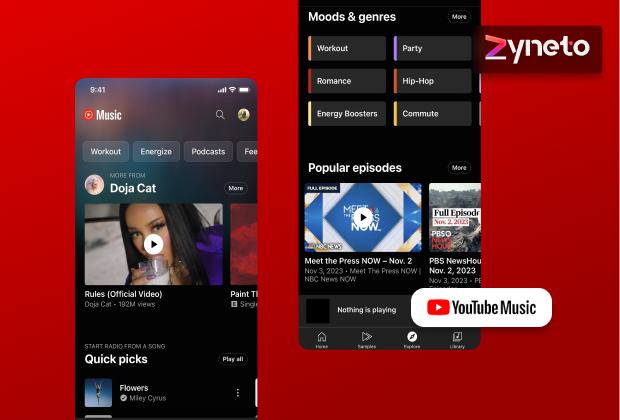
If you’ve ever thought about launching your own music streaming platform, you’re not alone.
The music app market is exploding, and users today expect more than just play and pause.
They want smart recommendations, offline listening, background play, seamless switching between devices, and content that feels personal.
That’s exactly why so many founders are researching how to build an app like YouTube Music.
It’s not just about streaming songs.
It’s about creating an ecosystem where music, discovery, AI recommendations, and user behavior work together smoothly.
The good news?
With the right strategy, tech stack, and licensing model, you can absolutely build a scalable music streaming app that competes in today’s digital market.
Let’s break it down step by step so you can turn your idea into a powerful product.
YouTube Music is one of the fastest-growing music streaming platforms globally.
Launched by Google, it combines official tracks, live performances, remixes, and user-generated content in one place.
As of recent industry reports, YouTube Music has crossed 100+ million paid subscribers, while YouTube itself has over 2.70 billion monthly active users worldwide.
That scale gives it a massive competitive edge.
Globally, the music streaming industry is projected to surpass $41 billion in revenue by 2030, with millions of users shifting from downloads to subscription models.
So if you’re planning to develop a music streaming app, the opportunity is real.
But success depends on how smartly you design features, licensing, and personalization from day one.
If you’re serious about entering the music streaming market, you need more than just a cool interface.
To truly develop an app like YouTube Music, you must understand user behavior, streaming infrastructure, licensing models, and AI-driven personalization.
It’s not just about playing songs.
It’s about delivering seamless discovery, smart recommendations, offline access, and a premium listening experience that keeps users coming back daily.
Now let’s break this down step by step so you can move from idea to execution with clarity.
Before you develop a music app like YouTube Music, start by studying your competitors and identifying gaps in the market.
Look at platforms like YouTube Music, Spotify, and Apple Music.
What features do users love? Where are they complaining?
You need to define your niche.
Will you focus on regional music? Indie artists? Podcasts? Spiritual content?
The clearer your positioning, the easier it becomes to design features that truly resonate with your audience.
Data-driven research at this stage saves you from expensive mistakes later.
If you want to build an app like YouTube Music, you shouldn’t start with everything at once.
Begin with an MVP (Minimum Viable Product).
Your core features should include user registration, search functionality, playlist creation, music streaming, and personalized recommendations.
Add offline downloads and background play if your budget allows.
Keep the first version lean but functional. The goal is to test market response quickly.
Once users start interacting with your app, you can gather insights and gradually expand advanced features.
When planning how to make a music app like YouTube Music, your technology choices matter more than you think.
For frontend development, you can use React Native or Flutter for cross-platform efficiency.
For the backend, Node.js or Django works well for scalable APIs. Use cloud platforms like AWS or Google Cloud to handle heavy streaming loads.
You’ll also need a powerful database such as PostgreSQL or MongoDB.
Most importantly, integrate AI-based recommendation engines to personalize user experiences.
A scalable tech foundation ensures your app performs smoothly even as your user base grows.
To legally create a music app like YouTube Music, licensing is non-negotiable.
You must obtain streaming rights from record labels, music distributors, and copyright holders.
This includes mechanical licenses, public performance licenses, and synchronization rights if videos are involved.
Ignoring licensing can shut your platform down before it scales.
Work with legal experts who understand digital media rights.
Also, ensure compliance with data privacy laws like GDPR and regional digital regulations.
A legally secure foundation protects your brand and builds trust with artists and users alike.
Modern users expect their music app to “understand” them.
That’s why AI-driven recommendations are critical.
Analyze listening history, skipped tracks, liked songs, and search behavior.
Use machine learning models to generate personalized playlists and mood-based suggestions.
Smart discovery keeps users engaged longer.
The more relevant your recommendations, the higher your retention rate.
This is what separates an average streaming app from a market leader.
Before going live, conduct rigorous testing.
Check streaming speed, buffering issues, UI responsiveness, and payment gateway functionality.
Perform beta testing with a small user group.
Gather feedback. Improve performance. Once confident, launch on Google Play and the Apple App Store.
Post-launch optimization is ongoing.
Monitor analytics, user behavior, churn rate, and subscription upgrades.
Continuous updates ensure your music app evolves with user expectations. So, these are some of the steps to know how to create a music streaming app like YouTube Music.
If you’re stepping into the music streaming space, offering just a simple audio player won’t be enough to stand out.
Modern users expect personalization, seamless streaming, offline access, and smart recommendations.
That’s why YouTube Music app development requires a strong focus on AI-driven discovery, smooth UI/UX, and scalable backend architecture.
An app like YouTube Music isn’t just about playing songs; it’s about delivering curated experiences, mood-based playlists, podcasts, live performances, and intelligent suggestions that keep users engaged daily.
Below is a comprehensive breakdown of essential features your app should include:
|
Feature Category |
Feature Name |
Description |
Why It Matters |
|
User Onboarding |
Easy Sign-Up/Login |
Sign up via email, phone, or social accounts |
Reduces friction and increases registrations |
|
User Profile |
Personalized Profiles |
Users can manage preferences, history, and playlists |
Enhances personalization |
|
Music Streaming |
High-Quality Audio Streaming |
Stream music in multiple quality formats |
Improves listening experience |
|
Smart Search |
Advanced Search |
Search by song, artist, album, genre, lyrics |
Makes content discovery effortless |
|
Recommendations |
AI-Based Recommendations |
Suggest songs based on listening behavior |
Boosts engagement and retention |
|
Playlists |
Custom Playlist Creation |
Users create, edit, and share playlists |
Encourages user interaction |
|
Offline Mode |
Download for Offline Listening |
Save music for offline playback |
Increases usability and convenience |
|
Audio Controls |
Smart Player Controls |
Shuffle, repeat, playback speed, equalizer |
Enhances user control |
|
Background Play |
Background Playback |
Continue playing while using other apps |
Improves |
|
Video Integration |
Music Video Support |
Stream official videos alongside songs |
Adds multimedia experience |
|
Mood & Genre Filters |
Curated Playlists |
Mood-based and genre-based playlists |
Simplifies discovery |
|
Social Sharing |
Share Music |
Share songs/playlists on social media |
Drives organic growth |
|
Notifications |
Smart Notifications |
New releases, recommendations, alerts |
Improves user retention |
|
Subscription Model |
Premium Plans |
Ad-free, offline downloads, exclusive content |
Generates revenue |
|
Ads Integration |
In-App Advertisements |
Audio/video ads for free users |
Monetization stream |
|
Analytics |
Listening History & Insights |
Show top tracks, artists, listening stats |
Personal engagement |
|
Live Streaming |
Live Concert Streams |
Watch live performances |
Enhances user value |
|
Voice Assistant |
Voice Search Integration |
Search songs using voice commands |
Improves accessibility |
|
Multi-Device Sync |
Cross-Device Sync |
Sync playlists across devices |
Seamless user experience |
|
Admin Panel |
Content Management Dashboard |
Manage songs, artists, ads, and analytics |
Backend control & scalability |
To get the best features in your YouTube Music like app, you can tak help of an experienced mobile app development company.
The cost to build an app like YouTube Music typically ranges between $50,000 to $250,000+, depending on complexity and scale.
A basic MVP with core features like music streaming, search, playlists, and user login may cost around $50,000–$80,000.
However, if you plan to include AI-based recommendations, video streaming, offline downloads, multi-device sync, and premium subscription features, the investment can go up to $100,000–$250,000 or more.
Additional expenses such as music licensing, cloud hosting, and ongoing maintenance also significantly impact the total budget:
|
App Version / Component |
Estimated Cost (USD) |
|
Basic MVP (Core Features) |
$50,000 – $80,000 |
|
Advanced App (AI + Video + Premium Features) |
$100,000 – $250,000+ |
|
Music Licensing & Legal |
$10,000 – $50,000+ |
|
Maintenance (Annual) |
15–20% of the total development cost |
|
Cloud & Infrastructure Setup |
$10,000 – $30,000 |
Note: Overall, the cost to develop a music app can increase or decrease as per changing market requirements.
When planning how to create an app like YouTube Music, monetization should be aligned with user behavior, engagement patterns, and long-term scalability.
A smart balance between free access and premium value ensures steady income while keeping users satisfied.
Let’s get to know the monetization strategy one by one:
When you develop an app like YouTube Music, implementing a freemium subscription model is essential.
Offer a free tier with ads and a premium plan that includes ad-free streaming, offline downloads, background play, and high-quality audio.
Recurring monthly and yearly subscriptions create predictable revenue.
If you plan to make an app like YouTube Music, in-app advertising can become a major revenue stream.
Integrate audio ads, video ads, and display banners for free users. Revenue can be generated through CPM (cost per thousand impressions), CPC (cost per click), or CPA models.
To successfully develop an app like YouTube Music, include options for sponsored playlists and promoted tracks.
Artists and record labels can pay to feature their songs at the top of search results or curated playlists, generating B2B revenue.
You can monetize through exclusive live concert streaming and virtual events. Users can purchase event passes, VIP access, or limited-time premium content.
This creates event-based income opportunities while increasing user engagement and platform loyalty.
Partnering with headphone brands, music merchandise stores, and ticketing platforms allows you to generate affiliate revenue.
You earn commissions through in-app promotions, product placements, and referral-based sales, creating an additional non-subscription income stream.
What if your music app didn’t just stream songs but created addictive listening experiences users can’t live without? That’s where Zyneto steps in.
As a forward-thinking music app development company, Zyneto combines strategy, creativity, and advanced technology to build powerful streaming platforms.
From AI-driven recommendations and seamless cross-device syncing to secure cloud infrastructure and scalable backend systems, every layer is built for performance.
The team also helps you design monetization models, integrate smart analytics, and optimize user retention.
The result? A future-ready music streaming app designed to compete, scale, and dominate in today’s fast-growing digital audio market.
The music streaming industry isn’t slowing down; it’s evolving faster than ever.
If you’ve been researching how to create an app like YouTube Music, now is the time to turn that curiosity into action.
Success doesn’t come from copying features; it comes from building smarter experiences, leveraging AI-driven personalization, securing proper licensing, and creating a monetization model that fuels long-term growth.
Users today expect seamless streaming, intelligent discovery, and effortless access across devices.
When you combine the right strategy, scalable tech stack, and user-first thinking, your music app can move beyond being “just another platform” and become a daily habit for listeners.
The opportunity is massive; what matters now is how boldly and strategically you execute.
The cost typically ranges between $50,000 to $250,000+, depending on features, AI integration, streaming infrastructure, and licensing requirements.
Yes, proper licensing is mandatory. You must obtain streaming and distribution rights from record labels, publishers, or music aggregators to avoid legal issues.
An MVP version can take around 4–6 months, while a fully featured app with AI recommendations and advanced features may take 6–9+ months.
Core features include music streaming, search, playlist creation, offline downloads, personalized recommendations, subscription plans, and secure payment integration.
By focusing on niche content, better personalization, unique user experience, regional targeting, and innovative monetization strategies.

Vikas has around fifteen years of experience building software and now builds generative AI systems at Zyneto. His work covers retrieval augmented generation, agentic AI, knowledge graphs, AI memory, and the evaluation and guardrails that decide whether any of it is safe to put in front of customers. He has shipped enterprise copilots, document AI, chatbots and predictive analytics for e-commerce, fintech and marketing teams, and works day to day in Python, JavaScript and SQL. He follows multimodal models, business process automation and enterprise AI security closely, and mentors engineers moving into AI. He writes about architecture, inference cost and the failure modes that only show up at production scale.
Share your details and we will talk soon.
Be the first to access expert strategies, actionable tips, and the trends actually shaping the digital world. No fluff - just practical insights delivered straight to your inbox.
Dive into our blog and stay ahead of the curve with expert perspectives, future-ready trends, and tech tips written for decision-makers and doers alike.