Flask vs Django: Which Framework Wins Your Project?


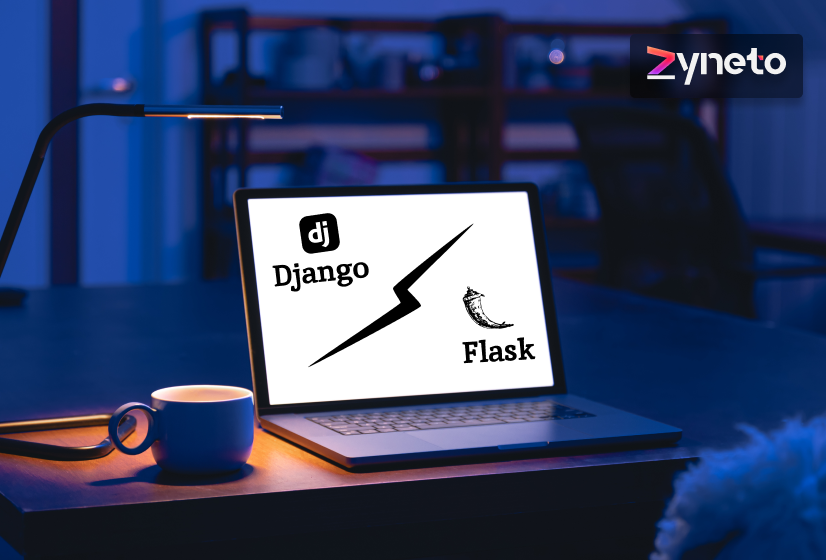
When it comes to building a web app in Python, there’s one debate that never seems to end - Flask vs Django.
Both are powerful, loved by developers, and capable of turning your ideas into scalable web applications. But here’s the catch: while Django gives you a full house of features, Flask gives you the keys to build your own dream setup.
If you’re someone trying to figure out which framework fits your goals, whether you’re building a sleek startup MVP or an enterprise-level app, this comparison is for you.
In this guide, we’ll break down the strengths, weaknesses, and best use cases of each, so by the end, you’ll know exactly where to invest your time and effort. Let’s dive into the world of Flask vs Django and find your perfect match.
Django is a high-level web framework for Python that operates on a “batteries-included” philosophy. It comes with built-in support for authentication, databases, security, and admin panels, allowing developers to build web apps quickly, securely, and at scale.
If you are a developer who loves structure, speed, and a reliable framework for web applications, Django will undoubtedly be your best friend.
Django is built in Python and embodies such an experience through its batteries-included philosophy, which basically means it includes a lot of tools you will need to build powerful web applications, right out of the box.
You do not have to worry about finding or integrating too many external packages. Whether it is authentication, admin panels, ORM, security, and scalability -- or all of the above -- Django provides all the features out of the box.
There is a reason development teams at companies like Instagram, Spotify, and Pinterest rely on Django for their large, scaled applications -- it is made for developing quickly and dirty without worrying about a broken application, but also made for businesses that need stable enterprise-grade solutions.
Out ot this add-on functionality in Django, some of the core features are more secure, built-in security against SQL injection, easy-to-use data models, and ready admin dashboard functionality out of the box. The benefits improve throughout Django to make the development experience faster, cleaner, or more secure at various levels.
So, when should you use Django?
If you’re building a content-heavy website, a CRM, or a scalable SaaS platform, Django is your go-to. It’s ideal when you want an all-in-one solution that handles complexity gracefully, letting you focus on innovation instead of setup.
Django has established itself as a reliable choice for enterprise-level development, and for good reason. It's reliable, secure, and designed to scale.
Large organizations do not have time to manage frameworks that need to be adjusted and modified repeatedly or rely on third-party libraries that are not intended for reliability.
You do not need to worry about that with Django’s “batteries-included” framework and functionality - you have authentication, database functions, security, and caching functionality all in one place.
However, it is the realization of its potential with enterprise-level projects that makes Django shine. Businesses like predictability, and Django is predictably defined and provides reusable components in this regard.
Keeping large teams organized is extremely important when working with many developers and can be a challenge with any framework.
Django focuses on organization, which means developers can work in the same architectural space, essentially speeding onboarding and minimizing integration issues down the road.
In the enduring debate of Flask vs Django, which is better, enterprises seem to gravitate toward Django because it is able to fulfill complex and often changing enterprise requirements without modification.
In other words, while you may get the flexibility with Flask, Django simply gives you the tool you need that works, which is an advantage all involved when turnarounds are tight and reliability is paramount.
Django delivers on all that is requested, whether it is managing thousands of calendar invitations for a conference or pulling off the dashboard you created for your neighbor’s kid’s art project.
Given the track record it has achieved and the demand placed on designing for reliability, it is a safe choice for the best brands globally.
Django isn’t just another Python web framework; it’s an ecosystem built for productivity, security, and speed. Let’s look at what makes it a powerhouse:
Together, these features make Django not just developer-friendly but business-smart, empowering teams to deliver high-quality web apps efficiently.
Choosing between the Python frameworks Django vs Flask depends largely on your project’s needs. If you’re building something large-scale, like a CRM, eCommerce platform, social network, or enterprise web app, Django is your go-to framework.
Many companies that rely on Python development services prefer Django because it offers the perfect balance of structure, scalability, and security. Its robust architecture allows development teams to build high-performing applications while maintaining clean, organized code.
You should use Django when:
On the other hand, if you’re developing something lightweight, like a microservice or an API prototype, Flask may fit better due to its flexibility. But for enterprises or long-term scalable apps, Django’s organized, all-inclusive nature often wins the Flask vs Django debate.
If you’re someone who prefers building things your own way without too many built-in rules, Flask might be the Python framework you’ll fall in love with. Unlike Django, Flask follows a “micro-framework” approach, meaning it gives you the basics you need to start a project but leaves the rest up to you.
It’s like getting an empty canvas — you decide how to paint it. Flask offers the essentials such as routing, request handling, and templating, but doesn’t force you into a specific structure. That freedom is what makes it so appealing to developers who want complete control over their architecture.
Developers adore Flask because it doesn’t try to do everything for you. Instead, it empowers you to decide what tools and libraries to use. That flexibility allows you to build anything — from a simple REST API to a custom, large-scale web application — exactly how you envision it.
Flask also has a gentle learning curve, making it perfect for beginners exploring web development or startups looking to quickly prototype ideas. You can start small and scale as you grow, adding components only when you need them.
In the Python Framework Django vs Flask debate, many developers side with Flask for projects that demand agility, speed, and creative freedom. It’s ideal when you want to keep things lean, efficient, and easy to manage.
Despite its minimalism, Flask is anything but limited. It comes with powerful features that make web app development smooth and flexible:
Even though Flask starts small, its ecosystem is rich enough to handle serious, production-level projects.
Flask shines when you want to start fast and keep things light. If your project doesn’t require heavy components or a rigid structure, Flask lets you build exactly what you need — nothing more, nothing less.
Use Flask when:
In the Flask vs Django, which is better discussion, Flask often wins for projects where customization, speed, and developer freedom matter most. It’s your go-to framework when you value flexibility and simplicity over structure-heavy configurations.
In short, Flask is perfect for developers who love the freedom to experiment, businesses that want rapid development, and teams that prefer building solutions their own way, without the weight of unnecessary complexity.
Choosing Flask for web development vs Django often comes down to your project’s scale, flexibility needs, and development speed. Both frameworks have their strengths: Flask offers freedom and simplicity, while Django provides structure and reliability. Below is a quick side-by-side comparison to help you understand how they stack up across key development factors.
|
Factors |
Flask |
Django |
|
Architecture |
Micro-framework; highly customizable |
Full-stack framework; follows MVC pattern |
|
Scalability |
Scales well for small to medium apps |
Excellent scalability for enterprise-level projects |
|
Learning Curve |
Easy for beginners to grasp |
Moderate; requires understanding of Django’s structure |
|
Speed |
Lightweight, fast for smaller apps |
Slightly slower due to built-in features |
|
Community Support |
Active and growing developer community |
Large, mature community with extensive documentation |
|
Security |
Requires manual configuration |
Strong built-in security features |
|
Flexibility |
Highly flexible; choose your own tools |
Less flexible, but offers a complete development ecosystem |
Let’s get to know in a detailed way:
When comparing Django vs Flask, architecture is one of the biggest differentiators.
Flask follows a micro-framework approach, giving you freedom to structure your project your way. It offers only essential tools like routing and templating.
The Django framework vs Flask setup follows the Model-View-Controller (MVC) pattern, offering a complete, ready-to-use structure for end-to-end web development.
In the Flask performance vs Django debate, both frameworks can scale, but in different ways. Flask is ideal for small to mid-sized apps and microservices, where agility matters.
Django is built for high-traffic, enterprise-grade platforms that demand heavy database management, advanced caching, and modular scalability. If you’re thinking long-term growth, Django has the upper hand here.
If you’re wondering Flask vs Django for beginners, Flask takes the win. It’s simple, lightweight, and easy to grasp even if you’re new to web frameworks.
Django, while more complex, rewards you once you understand its structure. In the Python Framework Django vs Flask discussion, Django’s conventions help large teams stay consistent, whereas Flask is perfect for solo developers or small startups.
When it comes to Flask Framework vs Django, Flask’s minimal design gives it a speed advantage for smaller projects.
It doesn’t load unnecessary components, so apps run faster. Django, though slightly heavier, is optimized for performance in complex systems.
If you’re measuring Flask performance vs Django in real-world enterprise apps, Django still performs impressively due to its caching and ORM optimizations.
In the Flask vs Django popularity comparison, Django leads with its mature ecosystem, huge community, and rich documentation.
It’s been around longer and powers many large-scale websites. Flask’s community, though smaller, is vibrant and highly active.
You’ll find plenty of tutorials, plugins, and extensions to enhance functionality, making both frameworks reliable choices for developers.
Security is a major factor when deciding between Python Flask vs Django.
Flask gives developers flexibility to choose security methods, but that means more manual work. Django comes packed with built-in security features like CSRF protection and SQL injection prevention.
If you’re building apps that handle sensitive data, Django provides an edge in this area.
If you’re wondering when to use Django vs Flask, it comes down to control versus convenience. Flask gives you complete freedom to pick tools, databases, and architecture, perfect for experimental or lightweight projects.
Django, being more structured, ensures consistency in larger applications.
In short, for maximum flexibility, go with Flask; for all-in-one reliability, Django is your best bet in the Flask vs Django "which is better" debate.
When it comes to Django vs Flask popularity, both frameworks are widely used, but performance often becomes a deciding factor depending on your project's needs.
Flask’s lightweight design makes it incredibly fast for smaller applications and microservices. It loads only essential components, allowing for quick response times and minimal overhead.
Django, while slightly heavier due to its built-in modules, excels in large-scale applications. It handles complex requests, asynchronous processing, and load balancing efficiently, making it reliable for enterprise-grade projects.
In real-world scenarios, Flask outperforms Django in lightweight apps and rapid prototypes, while Django shines in projects requiring robust performance under heavy traffic.
Benchmarks show Flask can handle simple requests faster, but Django’s ORM, caching, and optimization features provide consistent speed for complex operations. Choosing the right framework depends on your app size, traffic, and scalability goals.
When deciding Flask vs Django, which is better for growth, it’s important to consider both scalability and flexibility. Flask offers unmatched flexibility for modular projects.
You can add or remove components as needed, making it perfect for startups, MVPs, or experimental apps. Its lightweight nature allows you to iterate quickly without being constrained by a rigid structure.
Django, on the other hand, is designed for large, complex applications. Its built-in modules, structured architecture, and ORM make it highly scalable.
From handling millions of users to managing intricate workflows, Django ensures consistency and reliability across the entire project lifecycle, making it ideal for enterprise-grade solutions.
If you’re wondering when to use Django vs Flask, the choice often depends on your business goals.
Startups or small projects benefit from Flask’s freedom and rapid development, while enterprises prefer Django’s comprehensive framework and scalable infrastructure. This balance of flexibility versus scalability is crucial when planning long-term growth.
When it comes to securing and maintaining your application, both Flask vs Django offer distinct approaches that cater to different needs. Let's explore how each framework handles security and long-term upkeep.
Django is renowned for its robust, batteries-included security features. It provides:
These features are enabled by default, reducing the need for manual configuration. However, developers must remain vigilant and follow best practices to maintain security.
Flask, being a micro-framework, offers flexibility but requires developers to implement security measures manually. Some common practices include:
While Flask provides the tools, the responsibility lies with the developer to configure and maintain these security measures effectively.
Both frameworks benefit from active communities:
For both frameworks, adhering to security best practices and staying updated with the latest releases is crucial for maintaining a secure application.
In summary, if you're building an application where security is paramount and you prefer a framework that handles many security aspects for you, Django might be the better choice. However, if you value flexibility and are prepared to implement security measures yourself, Flask offers the tools to do so effectively.
Choosing between Flask vs Django Framework doesn’t have to feel like a tough exam. It’s really about understanding what type of project you’re building, how fast you need it, and how much structure you want.
Let’s break it down with some fun, real-world scenarios so you can see where each framework shines.
Flask is ideal for lightweight projects, rapid prototypes, and APIs where flexibility and speed matter most.
If you have a killer startup idea and want to test it fast, Flask is your go-to. Its lightweight nature lets you spin up a working app in no time without getting bogged down in unnecessary features. Perfect for MVPs that need to impress investors quickly.
Flask is ideal for building microservices or lightweight APIs.
You can focus on your core functionality without worrying about heavy frameworks slowing you down. Need a custom API for your mobile app? Flask has your back.
Blogs, personal dashboards, internal tools – Flask is perfect for smaller applications where flexibility matters more than pre-built components. You get to design your architecture exactly the way you want.
Django is perfect for building large, complex applications that require scalability, security, and a well-organized structure.
When your app needs to handle thousands or even millions of users, Django is the choice. Think of eCommerce platforms, CRMs, and SaaS products. Its structured architecture and built-in modules make scaling and managing complex data a breeze.
Django’s admin interface and templating system are perfect if your app requires managing lots of content. Need a blog, news portal, or knowledge base? Django makes publishing, editing, and organizing content effortless.
If your idea is anything like Instagram, Pinterest, or a social networking site, Django’s robust features and scalability handle everything from authentication and messaging to notifications and media storage efficiently.
How to Decide
So, how do you choose between Flask vs Django Framework?
Think of Flask as your creative, flexible friend who lets you try new things quickly. Django is the reliable, organized partner who keeps everything running smoothly when projects get serious.
By matching your project type with the right framework, you not only save time and effort but also ensure your app performs efficiently and scales with your business growth.
When planning a project, understanding cost and development speed is just as important as choosing between the Flask vs Django frameworks. The framework you pick not only affects how fast your app can be built but also impacts the overall budget, team size, and long-term maintenance costs.
So, why choose Flask? If you want a lightweight, flexible framework that lets you build apps quickly without unnecessary overhead, Flask is perfect.
It’s ideal for MVPs, prototypes, or startups that need to test ideas fast. Smaller teams can move swiftly, focusing only on core features, which reduces both time and development cost.
Django, on the other hand, may require a higher upfront investment, but its batteries-included approach saves time in the long run.
Built-in features like the admin panel, ORM, authentication, and security tools let your team deliver complex applications faster and with fewer errors, making it ideal for enterprise-level projects.
If you’re comparing the Python frameworks Django vs Flask for your next project, think about your goals: Flask is all about speed, flexibility, and lean development, while Django excels in structure, scalability, and robust functionality.
Time-to-market also differs: Flask allows rapid iterations and quick MVP launches, whereas Django ensures long-term reliability and maintainability for large-scale apps. Balancing speed, cost, and scalability is key when deciding between Flask and Django, which is better for your business.
The world of web development is evolving fast, and both Flask and Django are keeping pace in exciting ways. The future of Python web frameworks is all about smarter integrations, faster development, and seamless scalability.
Expect to see deeper support for AI-driven applications, making it easier to build intelligent features like recommendation engines, chatbots, and predictive analytics directly into your apps. Both frameworks are also embracing API-first development, which means building apps that play nicely with mobile apps, microservices, and third-party platforms.
Serverless architectures are another trend shaping the future. Imagine deploying your Flask or Django apps without managing servers, scaling automatically based on demand, and cutting down infrastructure costs. This makes cloud-ready applications more accessible for startups and enterprises alike.
Whether you’re prototyping with Flask or building a large-scale enterprise solution with Django, staying ahead of these trends ensures your projects remain modern, flexible, and future-proof.
In short, the future of Django vs Flask isn’t about choosing one over the other; it’s about leveraging their strengths to build smarter, faster, and more scalable web applications.
Choosing the right framework for your project can feel like standing at a crossroads with two equally tempting paths. Should you go with the lightweight freedom of Flask or the structured power of Django? That’s where Zyneto comes in.
As a trusted Flask development company, we help startups and small businesses harness the flexibility of Flask to build fast, scalable, and customized web applications.
At the same time, our Django development services empower enterprises to create robust, secure, and feature-rich platforms that can handle complex workflows and high traffic.
We don’t just build apps; we guide you through the entire decision-making process. By understanding your business goals, technical requirements, and future growth plans, Zyneto ensures that your choice between Flask and Django aligns perfectly with your vision. With our expertise, you get a solution that’s not just functional but future-ready.
When it comes to Flask vs. Django, there’s no absolute winner; it all depends on your project's needs and goals. Both frameworks are powerful, reliable, and backed by strong communities.
Flask shines if you value flexibility, simplicity, and rapid development, making it perfect for startups, MVPs, and lightweight applications.
Django excels if you need structure, scalability, and built-in features, making it ideal for enterprise-grade projects or apps with complex requirements.
Ultimately, the “best” choice is the one that aligns with your vision, team size, timeline, and long-term growth plans.
By understanding the strengths of each, you can pick the framework that helps you deliver your app efficiently while ensuring it’s scalable, secure, and future-ready.
No matter what you choose, both Flask and Django are excellent options capable of bringing your web application ideas to life.
Flask is often recommended for beginners due to its lightweight and simple structure. Django has a steeper learning curve but provides a full-featured framework that’s ideal once you understand its structure.
Yes, Flask can scale, but it requires careful architecture planning and third-party tools. Django, with its built-in modules and structure, is generally better suited for enterprise-grade, high-traffic apps.
Flask allows rapid prototyping and quick MVPs due to its minimal setup. Django may take longer initially, but it speeds up development for complex projects with its built-in features and reusable components.
Django comes with built-in security features like CSRF protection, SQL injection prevention, and secure password hashing. Flask provides flexibility but requires developers to implement security measures manually using extensions or libraries.
Choose Flask if you want flexibility, speed, and lightweight applications like APIs, prototypes, or small web apps. Choose Django for large-scale, content-heavy, or enterprise projects needing structure, built-in tools, and scalability.

Vikas has around fifteen years of experience building software and now builds generative AI systems at Zyneto. His work covers retrieval augmented generation, agentic AI, knowledge graphs, AI memory, and the evaluation and guardrails that decide whether any of it is safe to put in front of customers. He has shipped enterprise copilots, document AI, chatbots and predictive analytics for e-commerce, fintech and marketing teams, and works day to day in Python, JavaScript and SQL. He follows multimodal models, business process automation and enterprise AI security closely, and mentors engineers moving into AI. He writes about architecture, inference cost and the failure modes that only show up at production scale.
Share your details and we will talk soon.
Be the first to access expert strategies, actionable tips, and the trends actually shaping the digital world. No fluff - just practical insights delivered straight to your inbox.
Dive into our blog and stay ahead of the curve with expert perspectives, future-ready trends, and tech tips written for decision-makers and doers alike.