Blockchain in Music Streaming Apps Explained


The music industry has always struggled with one core problem: getting artists paid fairly and quickly for their work.
Streaming platforms generate billions of dollars every year, yet musicians often see only a fraction of that revenue, delayed by opaque royalty systems and multiple intermediaries.
This is exactly where blockchain in music app ecosystems is stepping in to change the game.
Blockchain technology introduces transparency, automation, and trust into a system that has historically relied on manual processes and third-party gatekeepers.
With blockchain music app development, streaming platforms can track plays, calculate royalties, and distribute payments in real time, without waiting for quarterly statements or losing revenue to hidden fees.
As artists and independent creators demand more control over their work, blockchain for music streaming is emerging as the foundation for a fairer, faster industry.
This guide explores how blockchain works in music apps, its key benefits, real-world use cases, and how businesses can build their own blockchain-powered music platform.
"Blockchain in music apps" refers to using distributed ledger technology to record, verify, and manage music-related transactions, including streaming data, royalty payments, licensing agreements, and ownership rights.
Instead of relying on a single centralized database controlled by a streaming company or label, information is stored across a decentralized network of nodes.
Every transaction- a song stream, a licensing deal, a royalty payout is recorded as an immutable entry on the blockchain.
This means the data cannot be altered without network consensus, creating a permanent, verifiable record of who owns what and who gets paid how much.
For the blockchain in the music industry conversation, this matters because it removes the need for artists to trust a label's internal accounting.
The blockchain itself becomes the source of truth, visible to everyone with permission to view it.
A blockchain music platform typically combines a distributed ledger for recording transactions, smart contracts for automating payments, and often a token system for handling transfers of value.
Together, these create an ecosystem where transparency is a built-in feature of the technology, not just a promise.
To understand blockchain for music streaming, it helps to break down the mechanics into a few key steps:
Step 1: Song Registration - When an artist uploads a track, metadata, including ownership details, collaborators, and licensing terms, is recorded on the blockchain, creating a verifiable digital fingerprint.
Step 2: Play Tracking - Every stream is logged on the blockchain. Unlike traditional platforms storing play counts in a private database, blockchain-based tracking is transparent and auditable.
Step 3: Smart Contract Execution - Predefined smart contracts automatically calculate how revenue splits among the artist, producer, songwriter, and other rights holders based on terms encoded at registration.
Step 4: Instant Payment Distribution - Once the contract executes, payments go directly to each party's digital wallet, often within minutes rather than the months typical of traditional royalty cycles.
Step 5: Immutable Record-Keeping - Every transaction stays permanently recorded, giving rights holders an unchangeable, auditable history of earnings and usage data.
This entire process eliminates multiple intermediaries, including collection societies, distributors, and administrative middlemen, making royalty distribution faster and more transparent. A forward-thinking mobile app development company can help you bring these blockchain capabilities to life and build a music platform that benefits both artists and listeners.
Discover the key benefits of using blockchain in music streaming app development, from transparent royalties and instant payments to stronger copyright protection for artists.
One of the most cited advantages of blockchain is transparency.
Every stream, download, or license is recorded on a public or permissioned ledger, so artists can see exactly how their revenue is calculated instead of relying on opaque statements from labels or distributors.
Traditional royalty payments can take six months to a year to reach artists due to layers of processing between streaming platforms, collection societies, and distributors.
Blockchain-powered smart contracts automate this process, enabling near-instant payments once a stream or sale is recorded.
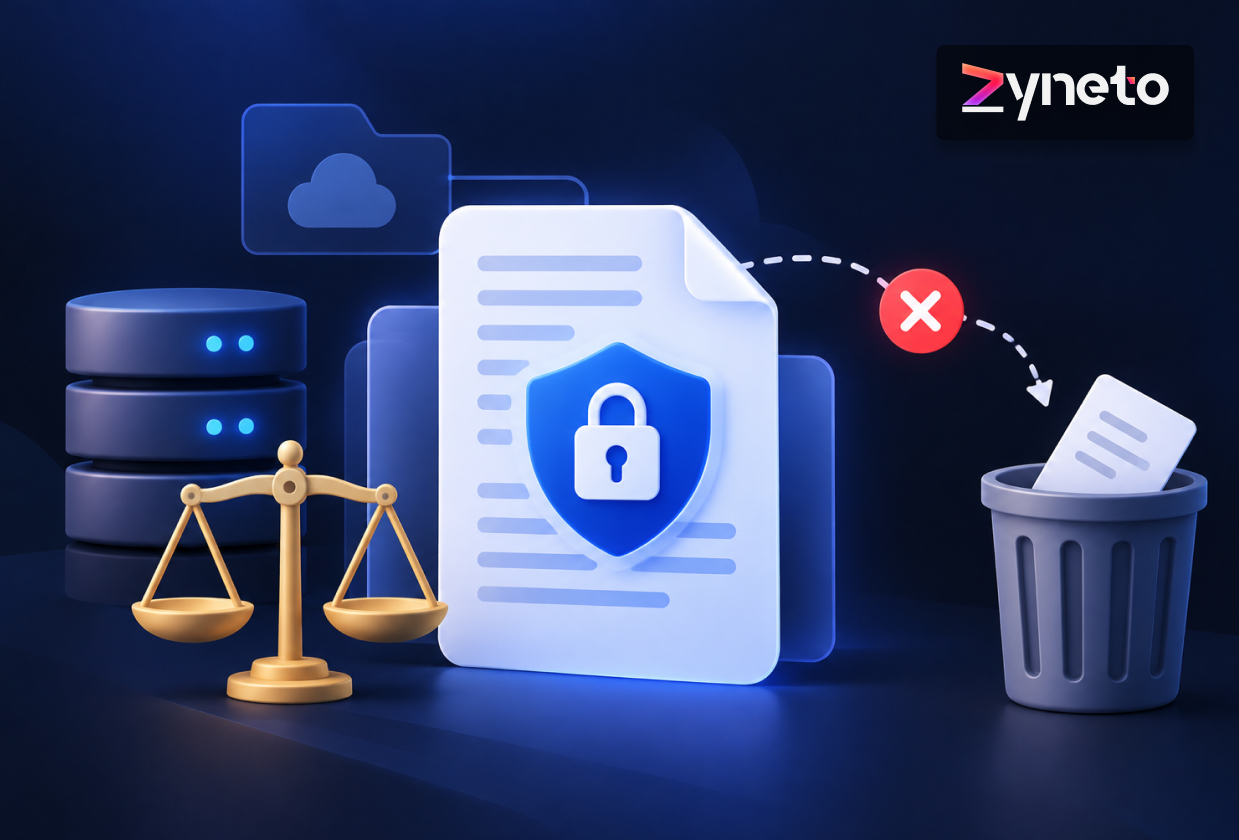
Blockchain creates a timestamped, tamper-proof record of ownership and creation.
This makes it significantly easier for artists to prove authorship and defend their copyright in disputes, since the blockchain entry cannot be retroactively altered.
With decentralized music streaming, artists can retain more control over their master recordings and publishing rights instead of signing them away to a label.
Fractional ownership models, powered by tokenization, even allow fans to own a share of a song's future royalties.
Because blockchain data is distributed across multiple nodes rather than stored in one central server, it's inherently more resistant to hacking, data breaches, and unauthorized tampering a critical advantage for protecting sensitive royalty and identity data.
Blockchain isn't just theoretical in music it's already being applied in practical ways:
One of the biggest advantages of blockchain in music app development is automated royalty distribution.
Smart contracts instantly calculate and distribute earnings to artists, producers, composers, and other contributors based on predefined ownership percentages.
This eliminates payment delays, reduces disputes, and ensures every stakeholder receives their fair share with complete transparency after each stream or download.
The integration of blockchain in music app platforms creates a tamper-proof record of music ownership and licensing rights.
Every song, sample, or composition is securely recorded on the blockchain, making it easier to verify ownership, manage licenses, and resolve copyright disputes.
This improves trust among artists, labels, and distributors while protecting intellectual property.
Artists can use blockchain-powered platforms to raise funds directly from their fans by offering tokenized ownership, exclusive content, or future royalty shares.
This approach reduces dependence on record labels and opens new revenue opportunities.
As adoption grows, blockchain technology in the music streaming industry is helping creators build stronger relationships with their audiences while securing financial support.
Blockchain helps music platforms issue verifiable digital tickets and authenticated merchandise certificates.
Each ticket or product is uniquely recorded, making duplication and counterfeiting extremely difficult.
Fans can confidently purchase event tickets or collectibles, while artists and organizers reduce fraud, unauthorized resales, and ticket scalping through secure blockchain verification.
Blockchain enables artists to receive payments directly from their audience without relying on intermediaries that charge high transaction fees.
Fans can send tips, purchase exclusive content, or subscribe to creators using secure blockchain transactions.
This payment model increases artist earnings, improves financial transparency, and strengthens the connection between musicians and their supporters.
These use cases show that blockchain music app development isn't limited to niche crypto experiments; it's solving real, longstanding problems in music distribution and monetization.
Several platforms have pioneered blockchain adoption in the music space, each focusing on different aspects of the ecosystem. Common features across these platforms include:
While specific platforms and market positions evolve rapidly, the pattern is consistent: blockchain shifts value and control away from centralized gatekeepers and toward artists and fans directly.
If you're planning to build a blockchain music platform, here are the essential features for your music app to consider:
1. Decentralized Storage – Storing music files and metadata across networks like IPFS rather than centralized servers.
2. Smart Contract Royalty Engine – Automated logic that calculates and distributes payments based on pre-set rules.
3. Digital Wallet Integration – Letting artists and fans send and receive payments in cryptocurrency or fiat-pegged tokens.
4. NFT Minting Capability – Enabling artists to tokenize songs, albums, or exclusive content.
5. Transparent Analytics Dashboard – Giving artists real-time visibility into streams, revenue, and audience data.
6. Identity and Rights Verification – Confirming ownership and authorship through digital signatures.
7. Multi-Party Royalty Splitting – Supporting complex collaborations with multiple rights holders.
8. Governance Tools – Enabling community voting on platform decisions for token-based platforms.
9. Cross-Platform Compatibility – Ensuring the app works seamlessly across mobile, web, and desktop.
10. Compliance and KYC Modules – Meeting regulatory requirements for payments and token transactions.
Smart contracts for music are self-executing agreements coded directly onto the blockchain. They remove the need for manual processing by automatically enforcing the terms of a deal once specific conditions are met.
In music licensing, this means a smart contract can be programmed to:
This automation drastically reduces the administrative overhead of music licensing on blockchain, cutting out lawyers, accountants, and collection agencies for many routine transactions. It also reduces disputes, since the terms are transparent and enforced automatically rather than subject to interpretation or delayed manual processing.
For labels and distributors, smart contracts mean lower operational costs. For artists, they mean faster, more predictable income and fewer surprises when royalty statements finally arrive.
NFTs (non-fungible tokens) have opened an entirely new revenue stream for musicians.
An NFT music platform allows artists to tokenize unique digital assets a limited-edition track, unreleased demo, concert ticket, or even a piece of album artwork—and sell them directly to fans as verifiable, ownable digital collectibles.
Tokenization goes a step further by allowing fractional ownership of a song's royalty stream.
Instead of an artist needing to sell 100% of their rights to a label for an upfront advance, they can tokenize a percentage of future royalties and sell shares to fans or investors. This creates a new funding model where supporters directly benefit from a song's commercial success.
Key applications of NFTs and tokenization in music include:
While the NFT market has matured significantly since its early hype cycle, tokenization remains a compelling tool for artists looking to build direct, ongoing financial relationships with their most loyal fans.
Despite its promise, blockchain adoption in music isn't without obstacles:
Challenge: Music streaming platforms process millions of plays every day. Traditional public blockchains may struggle to handle this transaction volume without increasing processing time or costs.
Solution: Layer-2 networks, sidechains, and high-performance blockchains can process transactions much faster while keeping costs low, making them suitable for large-scale music streaming applications.
Challenge: Some blockchain networks, especially those using Proof of Work (PoW), consume significant energy, raising environmental concerns.
Solution: Modern blockchain platforms now use energy-efficient Proof of Stake (PoS) consensus, allowing music apps to reduce their environmental impact without sacrificing security.
Challenge: Laws around cryptocurrencies, digital assets, and tokenized royalties differ across countries, making compliance difficult for global music platforms.
Solution: Partnering with legal experts, following regional regulations, and designing flexible payment systems help music apps remain compliant as regulations continue to evolve.
Challenge: Record labels, publishers, and royalty collection agencies may hesitate to adopt blockchain because it changes traditional revenue and rights management models.
Solution: Rather than replacing existing stakeholders, blockchain platforms can integrate with current systems, offering greater transparency while preserving established business relationships.
Challenge: Wallets, private keys, gas fees, and blockchain terminology can overwhelm users who simply want to stream music.
Solution: Simplified onboarding, hidden blockchain processes, and seamless in-app payments create a familiar user experience while the blockchain operates in the background.
Challenge: Moving existing music catalogs, ownership records, and licensing databases to blockchain infrastructure is technically and legally complex.
Solution: A phased migration strategy, API-based integrations, and experienced blockchain developers can modernize music platforms without disrupting existing operations.
Overcoming these challenges requires platform design that abstracts blockchain complexity away from end users while still delivering transparency and automation.
Building a blockchain-based music app requires more than adding smart contracts. Here's a step-by-step roadmap to create a secure, transparent, and future-ready music platform.
Start by identifying what makes your blockchain-powered music app unique. You might focus on transparent royalty payments, decentralized music streaming, NFT-based collectibles, or copyright management.
A clear value proposition helps shape your features, target audience, and long-term business strategy while solving real challenges for artists and listeners.
Selecting the right blockchain is critical for performance and scalability. Compare networks based on transaction speed, fees, security, developer support, and ecosystem maturity.
The right infrastructure ensures your blockchain-based music app delivers seamless streaming, secure payments, and reliable smart contract execution as your platform grows.
Smart contracts automate royalty distribution, licensing agreements, and artist payments without manual intervention.
Design them carefully to ensure every transaction follows predefined rules.
Well-written contracts reduce disputes, improve transparency, and build trust between artists, labels, distributors, and listeners using your music platform.
Instead of relying solely on centralized servers, use decentralized storage solutions to securely host music files and metadata.
This improves content integrity, reduces the risk of tampering, and ensures your blockchain-based music streaming app offers reliable access while protecting valuable digital assets.
Allow users to make secure cryptocurrency payments, receive royalties, or purchase digital assets directly within the app.
Supporting both crypto wallets and traditional payment methods creates a smoother experience, making your platform accessible to blockchain enthusiasts as well as mainstream music fans.
Blockchain technology should work behind the scenes without overwhelming users.
Design a clean, intuitive interface that hides technical complexities like wallet management or gas fees.
A frictionless experience encourages artists and listeners to adopt your platform with confidence and minimal learning.
Thoroughly test smart contracts, payment workflows, wallet integrations, and security before launch.
Since blockchain transactions are permanent, even small coding errors can become costly.
Rigorous testing helps ensure your blockchain-powered music app is secure, reliable, and ready for real-world usage.
Music licensing, royalty distribution, digital assets, and cryptocurrency payments are governed by different regulations worldwide.
Work with legal experts to ensure your platform complies with copyright laws, financial regulations, and data privacy requirements before launching in multiple markets.
Release your platform with a small group of artists and listeners to validate your idea.
Monitor user behavior, collect feedback, and continuously improve features based on real-world insights.
Regular updates help your blockchain music app remain competitive as technology and user expectations evolve.
Partnering with an experienced blockchain app development company can significantly reduce the risk and complexity of this process, since music-specific blockchain development requires expertise in both entertainment industry standards and distributed ledger technology.
To build a music app with blockchain integration, you need a top-notch tech stack. The technologies we are listing below support everything from decentralized storage and smart contracts to seamless streaming and real-time user experiences:
|
Component |
Recommended Technologies |
|
Frontend |
React.js, Next.js, Flutter |
|
Backend |
Node.js, NestJS, Python (FastAPI) |
|
Blockchain Network |
Ethereum, Polygon, Solana, BNB Chain |
|
Smart Contract Language |
Solidity, Rust |
|
Decentralized Storage |
IPFS, Arweave |
|
Database |
PostgreSQL, MongoDB |
|
Wallet Integration |
MetaMask, WalletConnect, Coinbase Wallet |
|
Authentication |
OAuth 2.0, Firebase Authentication, JWT |
|
Payment Gateway |
Stripe, MoonPay, Coinbase Commerce |
|
Cloud & Hosting |
AWS, Microsoft Azure, Google Cloud |
|
CDN & Media Streaming |
Cloudflare, AWS CloudFront |
|
Analytics |
Google Analytics, Mixpanel, Firebase Analytics |
|
DevOps & CI/CD |
Docker, Kubernetes, GitHub Actions |
|
Monitoring |
Prometheus, Grafana, Sentry |
Selecting the right combination depends on your platform's specific goals, expected transaction volume, and target audience's technical familiarity with cryptocurrency.
The cost to develop a music app with blockchain depends on the platform's complexity, blockchain network, smart contract functionality, streaming features, and third-party integrations. A basic app with wallet integration and royalty management costs significantly less than an enterprise-grade platform with NFT support, decentralized storage, and AI-powered recommendations.
Here's a general cost breakdown:
|
App Complexity |
Estimated Cost |
Development Timeline |
|
Basic |
$30,000 – $60,000 |
3–5 Months |
|
Medium |
$60,000 – $120,000 |
5–8 Months |
|
Advanced |
$120,000 – $250,000+ |
8–12+ Months |
The best way to estimate your budget is to define your feature set and business goals before development begins.
A phased approach with an MVP can help you launch faster, validate your idea, and scale your blockchain music app as your user base grows.
The future of blockchain in the music industry goes beyond secure payments and royalty tracking. As blockchain technology matures, it will reshape how artists create, distribute, monetize, and connect with fans. Here are some key trends expected to drive the next generation of music platforms.
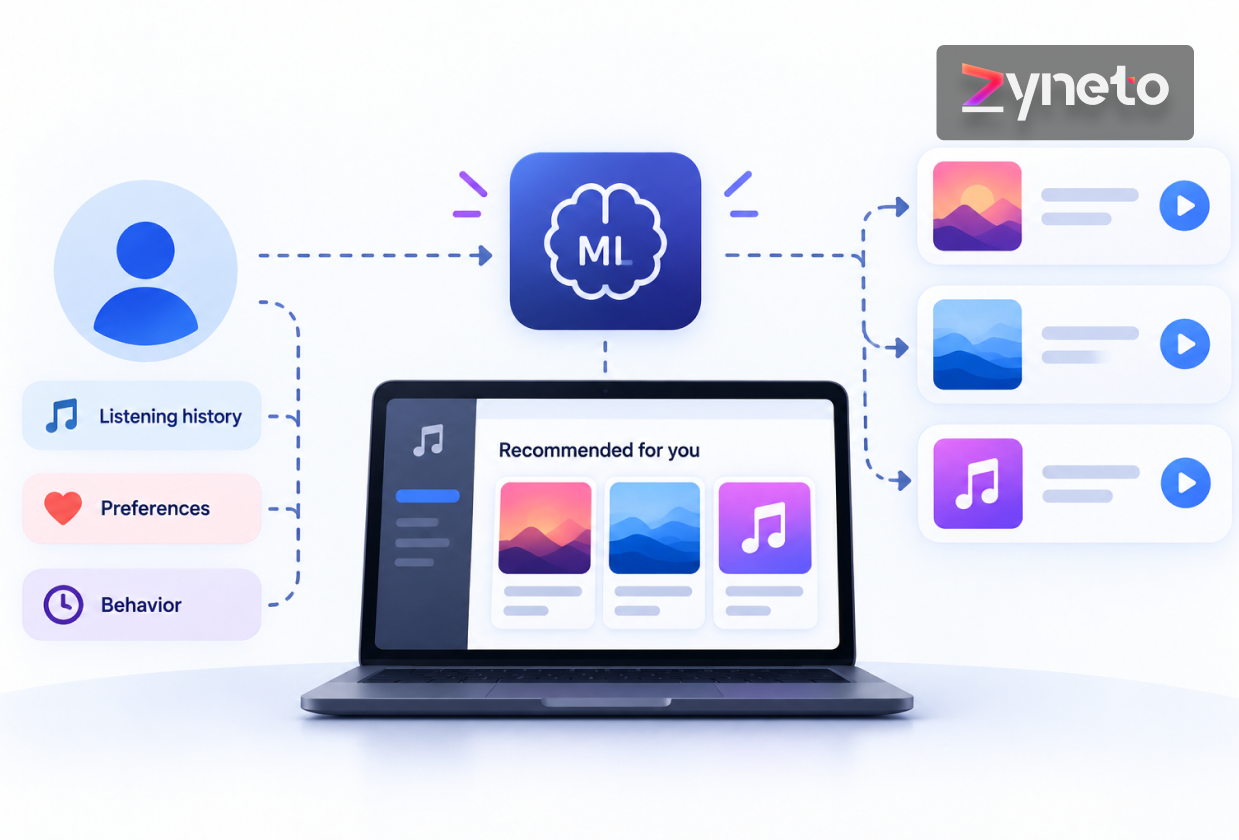
Artificial intelligence will combine with blockchain to deliver personalized music recommendations while maintaining transparent ownership and royalty records.
AI can analyze listener behavior, while blockchain ensures creators are compensated fairly for every stream, remix, or AI-generated composition.
Music ownership is expected to become more accessible through tokenization.
Artists will be able to sell fractional ownership of songs or albums, allowing fans and investors to earn a share of future royalties while supporting creators directly through blockchain-powered ecosystems.
More streaming platforms will adopt decentralized infrastructure to reduce dependence on intermediaries.
This approach gives artists greater control over their content, improves revenue distribution, and creates a fairer ecosystem where payments reach creators faster and with greater transparency.
NFTs will evolve beyond digital collectibles into exclusive fan memberships, VIP concert access, unreleased tracks, and limited-edition merchandise.
Blockchain will help artists build stronger communities while creating recurring revenue opportunities through verified digital ownership and exclusive experiences.
Future blockchain networks will enable seamless royalty tracking across multiple streaming platforms, social media channels, and digital marketplaces.
Instead of managing payments separately, artists will receive consolidated, real-time earnings through a single transparent blockchain-based royalty management system.
These trends suggest that blockchain in music industry applications will move from experimental features to foundational infrastructure over the coming years.
Building a successful blockchain music platform requires more than technical blockchain knowledge it demands a deep understanding of music industry workflows, royalty structures, and the user experience expectations of both artists and listeners.
Zyneto brings together the expertise needed to build modern blockchain-powered music platforms.
As a music streaming app development company, we design and develop custom blockchain music app solutions tailored to your business goals.
Whether you need transparent royalty management, NFT-based fan engagement, or a fully decentralized streaming ecosystem, our team can help turn your vision into reality.
Our approach focuses on:
If you're exploring blockchain music app development, Zyneto can help you navigate the technical and strategic decisions needed to build a platform that stands out in an increasingly competitive market.
Blockchain in music app development is transforming the way artists create, distribute, and monetize their work.
From automated royalty payments and secure copyright management to NFT-powered engagement and decentralized streaming, blockchain offers a more transparent and efficient music ecosystem.
While challenges like scalability and evolving regulations still exist, continuous innovation is making blockchain more practical for mainstream adoption.
Businesses looking to build the next generation of music platforms should focus on the right technology, secure smart contracts, and a seamless user experience.
By partnering with an experienced development team like Zyneto, you can create a scalable, future-ready blockchain music app that delivers lasting value for both artists and listeners.
Blockchain in music apps refers to using distributed ledger technology to record music transactions, such as streams, royalty payments, and ownership rights, in a transparent, tamper-proof way that removes reliance on centralized intermediaries.
Blockchain uses smart contracts to automatically calculate and distribute royalty payments the moment a triggering event (like a stream or sale) occurs, eliminating the lengthy manual processing typical of traditional royalty systems.
Blockchain can't eliminate piracy entirely, but it significantly strengthens copyright protection by creating an immutable, timestamped record of ownership that makes it easier to prove authorship and pursue action against unauthorized use.
Smart contracts are self-executing agreements coded onto a blockchain that automatically enforce licensing terms and royalty splits once predefined conditions are met, removing the need for manual administrative processing.
Costs vary significantly based on features like NFT minting, multi-party royalty splitting, and compliance requirements. A basic MVP requires a smaller investment, while enterprise-grade platforms with full decentralized infrastructure require substantially more budget for development, security auditing, and legal compliance.

Vikas has around fifteen years of experience building software and now builds generative AI systems at Zyneto. His work covers retrieval augmented generation, agentic AI, knowledge graphs, AI memory, and the evaluation and guardrails that decide whether any of it is safe to put in front of customers. He has shipped enterprise copilots, document AI, chatbots and predictive analytics for e-commerce, fintech and marketing teams, and works day to day in Python, JavaScript and SQL. He follows multimodal models, business process automation and enterprise AI security closely, and mentors engineers moving into AI. He writes about architecture, inference cost and the failure modes that only show up at production scale.
Share your details and we will talk soon.
Be the first to access expert strategies, actionable tips, and the trends actually shaping the digital world. No fluff - just practical insights delivered straight to your inbox.
Dive into our blog and stay ahead of the curve with expert perspectives, future-ready trends, and tech tips written for decision-makers and doers alike.