How Do Dating App Algorithms Work?


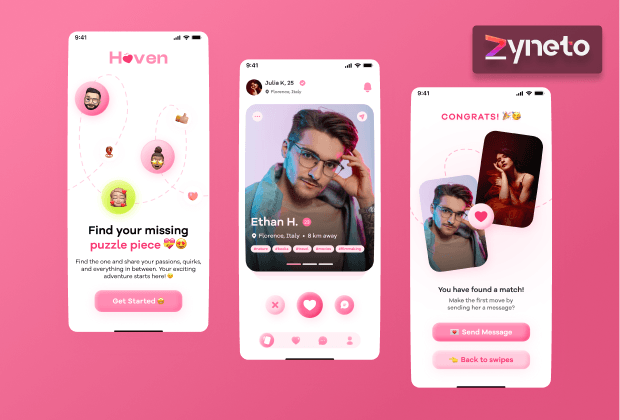
Let's be honest, swiping left or right feels almost too simple, right?
You tap a button, and somehow, the app knows exactly who to show you next. It feels almost… magical.
But there's no magic here. What's actually happening behind the scenes is far more fascinating.
Modern dating apps run on powerful dating app algorithms, complex systems designed to analyze who you are, how you behave, and who you're most likely to connect with.
These algorithms are constantly working in the background, learning from every swipe, every match, every conversation you have (or don't have).
They're not just random. They're built to give users better chances at finding someone real.
So the next time a user opens Tinder, Hinge, or Bumble, just know there's a whole intelligent system working overtime to find your person.
Let's see exactly how it all works:
Dating app algorithms are really smart matchmakers, ones that never sleep and never get tired of users’ profiles.
In layman's terms?
It's a set of rules and calculations that a dating app uses to decide which profiles to show you and in what order.
Unlike traditional matchmaking, a dating app algorithm works on data.
It understands user age, location, interests, past swipes, how long they stare at a profile, and even when they’re most active on the app.
Traditional matchmaking is based on human judgment and social context.
Algorithms are based on patterns, thousands of tiny signals a user sends without even realizing it.
The result? A system that gets smarter the more you use it, always refining who it thinks is your ideal match.
It's easy to assume these apps are just randomly shuffling profiles at you.
But the truth is much more structured, and honestly, pretty impressive.
So, how do dating algorithms work? Let's break it down step by step.
The moment a user creates their profile, the algorithm starts collecting data. Your age, location, the photos you upload, the bio you write, your preferences, all of it feeds into the system.
And once they start using the app, behavioral data kicks in. Which profiles did they swipe right on? How fast? Which ones did they skip immediately?
Once the app has their data, it starts comparing it to other users.
It ranks potential matches based on compatibility signals, shared interests, similar activity patterns, and mutual attraction.
Different apps weigh these signals differently, but the goal is always the same: show you the people you're most likely to actually connect with.
This is where it gets really smart. The algorithm doesn't just set matches and forget about them. It keeps learning.
Every swipe, every reply, every ignored message teaches the system something new about the preferences.
Over time, the recommendations get sharper, more accurate, and more personalized, almost like the app is getting to know the user better than they know themselves.
Not all dating apps use the same playbook.
Different platforms have built very different systems depending on what they want you to experience: speed, depth, or something in between.
Understanding the algorithms of dating app platforms can actually help you use them more strategically, and maybe even get better results.
Here's a look at the three main types you'll come across:
You might know ELO from chess; it's a scoring system that ranks players based on wins and losses.
Tinder borrowed this idea in its early days.
Every profile had a hidden "desirability score." When someone swiped right on you, your score went up. When they swiped left, it dipped a little.
The app would then show your profile to people with a similar score, so highly liked profiles saw other highly liked profiles, and so on.
It was basically a popularity contest running silently in the background.
Tinder has since moved away from this model, but developers who want to make an app like Tinder still study this ranking logic closely.
Its influence on how dating apps think about matching is still very much alive.
OkCupid takes a very different approach, and honestly, a more thoughtful one.
Instead of just looking at who swipes right on you, it asks you questions. Lots of them.
Your answers help the app figure out your values, dealbreakers, lifestyle, and what you actually want in a partner.
It then calculates a compatibility percentage between you and other users based on how aligned your answers are.
So instead of just matching you with whoever's hot and nearby, it tries to match you with someone you'd genuinely get along with.
It's slower, more intentional, and for people who are serious about finding a real connection, it often works better.
Hinge calls itself "the app designed to be deleted", and its algorithm is built around that mission.
It doesn't just track who you like. It tracks how you interact with profiles.
Did you send a message after matching? Did you actually go on a date? Did you unmatch quickly?
Hinge uses this behavioral data, combined with AI, to predict which matches are most likely to lead to real conversations and real dates.
It's less about surface-level attraction and more about predicting genuine chemistry.
As you keep using the app, it keeps learning, and the suggestions get more and more dialed in to what actually works for you.
Dating apps have come a long way from simple profile browsing.
Today, the most successful platforms are powered by artificial intelligence and machine learning, and these technologies are fundamentally changing how users find connections.
Let’s get to know how algorithms in dating apps can be uplifted:
When a user opens a dating app, smart recommendation engines get to work immediately.
They study behavior in real time, which profiles get attention, how long a user spends on a bio, and what their swiping patterns look like.
The result is a feed that feels personally curated, not randomly generated. However, it might increase the cost to develop your dating app.
Machine learning models analyze patterns across millions of interactions to predict what a user actually wants, sometimes before the user figures it out themselves.
From communication style to shared values, the algorithm builds a detailed preference profile silently.
If you're building a dating app, retention isn't a feature; it's the foundation. The most successful platforms in this space are built around specific mechanics that turn one-time installs into daily habits.
Users keep swiping because they don't know what comes next. That unpredictability is intentional. Tinder, Hinge, and Bumble are all built around variable reward mechanics that make opening the app feel automatic, not deliberate.
The right notification at the right moment brings users back. Bumble's 24-hour match expiry is a strong example; it creates urgency without feeling forced, and it works.
Strong retention products give users a daily reason to return. Daily like limits, curated match refreshes, and timed features aren't random; they're habit-formation mechanics built directly into the product.
Showing users that the platform is working for them, through profile performance signals or activity nudges, increases both retention and premium conversion.
Most apps lose users in the first 72 hours. The ones that don't engineer a meaningful first moment, a match, a like, a real interaction, before the user has any reason to leave.
For anyone building in this space, these mechanics aren't nice-to-haves. They're what separate apps that scale from apps that stall.
The algorithm is the heart of your dating app. If it connects the right people at the right time, users stay.
If it doesn't, they leave, and they don't come back.
Understanding how dating app algorithms work is the first step to building one that actually drives results.
Here's what the best ones get right:
Users say one thing and do another.
A strong algorithm watches actions, who they swipe on, who they message, how long they engage, and uses that data to improve match quality over time.
Algorithms like Hinge's are built around two-way interest.
When both users engage with similar profiles or respond positively to the same prompts, the system surfaces them to each other. Compatibility isn't just about filters; it's about patterns.
A stale feed kills engagement.
Your algorithm should balance new profiles with highly compatible ones so users always feel like something worth their attention is waiting.
Matching an active user with someone who hasn't opened the app in two weeks hurts the experience.
The best algorithms weigh recency and activity so users are matched with people who are actually present.
Every skip, every match, every conversation started or abandoned is data.
Build your algorithm to learn from these signals and get sharper over time; that's what separates good apps from great ones.
These algorithms have come a long way from simple filter-based matching.
What's coming next is smarter, faster, and far more personalized, and for anyone building in this space, staying ahead of these shifts is a real competitive advantage.
The next generation of dating app matchmaking algorithms won't just match on preferences; they'll predict compatibility based on conversation patterns, response times, and behavioral data.
AI is moving from a buzzword to a core infrastructure layer in how algorithms for dating apps actually function.
Photos and bios are becoming less relevant.
Leading platforms are already experimenting with matching users based on how they communicate, their tone, humor, and conversation style, rather than what they look like on paper.
Future algorithms will factor in real-time context, time of day, location patterns, and even mood signals inferred from app behavior.
The goal is to surface the right match at the moment a user is most likely to engage.
As video becomes native to mobile behavior, algorithms will begin to incorporate voice tone and video-interaction data as compatibility signals that how you talk matters as much as what you say.
Users are becoming more aware of how their data is used. The platforms that win in 2026 and beyond will be the ones that deliver highly personalized matching while being transparent about how their dating app matchmaking algorithm actually works.
The future isn't just smarter algorithms; it's algorithms that users actually trust.
Most dating apps don't fail because of bad design. They fail because the algorithm behind them wasn't built to scale, learn, or retain users past the first week.
That's exactly the problem Zyneto's dating app development services are built to solve.
We work with startups and enterprises that know what they want to build and need a technical partner who knows how to build it right.
From matchmaking logic to behavioral feedback loops, we handle the complexity so you can focus on growth.
Our team builds every layer of your dating app with retention and engagement baked in from day one, not added as an afterthought.
If you're ready to build something that lasts, let's talk.
Dating app matchmaking algorithms aren't just technical infrastructure; they're the core of your product's value. How well your algorithm matches users, retaining them, and improves over time directly determines whether your app grows or gets deleted after the first week.
For startup owners and enterprises entering this space, the opportunity is real, but so is the complexity. The apps winning in 2026 aren't the ones with the most features. They're the ones with the smartest, most user-centric algorithms behind them.
If you're serious about building a dating app that scales, the algorithm isn't something to figure out later. It's where you start.
Dating app algos analyze user behavior, preferences, location, and activity patterns to decide which profiles to show and in what order. The more a user interacts with the app, the smarter and more personalized the recommendations become.
An effective algorithm goes beyond basic filters. It learns from real user behavior, factors in mutual compatibility signals, keeps the match feed fresh, and continuously improves through feedback loops, all of which directly impact retention and user satisfaction.
It depends on the complexity of your matching logic and the features you want to include. A basic algorithm can be built in a few months, while an AI-powered, behavior-driven system typically requires more planning, data architecture, and development time.
Yes, by going niche. The most successful newer dating apps win by serving a specific audience exceptionally well, with a matching algorithm tailored to that community's needs, rather than trying to replicate what large platforms already do at scale.
Zyneto offers end-to-end dating app development services, including custom algorithm architecture, AI integration, behavioral feedback loops, and ongoing optimization. We work with startups and enterprises to build platforms that are built to retain users and scale from day one.

Vikas has around fifteen years of experience building software and now builds generative AI systems at Zyneto. His work covers retrieval augmented generation, agentic AI, knowledge graphs, AI memory, and the evaluation and guardrails that decide whether any of it is safe to put in front of customers. He has shipped enterprise copilots, document AI, chatbots and predictive analytics for e-commerce, fintech and marketing teams, and works day to day in Python, JavaScript and SQL. He follows multimodal models, business process automation and enterprise AI security closely, and mentors engineers moving into AI. He writes about architecture, inference cost and the failure modes that only show up at production scale.
Share your details and we will talk soon.
Be the first to access expert strategies, actionable tips, and the trends actually shaping the digital world. No fluff - just practical insights delivered straight to your inbox.
Dive into our blog and stay ahead of the curve with expert perspectives, future-ready trends, and tech tips written for decision-makers and doers alike.