How Do Restaurant Apps Make Money?


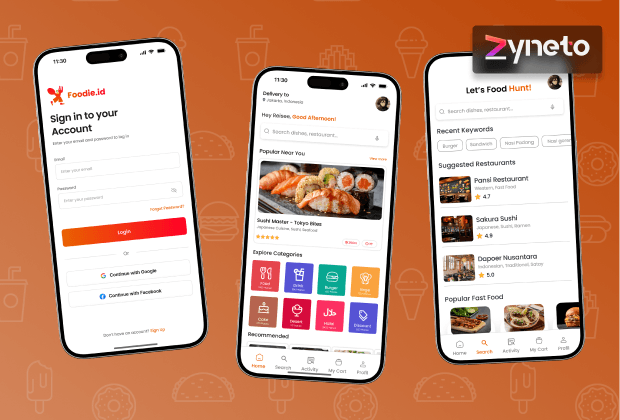
Nearly 70% of consumers say they prefer using smartphone apps to place orders at quick-service restaurants (QSRs) when available.
This shows people eat three times a day, seven days a week, 365 days a year- and increasingly, they’re doing it through an app.
DoorDash crossed $10 billion in revenue, which is a huge sign that food and restaurant businesses have immense capabilities to generate money.
Which is where investors Google how a restaurant app makes money?
The truth is, most successful restaurant apps have multiple monetization models that include delivery fees, commissions, and ads.
So let's break down exactly how restaurant apps make money, one revenue stream at a time.
Let’s face it, food-ordering habits have changed completely.
During COVID, people who never ordered online started doing it regularly, and even after restrictions ended, the habit stayed.
That’s when restaurant apps introduced different monetization models to turn growing demand into revenue.
Explore below the different strategies that you can use while developing a restaurant app:
Every order placed through a delivery app triggers a commission from the restaurant. This isn't a small cut; it's the single largest revenue driver across all major platforms, and it runs silently in the background of every single transaction.
Here's what that typically looks like:
What makes this model so powerful is that it scales automatically. The platform doesn't need to hire more staff or build more technology every time order volume increases. Revenue just grows with demand.
For restaurant owners, these fees are a constant frustration. But from a business model perspective, commissions are the engine that keeps everything else running and any serious restaurant app monetization model starts here.
Most users assume the delivery fee goes entirely to the driver. It doesn't.
The platform retains a portion of every delivery fee charged to the customer. Which means on one single transaction, the app is collecting money from two different directions simultaneously:
Two revenue streams. One order. No inventory owned. No kitchen is operating.
Delivery fees typically range from $1.99 to $7.99 per order under normal conditions, and go higher during peak hours or bad weather. Users have been conditioned to accept this as the "cost of convenience," which is exactly why it works so well.
This dual-sided revenue structure is one of the core reasons restaurant apps make money at scale, even without owning a single kitchen or vehicle. It's simple, repeatable, and compounds with every order placed on the platform.
DashPass. Uber One. Grubhub+. Every major platform has one and there's a very good reason for that.
Subscriptions are the single most powerful restaurant app monetization strategy available today. Here's what they typically offer:
But the real value isn't the subscription fee itself it's what subscriptions do to user behavior.
When someone has paid for the month, they psychologically need to "get their money's worth." So they order more frequently. They abandon their cart less. They stay loyal to one platform instead of switching between competitors.
Subscription users churn at a fraction of the rate non-subscribers do. They're more engaged, more profitable, and more likely to refer others.
If you're working with a mobile app development company to build a restaurant app, a subscription tier isn't a feature to add later it's a core revenue pillar to build around from day one.
Beyond delivery fees, there's another layer most users barely notice until they're at checkout.
Service fees are calculated as a percentage of the order subtotal usually between 5% and 15% and go directly to the platform.
Unlike delivery fees, they have nothing to do with getting food from one place to another. They're simply the platform's cut for providing the technology and marketplace.
Many apps also charge a small order fee when an order falls below a minimum threshold. This does two things at once:
These fees are usually visible at checkout clear enough to be legal, but not prominent enough to cause cart abandonment.
Platforms have spent years A/B testing exactly where that line is. For the platform, service fees across millions of monthly orders add up to hundreds of millions in annual revenue.
Open any major delivery app right now and look at the top of your restaurant feed. See those "Sponsored" tags? Those restaurants are paying to be there and that advertising revenue sits entirely on top of commissions and fees.
Here's what the advertising ecosystem inside a restaurant app typically looks like:
What makes this such an attractive restaurant app monetization model is that it requires zero additional operational infrastructure. The platform is already running.
The users are already there, already hungry, already with payment info saved. That's one of the most valuable advertising audiences that exists, and restaurants know it.
As the platform's user base grows, this ad inventory becomes more valuable. It's a revenue stream that compounds over time.
Ever noticed that delivery feels more expensive on a Friday night than on a Tuesday afternoon? That's surge pricing, and it's one of the more sophisticated tools in the restaurant app monetization strategy playbook.
During high-demand periods, platforms automatically increase delivery and service fees. This includes:
Surge pricing serves two purposes simultaneously. First, it generates significantly more revenue per order during the platform's busiest periods. Second, it brings more drivers online by offering better per-delivery earnings keeping supply aligned with demand.
The algorithm behind it is sophisticated factoring in real-time driver availability, order volume, weather, and historical demand patterns. Most users don't think twice about it. They're hungry, they want convenience, and the platform has already calculated exactly what they're willing to pay.
Not every restaurant app monetization model is built around end consumers. Some of the most successful platforms in this space make their money by selling their technology to other businesses entirely.
Platforms like Toast, Olo, and ChowNow have built entire businesses around licensing their ordering and restaurant management technology as white-label solutions. Here's how it works:
The brilliance of this model is that the technology is built once and sold infinitely. There's no meaningful marginal cost to adding a new client. Revenue is recurring and highly predictable.
And the relationships are sticky. Once a restaurant chain integrates its entire ordering operation into a platform, switching costs are enormous operationally, financially, and logistically.
Every time a customer pays through a restaurant app, money moves through a payment processing system. And for platforms that control that layer, it's a remarkably reliable revenue stream.
Here's how payment processing monetization typically works:
For a restaurant doing strong annual sales, payment processing fees to the platform can reach tens of thousands of dollars per year, from a single location. Multiply that across thousands of restaurant clients, and the numbers become substantial fast.
For apps that control the full transaction flow ordering, payment, and fulfillment owning the payment layer is one of the highest-leverage monetization decisions available. It turns every transaction into a revenue event at multiple levels simultaneously.
Not every restaurant app is built around delivery. Some of the biggest players in the space make their money entirely from reservations and the model is clean, outcome-based, and scalable.
Platforms like OpenTable and Resy operate on models that include:
What makes the reservation model work so well is that it ties revenue directly to outcomes. Restaurants only pay when the platform actually delivers a customer to their table — which makes the value proposition easy to justify and the sales conversation straightforward.
With platforms seating hundreds of millions of diners annually, even a modest per-cover fee generates enormous revenue at scale.
As more restaurants invest in reservation management and waitlist technology, this segment of the restaurant app market continues to grow, and the monetization potential grows with it.
Loyalty programs and gift cards look like customer retention tools on the surface. But underneath, they're a genuinely clever restaurant app monetization strategy with multiple revenue mechanisms built in.
Here's how the money actually works:
Starbucks built one of the most profitable businesses in food service history largely on the back of its loyalty app. The lesson is clear loyalty programs aren't a cost center. They're a revenue engine disguised as a customer perk.
Here's the truth most people won't tell you:
There's no single "best" monetization model for a restaurant app.
The right model depends entirely on who you're building for, what problem you're solving, and how you plan to grow.
Picking the wrong monetization strategy at the start doesn't just hurt your revenue it can kill your entire product.
So before you decide how your app will make money, ask yourself these critical questions and consider these key factors:
Everything starts here.
Are you building for customers who want cheap, fast delivery? Or for food enthusiasts willing to pay a premium for exclusive restaurant access?
A price-sensitive audience will resist high service fees but respond beautifully to a subscription model that promises savings.
A premium audience will happily pay for exclusive reservations, early access, and VIP perks without blinking.
The monetization model you choose also directly influences the cost of creating a restaurant app.
Are you a marketplace connecting restaurants and customers? A SaaS tool helping restaurants manage orders? Or a reservation platform filling tables?
Each position demands a different monetization approach.
Marketplaces thrive on commissions and delivery fees. SaaS platforms win with monthly subscriptions. Reservation tools monetize per cover or per booking.
Trying to force a commission model onto a SaaS product, or vice versa is a recipe for confusion, friction, and churn.
Know exactly where you sit in the ecosystem before you decide how to charge for it.
The most dangerous thing you can do is depend entirely on one way of making money.
Commission fees alone make you vulnerable to restaurant backlash. Delivery fees alone push customers toward competitors. Subscriptions alone take time to scale.
The smartest restaurant apps layer their monetization commissions at the base, subscriptions for loyalty, advertising for scale, and data insights for the long game.
Start with one primary model. But always be building toward multiple streams that reinforce each other.
Some models work brilliantly at a small scale but break at a large scale and vice versa.
Per-cover reservation fees are perfect for a boutique platform with 500 restaurant partners. But they become operationally complex and harder to manage at 50,000 partners.
Advertising revenue, on the other hand, is almost worthless until you have serious traffic but becomes enormously valuable once you do.
Map out what your monetization model looks like at 1,000 users, 100,000 users, and 10 million users. If it doesn't scale cleanly, redesign it before you build it.
DoorDash, Uber Eats, and OpenTable have spent billions figuring out what works.
Study their models obsessively. Understand why they charge what they charge and how they structure their fees.
Then find the gap, the customer segment they're ignoring, the restaurant type they're underserving, and the pricing model that feels fairer and more transparent.
And if you really want an edge, use AI for restaurant app competitive analysis to spot pricing gaps and demand patterns your competitors aren't acting on yet.
This one is counterintuitive but critically important.
Hidden fees, confusing pricing, and aggressive upsells might boost your revenue in the short term. But they destroy trust, and in the restaurant app world, trust is everything.
Restaurants talk to each other. Customers leave reviews. Word spreads fast.
Build a monetization model that feels fair, transparent, and genuinely valuable to everyone involved: restaurants, customers, and drivers alike.
The apps that win long-term aren't the ones that extract the most from every transaction. They're the ones that make every party feel like they got a good deal.
That's how you build a monetization model that lasts.
Knowing the revenue streams is one thing; building them into your app the right way is a completely different challenge.
That's where Zyneto comes in.
As a specialized restaurant app development company, Zyneto doesn't just build apps that look good; we build apps that make money.
If you want to integrate commission logic, set up a subscription tier, plug in a dynamic pricing engine, or build an in-app advertising layer, we've done it before.
We work with your business model, not against it. Every monetization feature we build is designed to feel seamless to the user and profitable for you.
No bloated timelines. No guesswork. Just a revenue-ready product built right the first time.
The most successful restaurant apps don't rely on a single revenue stream.
They build layered monetization models where multiple streams reinforce each other subscriptions increase order frequency, which increases commission revenue, which funds better technology, which attracts more restaurants, which generates more advertising inventory, which funds growth.
It's a flywheel. And once it starts spinning, it's incredibly hard to stop.
If you're building a restaurant app, the question isn't which revenue model to choose. It's how quickly you can build multiple models that compound on each other.
Start with commissions and delivery fees; they're the foundation. Add subscriptions to drive loyalty. Layer in advertising once you have scale.
Always be thinking about the data you're collecting and how it could be monetized responsibly in the future.
The restaurant app industry is one of the most exciting spaces in tech right now, and the money is very, very real.
Restaurant apps make money through multiple revenue streams like commission fees, delivery charges, subscription plans, service fees, ads, promoted listings, and payment processing fees.
Commission-based revenue is considered one of the most profitable restaurant app monetization models because the platform earns a percentage from every order placed.
Delivery and service fees help platforms cover operational costs, driver payouts, technology maintenance, and overall platform management while generating consistent revenue.
Yes, some restaurant apps earn through subscriptions, advertising, SaaS licensing, reservation booking fees, and loyalty programs instead of relying only on commissions.
For a new restaurant app, combining commission fees with subscriptions or delivery charges works well because it creates multiple revenue streams from the beginning.

Vikas has around fifteen years of experience building software and now builds generative AI systems at Zyneto. His work covers retrieval augmented generation, agentic AI, knowledge graphs, AI memory, and the evaluation and guardrails that decide whether any of it is safe to put in front of customers. He has shipped enterprise copilots, document AI, chatbots and predictive analytics for e-commerce, fintech and marketing teams, and works day to day in Python, JavaScript and SQL. He follows multimodal models, business process automation and enterprise AI security closely, and mentors engineers moving into AI. He writes about architecture, inference cost and the failure modes that only show up at production scale.
Share your details and we will talk soon.
Be the first to access expert strategies, actionable tips, and the trends actually shaping the digital world. No fluff - just practical insights delivered straight to your inbox.
Dive into our blog and stay ahead of the curve with expert perspectives, future-ready trends, and tech tips written for decision-makers and doers alike.