Develop a Restaurant App: Features, Cost, & Process Guide


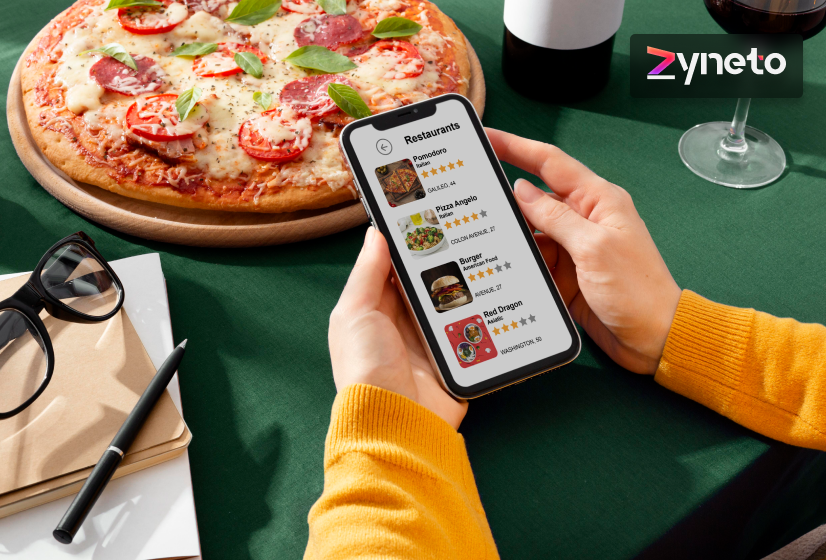
Food ordering today is just a few taps away. Customers no longer want to wait in long lines or make phone calls to place an order; they expect speed, convenience, and a smooth digital experience.
This level of convenience has completely transformed how people interact with restaurants today.
With the growing demand for quick, digital experiences, restaurant app development has become a powerful tool for food businesses to stay competitive.
A dedicated restaurant app not only simplifies ordering and reservations but also helps restaurants connect with customers through personalized offers, loyalty programs, and real-time updates.
In this guide to create a restaurant app, we’ll explore everything you need to know about restaurant app development and how it can help restaurants grow in the digital era.
A restaurant app is a mobile or web application that allows customers to interact with a restaurant digitally.
It provides features such as browsing menus, placing food orders, making table reservations, tracking deliveries, and completing secure payments directly from a smartphone.
Instead of calling the restaurant or visiting in person, users can quickly access all services in one convenient platform.
For restaurant owners, these apps help streamline operations, manage orders efficiently, and build stronger relationships with customers through loyalty programs, push notifications, and personalized offers.
As consumer behavior continues to shift toward mobile-first experiences, many businesses are choosing to create a restaurant app in 2026 to stay competitive in the evolving food industry.
A well-designed restaurant app not only improves customer convenience but also helps restaurants increase sales, enhance brand visibility, and deliver a better dining experience overall.
If you’re planning to launch your own restaurant app, knowing the right features to include can make a huge difference.
The best features of a restaurant app focus on convenience, speed, and personalization. Let’s get to know them:
A smooth registration system helps customers create accounts quickly using email, phone numbers, or social logins. Profiles store preferences, past orders, and favorite dishes.
This allows your restaurant app to deliver personalized recommendations and faster reordering, making the experience more convenient for returning customers.
A dynamic digital menu lets you update dishes, prices, and availability instantly without printing new menus. Customers can browse categories, view food images, and read descriptions easily.
Modern restaurant solutions use digital menus to keep customers informed and help restaurants manage menu changes efficiently.
An online ordering feature allows customers to browse dishes, customize meals, and place orders directly from their phones.
A well-designed restaurant app simplifies the ordering process and reduces errors, while helping restaurants handle high order volumes smoothly during busy hours.
Secure payment options are essential for building trust with customers. Your restaurant app should support multiple payment methods such as credit cards, digital wallets, and UPI.
Reliable restaurant solutions ensure encrypted transactions so customers can complete payments quickly and safely.
A built-in table booking system allows customers to reserve tables instantly without making phone calls.
This feature improves seating management and reduces waiting times. For restaurants, it becomes easier to organize reservations and manage peak dining hours effectively.
Customers love knowing exactly when their food will arrive. Real-time tracking shows order status from preparation to delivery.
Many modern restaurant solutions integrate this feature into the restaurant app so customers feel confident and informed throughout the entire ordering process.
Push notifications help you stay connected with customers even when they are not using the app.
Restaurants can send updates about special deals, new menu items, or order confirmations. These alerts make the restaurant app a powerful marketing and engagement tool.
Customer feedback plays a big role in building trust.
A review and rating system allows users to share their dining experience directly inside the restaurant app.
Restaurants can learn from this feedback and improve their services while attracting new customers through positive ratings.
So, these are the features to have in your restaurant app. Now, let’s get to know the step-by-step restaurant app development guide
If you’re planning to go digital, understanding how to develop a restaurant app is the first step toward building a powerful customer experience.
A restaurant app is more than just an ordering tool. It becomes your direct connection with customers, helping them discover your menu, place orders, reserve tables, and stay engaged with your brand.
But building a successful app doesn’t happen randomly. It follows a structured development process that ensures your app is functional, user-friendly, and scalable.
Let’s walk through the key steps you should follow:
Before you jump into development, you need to understand your market. Ask yourself a few important questions.
Who are your customers? What problems are they facing when ordering food? Which apps are they already using?
Researching competitors helps you identify what works and what doesn’t. Look at features, pricing models, delivery systems, and user experience.
This step helps you discover opportunities to differentiate your app. If you truly want to understand how to create a restaurant app, solid market research will guide your entire strategy and prevent costly mistakes later.
Not every restaurant needs the same kind of mobile app. Some businesses focus on online ordering.
Others prioritize table reservations, loyalty programs, or food delivery services.Choosing the right type depends on your restaurant model and customer expectations.
For example, a fine dining restaurant may focus on reservations, while a fast-food chain may prioritize quick ordering and delivery.
When you clearly define the purpose of your app, development becomes much easier.
Understanding this step is critical when learning how to build a restaurant app that actually solves customer problems.
Your app’s design plays a huge role in how customers interact with it. If your app is confusing or slow, users will simply leave.
That’s why UI/UX design focuses on creating a clean, simple, and intuitive interface.
Customers should be able to browse menus, customize dishes, place orders, and make payments without any difficulty.
Good design also includes clear navigation, appealing visuals, and smooth transitions. When you focus on user experience, customers enjoy using your platform.
That’s an essential part of understanding how to make a restaurant app that people return to again and again.
Behind every great app is a powerful technology foundation.
Your technology stack includes the programming languages, frameworks, databases, and cloud services used to build the application.
Choosing the right technologies ensures your app runs smoothly and can handle high traffic during busy hours.
For example, you may need scalable cloud infrastructure, secure payment gateways, and reliable APIs for delivery tracking.
A well-planned tech stack also makes future upgrades easier.
Selecting the right tools is a crucial part of how to develop a restaurant app that grows with your business.
Now comes the stage where your idea starts becoming a real product. During development, your app is built feature by feature.
Developers create the customer interface, admin dashboard, and backend system that manages orders and data.
Key features such as digital menus, online ordering, secure payments, push notifications, and loyalty programs are integrated.
For Android, you can work with a reliable development team. For iPhone users, partnering with an experienced iOS development company helps ensure your app follows Apple’s guidelines and runs smoothly on iOS devices.
Afterall, the goal is to ensure everything works smoothly together. A well-developed app not only looks good but also performs reliably during peak usage times.
Before your app reaches customers, it needs to be thoroughly tested. Testing ensures that every feature works exactly as expected.
Developers check for bugs, performance issues, and security vulnerabilities. They also test the app across different devices, screen sizes, and operating systems.
This step helps guarantee a smooth and frustration-free experience for users. Quality assurance is extremely important because even small errors can affect user trust and retention.
Once testing is complete, your app is ready to go live. This step involves publishing your app on platforms like Google Play and the App Store.
But launching an app is more than just uploading it. You also need proper server setup, monitoring systems, and a marketing strategy to attract users.
Promotions, app store optimization, and customer onboarding can help generate early traction. A successful launch ensures your app reaches customers quickly and starts driving orders for your restaurant.
So, this is the most important part of a complete guide to develop a restaurant app. Let’s get to know the overall cost to develop a restaurant app.
If you’re planning to launch a digital platform for your restaurant, understanding the mobile food service app development cost is essential before starting the project.
The cost mainly depends on the features you want, the complexity of the design, the technology used, and the platforms you choose (Android, iOS, or both).
A basic restaurant app includes essential features like menu browsing, simple user registration, and online ordering.
It’s a great starting point if you want to test the market and give customers a simple, convenient way to order from your restaurant.
A standard restaurant app comes with advanced features like secure payments, push notifications, order tracking, and customer profiles.
This level is ideal if you want to improve customer engagement while managing orders and promotions more efficiently.
An advanced restaurant app includes powerful tools like delivery tracking, loyalty programs, analytics dashboards, AI-based recommendations, and multi-location management.
It’s perfect for growing restaurant brands that want to scale operations and deliver a premium digital dining experience.
When planning your digital product, one of the biggest questions you’ll have is about the restaurant app development timeline.
The time required depends on the features, complexity, and platforms you choose.
A simple app with basic ordering features can usually be developed in 2–3 months, while a more advanced solution with delivery tracking, loyalty programs, and custom integrations may take 4–6 months or longer.
Design planning, development, testing, and deployment all play an important role in the overall eateries app development timeline.
So working with an experienced mobile app development company helps ensure your app launches faster and runs smoothly from day one.
Launching your app is the first step. The real goal is turning that platform into a consistent revenue source. That’s where restaurant app monetization comes in.
A well-planned monetization strategy helps you earn from every order, customer interaction, and promotion running inside your app.
When you make a restaurant app, you’re not just creating a digital menu; you’re building a powerful business channel that can generate multiple streams of income.
Let’s look at some practical ways restaurant apps generate revenue.
One of the most common monetization models is earning revenue through online orders.
If you develop an online restaurant app, you can charge a small service fee on each order placed through the platform.
Even a small percentage per order can turn into significant revenue as your user base grows.
Many restaurant apps offer premium memberships where customers pay a small monthly fee.
In return, they get benefits like free delivery, priority reservations, exclusive discounts, or early access to special menu items. This creates a predictable recurring revenue stream.
Restaurants can promote special menu items, seasonal dishes, or limited-time offers directly inside the app.
You can also partner with food brands or beverage companies to run promotional campaigns within your platform.
Delivery charges are another simple yet effective monetization strategy.
Customers are often willing to pay a small fee for the convenience of fast home delivery, especially during peak hours or bad weather.
Loyalty programs don’t just retain customers they also increase spending.
You can encourage users to add extra items, upgrade meals, or try premium dishes in exchange for reward points or discounts, which increases the average order value.
When you plan to create a restaurant app, the idea may seem straightforward at first.
But once development begins, several challenges can appear, from managing real-time orders to delivering a smooth user experience.
The key is not avoiding these challenges, but preparing for them with the right strategy and technology. When handled correctly, these obstacles become opportunities to build a stronger and more reliable platform for your customers.
During peak hours, restaurants may receive hundreds of orders at the same time. This can overload the system and slow down order processing.
Solution:
Using scalable cloud infrastructure and automated order management systems ensures the app can handle large volumes without crashes or delays.
If an app is slow, confusing, or difficult to navigate, customers may abandon it quickly. A poor user experience can directly affect your orders and customer retention.
Solution:
Investing in intuitive UI/UX design and conducting usability testing helps ensure the app is easy to use, fast, and visually appealing.
Customers expect accurate delivery tracking. Delays or incorrect tracking updates can create frustration and reduce trust in the platform.
Solution:
Integrating GPS tracking and real-time notification systems ensures customers always know the exact status of their orders.
Handling online payments comes with security risks such as fraud or data breaches. Restaurants must protect sensitive customer information.
Solution:
Using secure payment gateways, encrypted transactions, and compliance with security standards like PCI-DSS helps maintain safe and reliable payment processing.
Customers use a wide variety of smartphones and operating systems. If the app doesn’t work well on certain devices, it can limit your audience.
Solution:
Developers perform cross-platform testing and optimization to ensure the app works smoothly across different devices, screen sizes, and operating systems.
Technology is rapidly changing how restaurants connect with their customers.
The latest trends in restaurant app development are focused on smarter ordering, faster service, and more personalized dining experiences.
Let’s get to know those trends that you can leverage:
Artificial intelligence is transforming the way restaurants interact with customers. AI-powered systems can analyze customer preferences, recommend dishes based on past orders, and automatically send personalized offers.
When businesses build a restaurant app with AI capabilities, they can automate order management, forecast demand, and improve customer engagement. This not only saves time for restaurant staff but also creates a smarter and more personalized ordering experience for users.
Convenience is one of the biggest priorities for modern diners. Contactless ordering allows customers to browse menus, place orders, and complete payments directly from their smartphones without waiting in line.
Restaurants that develop a restaurant app with contactless features can reduce waiting times, improve order accuracy, and provide a smoother dining experience. This technology also helps restaurants serve more customers efficiently during busy hours.
Voice technology is slowly becoming part of the food ordering experience. Instead of typing or browsing through menus, customers can simply speak commands to search dishes or place orders.
As voice assistants and smart devices continue to grow in popularity, restaurants that build a restaurant app with voice ordering capabilities can offer a faster and more convenient way for customers to interact with their platform.
Augmented Reality (AR) is becoming an exciting feature in modern restaurant apps.
Instead of just reading menu descriptions, customers can visualize dishes in 3D before placing an order. This makes the experience more interactive and helps customers make faster decisions.
When businesses build a restaurant app with AR-powered menus, it creates a unique digital dining experience that attracts tech-savvy customers and makes your restaurant stand out from competitors.
Turning your restaurant idea into a powerful digital experience requires the right technology partner, and that’s where Zyneto comes in.
Our restaurant app development services are designed to help food businesses move beyond traditional ordering systems and build smart, customer-focused platforms.
At Zyneto, we don’t just develop apps; we help you create a digital ecosystem for your restaurant. From visually appealing UI/UX design to seamless online ordering, secure payments, delivery tracking, and loyalty features, every element is built to enhance customer convenience and engagement.
Our developers focus on performance, scalability, and intuitive user experiences so your app can handle growing demand while delivering smooth service.
The restaurant industry is evolving rapidly, and mobile apps are becoming a key part of how businesses attract and serve customers. From online ordering and table reservations to loyalty programs and personalized offers, a well-designed restaurant app can transform the way your customers interact with your brand.
Investing in the right technology allows you to simplify operations, increase customer engagement, and create a seamless dining experience. As customer expectations continue to grow, having a dedicated restaurant app helps your business stay competitive in a digital-first world.
With the right strategy and development partner, you can build a powerful platform that not only improves convenience for customers but also drives long-term growth for your restaurant business.
The cost depends on the features, app complexity, and platforms you choose. A basic restaurant app may cost around $8,000–$20,000, while advanced apps with delivery tracking and loyalty systems can cost $50,000 or more.
The development timeline typically ranges from 2 to 6 months, depending on the features, design complexity, and the development process involved.
A good restaurant app should include online ordering, digital menus, secure payment integration, push notifications, loyalty programs, and real-time order tracking to provide a smooth user experience.
Yes. A restaurant app makes ordering easier for customers, encourages repeat purchases through loyalty rewards, and allows restaurants to promote special offers directly to users.
Ideally, yes. Launching your app on both platforms helps you reach a wider audience and ensures that more customers can easily access your restaurant’s digital services.

Vikas has around fifteen years of experience building software and now builds generative AI systems at Zyneto. His work covers retrieval augmented generation, agentic AI, knowledge graphs, AI memory, and the evaluation and guardrails that decide whether any of it is safe to put in front of customers. He has shipped enterprise copilots, document AI, chatbots and predictive analytics for e-commerce, fintech and marketing teams, and works day to day in Python, JavaScript and SQL. He follows multimodal models, business process automation and enterprise AI security closely, and mentors engineers moving into AI. He writes about architecture, inference cost and the failure modes that only show up at production scale.
Share your details and we will talk soon.
Be the first to access expert strategies, actionable tips, and the trends actually shaping the digital world. No fluff - just practical insights delivered straight to your inbox.
Dive into our blog and stay ahead of the curve with expert perspectives, future-ready trends, and tech tips written for decision-makers and doers alike.