Top Benefits of CRM in Restaurant Business Growth


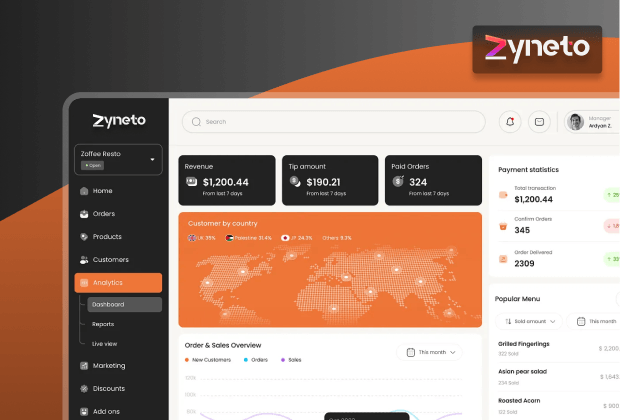
Did you know that more than 60% of restaurant customers now expect personalized offers, faster service, and smooth digital experiences from their favorite restaurants?
Today, running a successful restaurant is not just about serving good food; it’s also about building strong customer relationships that keep people coming back.
If a restaurant fails to deliver good user experiences, customers can easily switch to another option within minutes. That’s why CRM (Customer Relationship Management) has become an important tool for restaurant businesses.
A good CRM system helps restaurants understand customer preferences, manage customer interactions, automate marketing campaigns, improve customer retention, and increase repeat orders.
In this article, we’ll explore the role and benefits of CRM in restaurant business growth and how it helps restaurants improve customer engagement, simplify operations, and increase revenue in today’s competitive market.
CRM is a customer relationship management, is the system that restaurants use to collect, manage, and act on customer data to build long-lasting relationships.
In simple terms, it’s how a restaurant remembers who you are, what you ordered last time, when your birthday is, and what offers are most likely to bring you back.
The benefits of CRM in a restaurant go beyond just storing contact information. It tracks dining history, manages loyalty programs, automates operations, and gives you a clear picture of your valuable customers.
If you are running a single outlet of a chain of 50 locations, CRM helps you treat every customer like a regular, and that impacts retention and revenue as well.
It's one of the most powerful tools you can integrate when thinking about how to develop a restaurant app that keeps customers coming back.
If you’re running a restaurant and not using a CRM, you’re leaving a lot of money and a lot of loyal customers on the table.
The advantages of CRM is restaurant business go far beyond just storing customer names and emails.
It’s about using real data to make smarter decisions, build genuine relationships, and grow revenue.
Here's what a good CRM actually does for your restaurant:
CRM gives you a clear picture of who's walking through your door or ordering online.
You can see what they order, how often they visit, what time they usually come in, and what offers they respond to.
That kind of insight helps you personalize every interaction, and customers who feel known always come back more often.
Sending the same generic promotion to every customer is a waste of time and budget.
With CRM, you can segment your audience and send the right message to the right person at the right time.
Birthday discounts, win-back campaigns for customers who haven't visited in 30 days, loyalty rewards for your regulars–all of it becomes targeted, automated, and actually effective.
Getting a new customer costs five times more than keeping an existing one.
CRM helps you keep the customers you already have by staying on their radar through personalized offers, timely follow-ups, and loyalty programs that genuinely reward them.
When customers feel valued, they don't need a reason to go somewhere else.
When your team can see a customer's order history and preferences before they even sit down, service feels personal, not scripted.
CRM gives your front-of-house staff the context they need to make every guest feel like a VIP.
That kind of experience is what turns a one-time visitor into a regular.
Gut feeling only gets you so far.
CRM gives you actual data, peak hours, best-selling items, average order value, and customer lifetime value, so every decision you make is backed by numbers, not guesses.
If you're planning a new menu, adjusting pricing, or deciding when to run a promotion, CRM tells you exactly what your data says.
More loyal customers mean more repeat orders, without spending more on acquisition.
CRM helps you maximize the value of every customer you already have through upselling, cross-selling, and timely re-engagement campaigns.
When planning the cost to develop a restaurant app, adding CRM features can deliver long-term ROI and faster business growth.
It’s a lot harder to lose a customer when you actually remember who they are.
Instead of emailing them with generic discounts, a CRM lets you treat thousands of buyers like individuals. It logs their exact purchase history and preferences in real time.
The result? You stop sending spam and start sending the exact offer they need, right when they’re already thinking about buying again.
When you treat people like individuals rather than just numbers on a spreadsheet, magic happens.
You can stop sending annoying, generic spam and start sending hyper-targeted offers. Imagine getting a discount on the exact coffee blend you’re about to run out of, right when you need it that’s the power of CRM automation.
By tracking purchase cycles and celebrating customer milestones (like birthdays), a CRM builds genuine loyalty and turns accidental buyers into predictable, repeat revenue.
This strategy is a game-changer across every sector.
For example, understanding the advantages of customer relationship management in the restaurant business growth allows local eateries to track favorite dishes, tailor reward programs, and personalize reservation perks.
To make this data easily accessible on the go, many businesses feed these insights directly into a custom interface built by a specialized mobile app development company.
Using a dedicated CRM system helps restaurants collect customer data, manage daily tasks smoothly, and run personalized marketing campaigns that increase sales and business growth.
Let’s get to know the role of CRM in restaurant business growth:
Understanding the specific role of CRM in restaurant business growth starts with centralizing data like dietary restrictions and seating preferences.
Staff can instantly access these profiles to deliver tailored service, which significantly increases customer satisfaction and repeat visits.
Maximize your digital footprint by examining the role of CRM in restaurant apps and mobile ordering.
When your management software connects directly to your smartphone application, it tracks real-time user behavior, coordinates push notifications, and delivers seamless in-app rewards that keep your brand top-of-mind.
It is far more cost-effective to retain existing diners than to acquire new ones.
One of the major benefits of CRM in restaurant operations is the ability to automatically identify lapsed guests who have not visited recently and trigger automated re-engagement incentives to win back their business.
Systems eliminate generic promotions by segmenting your customer database based on spending habits and visit frequency. This allows management to launch targeted email or SMS campaigns, ensuring that promotional offers reach the specific demographics most likely to respond.
Utilizing historical booking and ordering data helps management accurately forecast daily traffic and menu item demand.
This operational forecasting optimizes staff scheduling and reduces food waste by aligning inventory orders with predicted volume.
When a guest submits a complaint or a negative review, the software alerts management immediately and links the feedback to the customer's profile.
This centralized view enables the team to resolve issues swiftly and protect the establishment's online reputation.
The integration of artificial intelligence and machine learning is entirely changing how hospitality brands interact with their guests. By leveraging AI development services, many top restaurant groups are changing from traditional ways to more advanced ones.
Let’s get to know how it is possible:
Instead of displaying a static online menu, AI algorithms analyze a returning diner's past behavior, current local weather, and time of day to display dynamic options.
If the system knows a guest frequently orders spicy dishes on rainy Friday nights, the mobile interface adjusts instantly to showcase those exact items alongside an optimized drink pairing.
Traditional, manual database sorting is being replaced by machine learning engines that tag customers autonomously behind the scenes.
Guests are instantly categorized into fluid buckets, such as "weekend brunch lovers," "high-value corporate spenders," or "lapsing regulars," "allowing the system to dispatch hyper-targeted WhatsApp or email campaigns without any human input.
AI sentiment analysis tools now monitor inbound reviews, survey feedback, and social mentions in real time.
If a guest leaves a poor rating regarding delivery speed, the automation matrix triggers an immediate, personalized apology note and attaches a compensatory voucher tailored to that customer's favorite menu item, preserving the relationship instantly.
Modern systems cross-reference historical CRM booking frequencies with local event calendars and holiday traffic patterns to project exact front-of-house and back-of-house needs.
This advanced operational foresight ensures managers avoid the financial drain of over-staffing or running out of critical ingredients during unexpected peak rushes.
Conversational AI assistants now handle complex, multi-channel customer service inquiries over the phone, web chat, and social media simultaneously.
These digital agents answer menu questions, accommodate intricate dietary modifications, and book reservations directly into the centralized floor plan, keeping front-of-house staff focused entirely on the guests in the room.
Zyneto helps restaurants turn customer data into meaningful business growth with smart CRM-powered solutions.
From managing customer preferences and loyalty programs to automating promotions and improving customer engagement, we help restaurants create better dining experiences that keep people coming back.
As a top restaurant app development company, Zyneto builds customized CRM-integrated restaurant apps that simplify operations, increase repeat orders, and strengthen customer relationships.
Be it running a small cafe, a cloud kitchen, or a large restaurant chain, our solutions are designed to help you understand your customers better and grow your revenue faster.
With the right CRM strategy and technology, your restaurant can deliver personalized experiences that stand out in today’s competitive market.
Investing in a restaurant CRM is no longer just a luxury for tech-savvy chains; it is an essential ingredient for any food business that wants to thrive.
By bringing together customer preferences, automated marketing, and smart digital tools, a CRM takes the guesswork out of running your restaurant.
It helps you treat every guest like a lifelong regular, making sure they feel valued whether they are dining in or ordering from your app.
At the end of the day, great food gets people through your doors the first time, but a great experience brings them back.
By letting a CRM handle your data, you can focus on what you do best: serving amazing meals and creating unforgettable moments.
It is time to stop leaving revenue on the table and start using the ultimate role of CRM in restaurant growth to secure your business's future.
A restaurant CRM is a software system that collects and stores customer data, including contact information, visit frequency, and past order history. The system automatically organizes this data into individual profiles so restaurant owners can track customer habits and preferences in one central location.
No, these systems are designed with user-friendly interfaces for restaurant staff and managers. If you can navigate a standard smartphone app or a digital point-of-sale screen, you can operate a CRM dashboard, as the software handles all data collection and processing automatically.
The system segments your customer list based on their actual buying behavior and visit history. This allows you to send targeted promotions, such as automated birthday rewards or specific discounts to guests who have not visited in the last 30 days, rather than sending generic spam.
Yes, the software tracks long-term sales data and reservation trends to help project future customer volume. By reviewing these historical patterns, management can order more accurate quantities of inventory and schedule the correct number of staff members for specific shifts.
Yes, retaining existing customers is critical for smaller operations with limited budgets. A CRM allows a single-location business to track its local customer base efficiently, build digital loyalty programs, and compete effectively with larger chains without spending a large amount of money on advertising.

Vikas has around fifteen years of experience building software and now builds generative AI systems at Zyneto. His work covers retrieval augmented generation, agentic AI, knowledge graphs, AI memory, and the evaluation and guardrails that decide whether any of it is safe to put in front of customers. He has shipped enterprise copilots, document AI, chatbots and predictive analytics for e-commerce, fintech and marketing teams, and works day to day in Python, JavaScript and SQL. He follows multimodal models, business process automation and enterprise AI security closely, and mentors engineers moving into AI. He writes about architecture, inference cost and the failure modes that only show up at production scale.
Share your details and we will talk soon.
Be the first to access expert strategies, actionable tips, and the trends actually shaping the digital world. No fluff - just practical insights delivered straight to your inbox.
Dive into our blog and stay ahead of the curve with expert perspectives, future-ready trends, and tech tips written for decision-makers and doers alike.