Restaurant App Development Challenges: What You Need to Know Before You Build


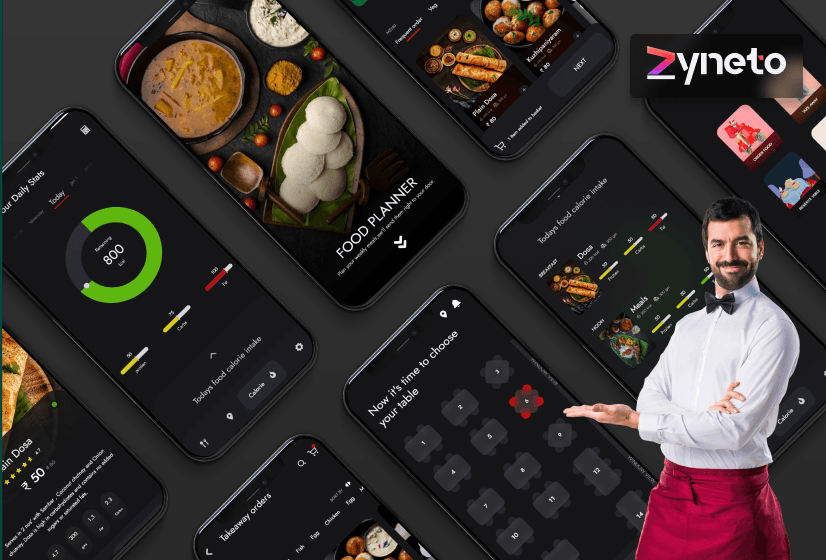
So, you're thinking about building a restaurant app.
Maybe you run a growing restaurant chain. Maybe you're a food-tech founder with a big idea. Or maybe you're a business owner who's tired of paying huge commissions to third-party delivery platforms.
Whatever your reason, one thing is true.
Building a restaurant app is not as simple as it looks.
Sure, you've seen apps like Uber Eats and DoorDash. They look smooth. They feel effortless. Ordering food takes just a few taps.
But behind that simplicity is a mountain of technical, operational, and business complexity.
As an expert in this niche, we've worked with restaurants, cloud kitchens, and food-delivery startups. And we've seen the same pattern again and again.
Everyone underestimates restaurant app development challenges.
They think it's "just an app." Add a menu, a cart, and a payment gateway, and you're done.
But that's far from reality.
In this blog, we're going to walk you through the real challenges of restaurant app development, why they happen, and more importantly, how you can solve them.
We'll also share some best practices for launching a successful restaurant app.
And by the end, you'll understand why partnering with the right development team can make or break your app's success.
Let's get into it.
A restaurant app is a mobile or web application that lets customers browse menus, place orders, make payments, and track deliveries, all from their phone.
For restaurant owners, it's more than just an ordering tool.
It's a complete digital ecosystem that connects customers, kitchen staff, and delivery partners in real time.
A good restaurant app typically includes a customer-facing interface for browsing and ordering, an admin panel for managing menus and orders, and sometimes a dedicated app for delivery partners.
Beyond convenience, it helps restaurants build direct relationships with customers instead of relying entirely on third-party delivery platforms.
Features like loyalty programs, personalized recommendations, and order history keep customers coming back.
That's exactly why more restaurants today choose to create a restaurant app of their own.
It gives them control over branding, customer data, and the overall ordering experience, something that's hard to achieve when you're just another listing on a marketplace app.
Let's start with the big picture.
Every restaurant app, no matter how small or big, deals with a common set of hurdles.
Here are the top restaurant app development challenges you should know about.
This is probably the biggest challenge of restaurant app development.
Your app isn't just showing a menu.
It's managing live orders, kitchen queues, delivery timelines, and customer expectations, all at the same time.
Think about it. A customer places an order. The kitchen needs to see it instantly. The delivery partner needs to be assigned. The customer needs live tracking.
And all of this needs to happen within seconds, without any lag or confusion.
If your backend isn't built to handle real-time data syncing, you'll run into delayed orders, wrong order statuses, and frustrated customers.
This is one of those restaurant app challenges that looks simple on the surface but requires serious backend architecture underneath.
A restaurant app isn't just one app.
It's actually three or four apps rolled into one.
You need:
A customer app for ordering food. A restaurant/admin panel for managing menus, orders, and inventory. A delivery partner app for accepting and tracking deliveries.
And sometimes, a separate dashboard for business analytics.
Each of these has different user flows, different permissions, and different real-time data needs.
Building and syncing all of these together is one of the leading restaurant app development challenges that development teams face.
If even one of these panels isn't well-integrated, the whole system can break down.
Nobody wants a food app where payments fail.
But payment integration is trickier than it sounds.
You need to support multiple payment methods. Credit cards, debit cards, digital wallets, UPI, cash on delivery, and sometimes even buy-now-pay-later options.
Each payment gateway has its own documentation, security protocols, and compliance requirements.
On top of that, you need to handle refunds, partial payments, failed transactions, and split payments (in case of group orders).
This is where a lot of restaurant apps struggle.
A poorly integrated payment system leads to lost sales and unhappy customers.
Let's say your app launches, and it's a hit.
Suddenly, you're getting thousands of orders every day instead of a few dozen.
Can your app handle that spike?
This is one of the more underestimated restaurant app development challenges.
Many restaurant apps are built for small-scale use and completely collapse once traffic increases.
Servers crash. Load times increase. Orders get lost.
If scalability isn't planned from day one, your app's growth will actually become its biggest threat.
Customers today expect to see exactly where their food is.
They want a live map, an accurate ETA, and delivery partner details.
Implementing accurate real-time GPS tracking is technically demanding.
You need to factor in traffic conditions, delivery partner availability, distance calculations, and route optimization.
And if your tracking system is inaccurate or laggy, customers lose trust in your app almost immediately.
This is genuinely one of the best examples of challenges of restaurant app development that's often overlooked during the planning stage.
You'd think managing a menu would be the easiest part.
It's not.
Restaurants change their menus frequently. They add seasonal items, remove out-of-stock dishes, update prices, and offer combo deals.
Your app needs a menu management system that's flexible enough to handle all of this without requiring a developer every time something changes.
On top of that, you need to support various customizations. Extra cheese, spice levels, add-ons, portion sizes, and dietary preferences like vegan or gluten-free.
Multiply this by multiple restaurant locations, and menu management becomes a genuinely complex challenge.
Most restaurant apps don't work in isolation.
You need integrations with SMS and email services for notifications, POS (point-of-sale) systems for in-store order syncing, delivery logistics providers, loyalty and rewards platforms, and analytics tools.
Each of these integrations comes with its own API documentation, rate limits, and potential compatibility issues.
Getting all these third-party services to work together smoothly is one of those restaurant app development challenges that requires careful technical planning.
Your app is handling sensitive data. Customer addresses, phone numbers, payment details, order history.
This makes your app a target for cyberattacks if security isn't taken seriously.
You also need to stay compliant with data protection regulations depending on your target market, like GDPR or local data privacy laws.
Any lapse in security doesn't just cost you money. It costs you customer trust, and that's much harder to rebuild.
Here's an uncomfortable truth.
Most restaurant apps get downloaded, used once, and then deleted.
Why?
Because the ordering process felt clunky. Or the app was slow. Or there was no reason to come back.
Creating an app that customers actually want to keep using is one of the toughest restaurant app challenges out there.
You're not just building software. You're building a habit.
And that requires thoughtful UX design, personalization, and loyalty features.
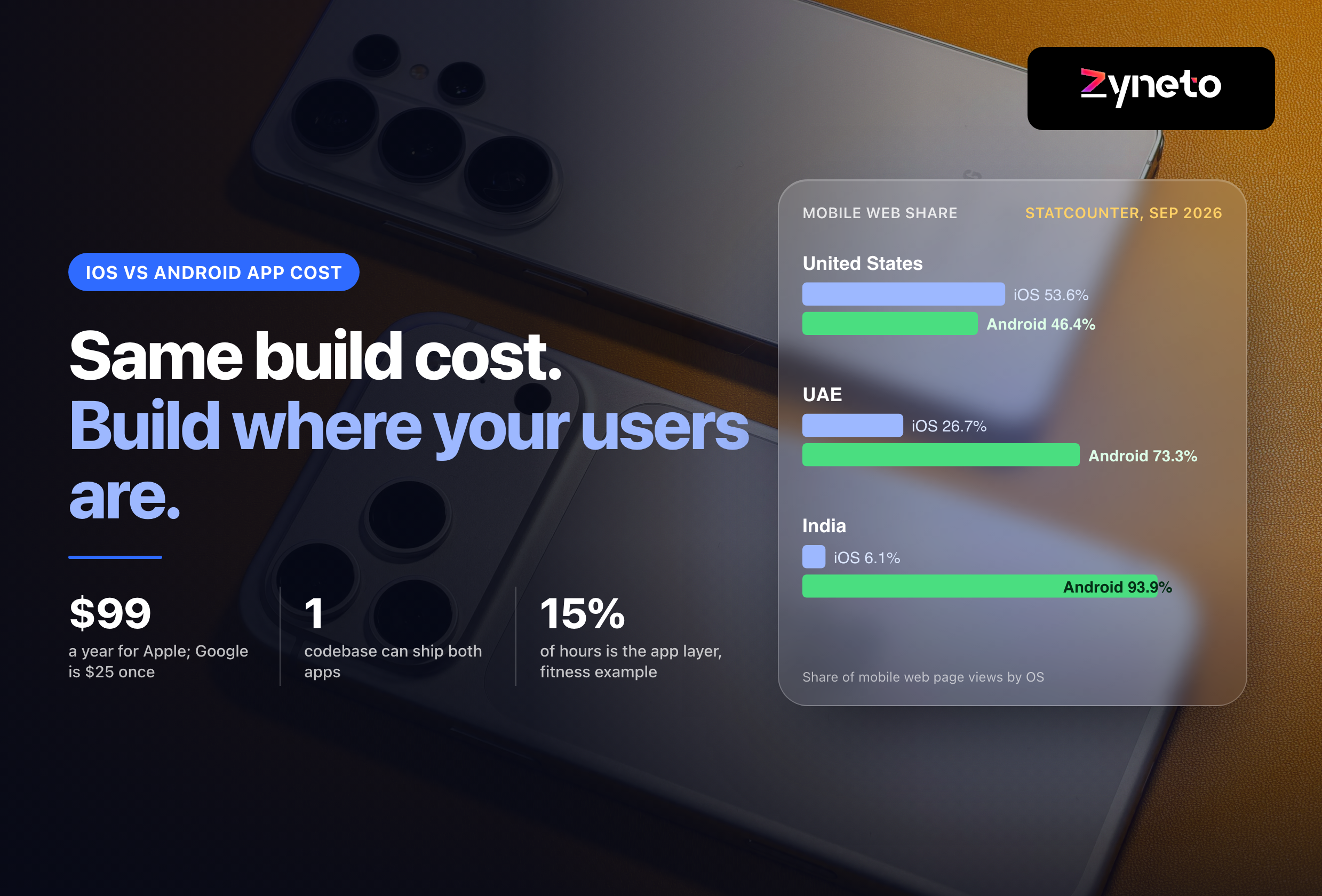
Your customers are using different devices. iPhones, Android phones, tablets, and sometimes even browsers.
Your app needs to work flawlessly across all these platforms.
Building separate native apps for iOS and Android can increase your restaurant app development cost and time.
Choosing the right tech approach, whether native or cross-platform, is a decision that impacts your budget, timeline, and future scalability.
Okay, so now you know the challenges.
Let's talk solutions because every problem here has a practical fix.
The key here is using the right backend architecture from the start.
Technologies like WebSockets or Firebase real-time databases allow instant data syncing across customer apps, restaurant panels, and delivery apps.
This ensures that the moment an order is placed, everyone involved sees it instantly.
A good development team will also build in fallback mechanisms, so if a real-time connection drops, no order gets lost or duplicated.
The trick here is modular architecture.
Instead of building each panel separately and hoping they connect later, you build a unified backend system with role-based access control from day one.
This means one core system powers everything, but different users see different views based on their role.
It keeps your data consistent and makes future updates much easier to manage.
Work with established, well-documented payment gateway providers.
Choose ones that support multiple currencies and payment methods relevant to your target market.
Also, build a proper failure-handling system.
If a payment fails, the app should clearly communicate that to the user and offer alternative payment options instantly, instead of leaving them stuck.
This comes down to smart infrastructure decisions.
Using cloud platforms like AWS, Google Cloud, or Azure allows your app to scale up automatically when traffic increases.
Load balancing, caching, and database optimization all play a role here too.
The key is designing your app to scale from the beginning, not scrambling to fix it after your app goes viral.
Integrate reliable mapping APIs like Google Maps or Mapbox.
Optimize your tracking updates so they're frequent enough to feel real-time, but not so frequent that they drain battery life or overload your servers.
Testing this thoroughly across different network conditions is essential before launch.
Build a flexible, admin-friendly content management system (CMS) for your restaurant partners.
This should let them update menus, prices, and availability without needing any technical help.
Adding smart features like "sold out" auto-updates or scheduled menu changes for different times of day can make life much easier for restaurant owners.
Choose integrations carefully, and always test them in a staging environment before going live.
A good development team documents every integration properly and builds in monitoring to catch any issues early, before they affect real customers.
Implement encryption for sensitive data, both in transit and at rest.
Use secure authentication methods like OTP verification or two-factor authentication where appropriate.
Regular security audits and staying updated with compliance requirements should be a standard part of your development process, not an afterthought.
This is where user research really pays off.
Understand your actual customers. What frustrates them? What delights them?
Simplify your ordering flow. Reduce the number of taps needed to place an order.
Add features like saved addresses, reorder options, and personalized recommendations based on order history.
Loyalty programs and push notifications (used thoughtfully, not annoyingly) can also boost retention significantly.
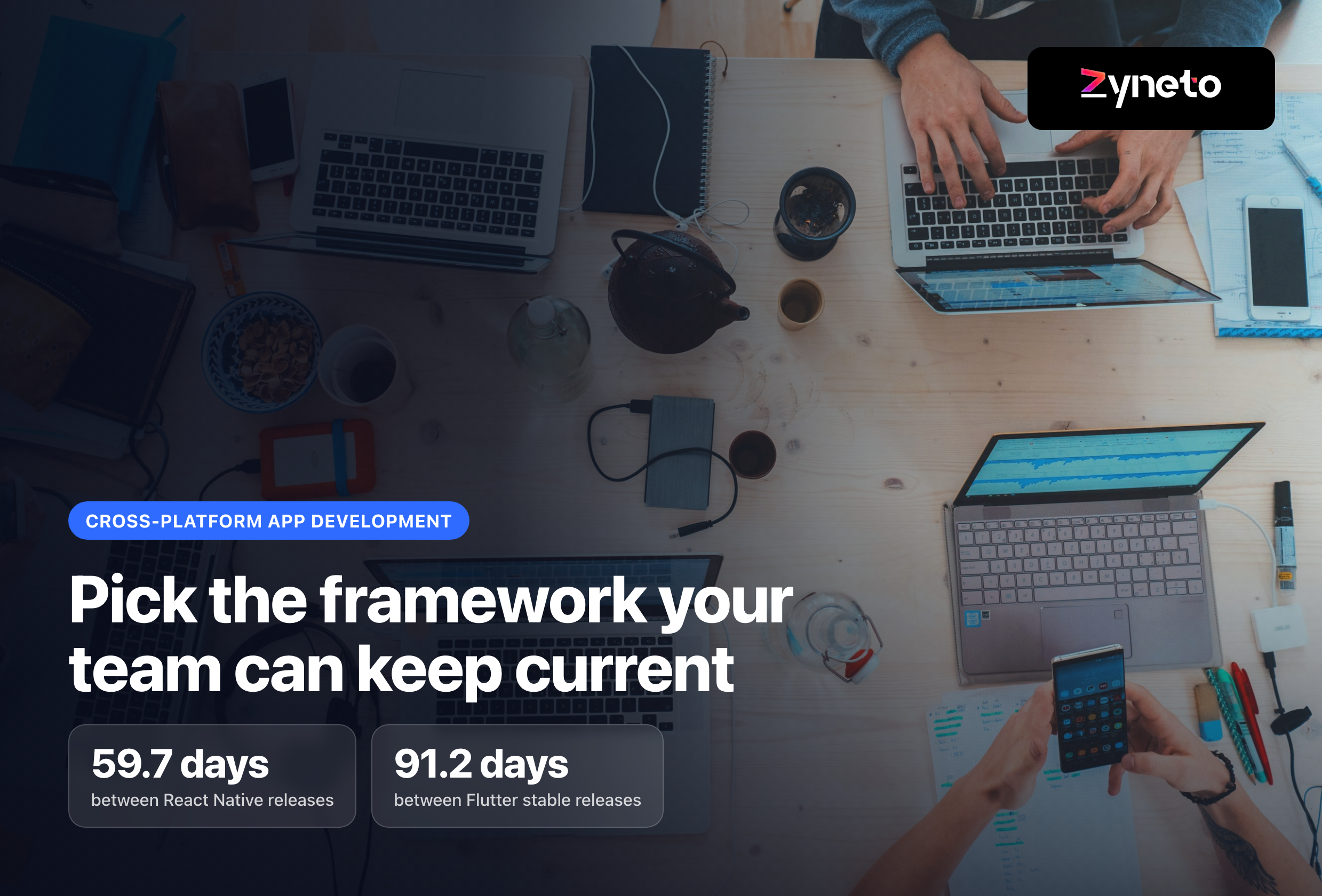
Consider cross-platform frameworks like Flutter or React Native.
These let you build one codebase that works well on both iOS and Android, saving significant time and cost, without compromising too much on performance or user experience.
Now that you know the challenges and solutions, let's talk about how to actually launch successfully.
Before writing a single line of code, understand your competitors, your target audience, and what gaps exist in the current market.
Look at what similar apps are doing well and where they're failing. This research shapes your entire strategy and helps you avoid building something the market doesn't actually need.
Don't try to build every feature at once, no matter how tempting it feels.
Launch with core features like ordering, payments, and tracking, then gather real feedback from actual users.
This approach saves money, reduces risk, and lets you improve iteratively based on what customers genuinely want, not just assumptions.
Your users should be able to browse the menu and place an order within just a few taps.
If your app feels cluttered, slow, or complicated in any way, they'll switch to a competitor almost instantly.
Clean navigation, minimal steps, and clear visuals go a long way in keeping people engaged.
This includes functional testing to catch bugs, performance testing under high traffic and peak-hour load, and security testing to protect customer data.
Skipping proper testing is one of the fastest ways to damage your app's reputation right after launch, when first impressions matter the most for retention.
A great app with no users won't succeed, so have a launch strategy ready before going live.
At the same time, build in analytics from day one to track user behavior, order patterns, and drop-off points, so you can keep improving the app well after launch.
This might be the most important point on this list. Your development team's experience directly affects how well these restaurant app development challenges get handled.
Also plan for post-launch support, beta testing with real users, and accessible customer support, because launching is just the beginning.
Looking for a restaurant app development company to ovecome these issues?
This is exactly where Zyneto come in.
We've built restaurant apps that handle real-time orders, multi-location menu management, live delivery tracking, and secure payment systems, all working together seamlessly.
We don't just write code. We understand the operational realities of running a restaurant business, and we design our solutions around that understanding.
Here's what working with us actually looks like.
We start by understanding your specific business model, whether you're a single restaurant, a multi-location chain, or a food delivery startup.
We then design a scalable architecture from day one, so your app can grow without needing a complete rebuild later.
Our team handles the full development cycle. Customer apps, restaurant admin panels, delivery partner apps, and backend systems, all built to work together smoothly.
We prioritize security and compliance throughout the development process, not as an afterthought.
We also provide post-launch support, so your app keeps improving based on real user feedback and changing business needs.
Most importantly, we treat every restaurant app development challenge as something to solve proactively, not something to fix after it becomes a problem.
If you're serious about building a restaurant app that actually works, and actually lasts, we'd love to help you build it right.
Building a restaurant app is exciting, but it's genuinely complex.
From real-time order management to payment integration, from scalability to security, there are plenty of restaurant app challenges that can trip up even well-funded projects.
But here's the good news.
Every single one of these challenges has a proven solution.
With the right planning, the right technology choices, and the right development partner, you can build an app that customers actually love using.
The key is going in with your eyes open.
Understand these top restaurant app development challenges before you start, not after you've already spent time and money.
Plan for scalability, security, and user experience from day one.
And most importantly, work with a team that's actually solved these problems before, not one that's learning on your dime.
At the end of the day, a successful restaurant app isn't about having the flashiest features. It's about solving real problems for real customers, reliably and consistently.
That's what turns a simple food-ordering app into a business that grows year after year. If you're ready to build something like that, we're ready to help you get there.
Let's build your restaurant app the right way.
Real-time order management, multiple user panels, payment integration, scalability, and data security top the list. These are the ones that cause the most delays and cost overruns if they're not planned for early.
It really depends on the scope. A basic MVP with core ordering features can take around 2 to 4 months. A full-featured app with customer, restaurant, and delivery panels, plus integrations, usually takes 5 to 8 months or more.
Costs vary widely based on features, platforms, and integrations. A simple single-restaurant app can start in the lower range, while a multi-panel, multi-location system with real-time tracking and custom integrations will cost significantly more. The best approach is to start with an MVP and scale up as your business grows.
If budget and timeline are a concern, cross-platform frameworks like Flutter or React Native are a smart choice. They let you launch on both iOS and Android from a single codebase. Native development makes sense if you need the absolute best performance or plan to use platform-specific features extensively.
Focus on a smooth, fast ordering experience with minimal steps. Add personalization, like saved addresses and reorder options, along with a simple loyalty or rewards system. The goal is to make ordering so easy that customers keep coming back instead of switching to another app.

Vikas has around fifteen years of experience building software and now builds generative AI systems at Zyneto. His work covers retrieval augmented generation, agentic AI, knowledge graphs, AI memory, and the evaluation and guardrails that decide whether any of it is safe to put in front of customers. He has shipped enterprise copilots, document AI, chatbots and predictive analytics for e-commerce, fintech and marketing teams, and works day to day in Python, JavaScript and SQL. He follows multimodal models, business process automation and enterprise AI security closely, and mentors engineers moving into AI. He writes about architecture, inference cost and the failure modes that only show up at production scale.
Share your details and we will talk soon.
Be the first to access expert strategies, actionable tips, and the trends actually shaping the digital world. No fluff - just practical insights delivered straight to your inbox.
Dive into our blog and stay ahead of the curve with expert perspectives, future-ready trends, and tech tips written for decision-makers and doers alike.