Frequently Asked Questions
Do these rules apply to us if we are not based in the EU or the UK?

Generally yes. All four regimes bind on where your users are rather than on where you are incorporated. A platform with no European entity can still be within scope of the DSA because it serves EU users, and the same logic applies to the UK Act, the Indian rules and the Australian minimum age.
We are small. Does the DSA still apply?
The DSA has applied to all platforms serving EU users since 17 February 2024. The heaviest duties, including systemic risk assessment, independent audit and vetted researcher access, attach only to Very Large Online Platforms at 45 million average monthly active recipients in the Union. Below that threshold you still owe notice and action, statements of reasons, an appeal route and transparency reporting.
How long does phase one take?
Usually 8 to 14 weeks. The variable is almost never engineering capacity. It is how much of your policy already exists in writing, because undocumented policy has to be elicited from the people currently enforcing it before any of it can be encoded.
Can you work with the classifier we already have?
Yes, and we would rather. We start by evaluating it against a labelled sample at your real base rates before recommending anything. A surprising share of drift complaints turn out to be threshold and routing problems rather than model problems, and those are much cheaper to fix.
Do we need age verification?
It depends on your markets and your gates. Australia sets a minimum account age of 16 that parental consent cannot override, in effect since 10 December 2025. The UK requires age assurance that Ofcom describes as highly effective for certain content, enforceable since 25 July 2025. Not every platform needs it, and almost no platform needs it everywhere.
What is the difference between this and a content filter?
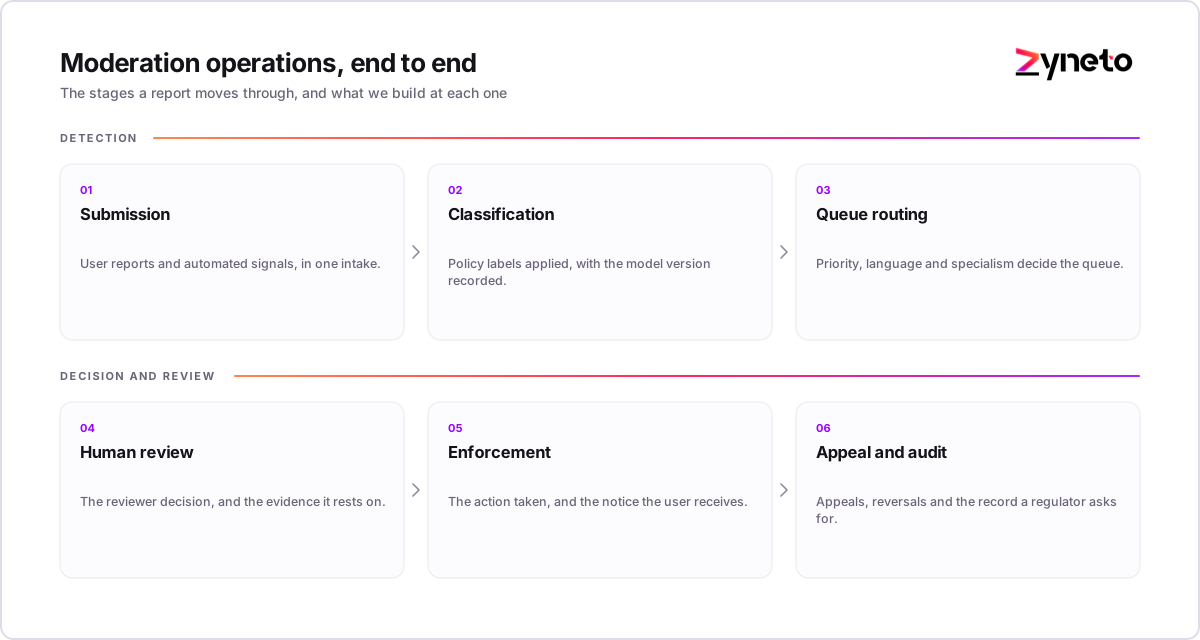
A filter scores content. This is the system that decides what happens next, tells the user which rule was applied to which item, hears the appeal, and can prove all of it afterwards. The filter is one component inside it, and it is the component most easily replaced.
Who reviews the hard cases?
Your people, on tooling we build. We do not provide moderation staffing. Outsourcing the judgement that defines your community to a vendor is a decision we would argue against even if we sold it.
What happens to decisions made before we had a policy version?
They stay as they are, and the record shows they predate versioning. Reconstructing them retrospectively would mean inventing a record, which is materially worse than an honest gap when somebody eventually audits it.
What does it cost, and how do you price it?
Hours times $40 to $100 per hour by role. The module table above gives the hour range for each of the six modules, and the worked example shows 680 hours adding up to about $44,200 at a $65 blend. We do not quote before discovery.
Who owns the code, the policy and the decision data?
You do, all three. The code is yours on delivery, the written policy is yours from the discovery phase whether or not you build with us, and the decision record lives in your infrastructure rather than ours. We do not retain a copy of your moderation data, and there is no arrangement under which your enforcement history becomes training material for anything.
Can you help with the regulator correspondence itself?
No. We build the systems and generate the reports. Legal advice on what to say to a regulator comes from your counsel, and any supplier telling you otherwise is selling something they should not.