How to Develop an App Like OkCupid: The Complete Guide for 2026


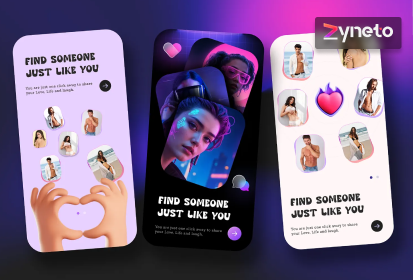
So you've been swiping through the dating app market and you're thinking, "I could build something better than this."
Honestly? You might be right.
Dating apps are one of the few app categories where people genuinely open them every single day, sometimes multiple times a day.
And if you're looking to create an app like OkCupid, you're tapping into a niche that blends personality-driven matching with real conversation, not just endless swiping on faces.
This guide walks you through everything you need to know before you build an app like OkCupid, from the development process to the costs to the features that actually keep users coming back.
Let's get into it.
Before you develop an app like OkCupid, it helps to understand what made the original one stick around for over two decades.
OkCupid launched back in 2004, and unlike a lot of dating apps that came after it, it wasn't built around looks alone.
It was built around questions.
Thousands of them, actually.
Users answer personality, lifestyle, and values-based questions, and the app uses those answers to calculate a compatibility percentage between two people.
That's the magic sauce here.
Instead of just showing you someone's face and a one-line bio, OkCupid tries to tell you how likely you are to actually get along with them.
It also introduced more inclusive gender and sexual orientation options long before most competitors did, which helped it build a loyal, diverse user base.
Over time, it added swipe-based discovery too, blending the best of Tinder-style browsing with deeper compatibility data.
That combination, quick browsing plus meaningful matching, is exactly why so many founders want to replicate this model.
If you're planning OkCupid-like app development, this dual approach is your blueprint: give users the fun, fast experience they expect, but back it up with data that makes matches feel less random and more real.
Building a dating app isn't like building a to-do list app.
There's a lot moving underneath the surface, from matching algorithms to real-time chat to safety systems.
So let's break down what the actual process looks like when you decide to make an app like OkCupid.
You need to know who you're building this for before you write a single line of code.
Are you targeting a general audience, or a specific community, like professionals, a particular religion, age group, or interest-based crowd?
The more focused your niche, the easier it is to stand out in an overcrowded market.
Look at what competitors are doing well and, more importantly, where they're falling short.
That gap is your opportunity.
Once you know your audience, map out exactly what the user journey looks like.
Sign-up, profile creation, the question-and-answer compatibility system, browsing, matching, chatting.
Every screen should have a clear purpose.
This is also the stage where you decide on your monetization model, which we'll dig into later.
Dating apps live and die by their design.
If your interface feels clunky or outdated, users will bounce within seconds.
You want something clean, warm, and intuitive, something that makes people feel comfortable sharing personal details about themselves.
Good design also builds trust, which matters a lot in an app where users are meeting strangers.
This is where the real engineering work happens.
You'll need a robust backend to handle user data, real-time messaging, geolocation, and of course, the compatibility matching algorithm.
Building a scoring system similar to OkCupid's takes serious data science work, since it involves weighting different questions based on importance and calculating percentage-based matches.
Your development team builds out the frontend and backend simultaneously, usually in agile sprints.
Testing is non-negotiable here.
You're dealing with sensitive user data, payments, and real people's safety, so QA needs to be thorough across devices, operating systems, and edge cases.
Once it's live, the real work begins.
You'll be gathering user feedback, monitoring engagement metrics, and rolling out updates constantly.
Dating apps are never really "done," they evolve with their user base.
This is usually the first question on everyone's mind, and fair enough.
The honest answer is: it depends on what you're building.
A basic version with essential swiping, profiles, and chat could start around $10,000 to $20,000.
A mid-range app with a compatibility algorithm, in-app purchases, video calling, and solid UI/UX design typically falls between $25,000 and $50,000.
If you want a full-featured platform with AI-powered matching, advanced safety features, robust admin panels, and cross-platform support (iOS, Android, and web), you're looking at $50,000 to $80,000 or more.
Why such a wide range?
Because the cost of OkCupid like app development depends on a bunch of variables.
The good news is you don't need to build everything at once.
Most successful founders start lean with an MVP, validate the idea with real users, then scale up features as the app grows.
If you want to build an app like OkCupid that actually competes, certain features are non-negotiable.
Let's go through them.
This sounds basic, but it sets the tone for everything.
Users should be able to sign up quickly through email, phone number, or social login, then build out a detailed profile with photos, bio, interests, and preferences.
This is the heart of what makes an OkCupid-style app different from a plain swiping app.
Users answer a series of questions about their values, lifestyle, and preferences, and you assign weights to each answer based on how important it is to that user.
This data feeds directly into your matching algorithm.
Your algorithm should calculate compatibility scores using the questionnaire data, plus factors like location, age range, and shared interests.
The more accurate and thoughtful this system is, the more valuable your app feels compared to generic swipe apps.
Even with a deep matching system, users still expect the fun, familiar swipe interface.
Combining both gives you the best of speed and substance.
Once there's a match, users need a smooth, reliable way to talk.
Text messaging is the baseline, but read receipts, typing indicators, and media sharing all improve the experience.
Post-pandemic, in-app video calling became a huge trust factor.
It lets users verify they're talking to a real person before agreeing to meet up.
Users want to find matches nearby, so integrating location services for distance-based filtering is essential.
Age, location, interests, education, lifestyle habits the more refined the filtering options, the better the match quality.
Keep users engaged with alerts for new matches, messages, and profile likes.
Without this, retention drops fast.
Photo verification, ID checks, and in-app reporting or blocking tools are critical.
Nobody wants to use a dating app that feels unsafe.
You'll need a robust backend dashboard to manage users, monitor reports, handle moderation, and track app analytics.
More modern apps are layering AI on top of traditional matching to predict compatibility even more accurately over time, learning from swipe behavior and conversation patterns.
Building the app is one thing.
Making it profitable is a whole different challenge, and it's one you need to plan for from day one.
Here are the monetization models that work well for dating apps like OkCupid.
Offer the core experience for free, but charge for premium features like unlimited likes, advanced filters, or seeing who liked your profile.
This is the most common model in the dating app world, and OkCupid itself uses a version of it.
Let users buy boosts to increase profile visibility, "super likes" to stand out, or extra features on a one-time basis.
Small purchases add up fast when your user base grows.
Offer multiple subscription levels, like Basic, Plus, and Premium, each unlocking more advanced tools such as read receipts, incognito browsing, or priority matching.
If your user base is large enough, in-app ads (banner or native) can generate steady passive revenue, though you'll want to balance this carefully so it doesn't hurt user experience.
Some apps charge a small fee for enhanced verification badges that boost user trust and profile credibility.
Virtual speed-dating events, matchmaking consultations, or exclusive community events can be monetized as premium add-ons.
The key here is not to overload users with paywalls right out of the gate.
Give them enough value for free that they fall in love with the app first, then introduce premium options naturally as they get more invested.
This is where a lot of founders get stuck, because a great idea only goes so far without the right execution partner.
That's exactly where Zyneto comes in.
We've worked with startups and businesses looking to build an app like OkCupid from the ground up, and we understand that dating apps aren't just another app category, they require a careful balance of psychology, design, and technology.
Our team handles everything from market research and UI/UX design to backend architecture and AI-driven matching algorithms.
We don't believe in cookie-cutter solutions.
Every dating app we build is tailored to the founder's specific vision, target audience, and monetization goals.
Whether you need a lean MVP to test the market or a full-scale platform ready to compete with the big names, we scale our approach to match your budget and timeline.
We also stick around after launch, offering ongoing support, feature updates, and performance monitoring so your app keeps improving as your user base grows.
If you're serious about OkCupid like app development, partnering with a team that's actually done this before saves you time, money, and a whole lot of headaches.
Building a dating app that stands out isn't easy, but it's absolutely doable with the right strategy.
OkCupid succeeded because it combined genuine compatibility science with a fun, approachable user experience, and that formula still works today.
Whether your budget sits closer to $10,000 for a lean MVP or $80,000+ for a fully-loaded platform, what matters most is getting your core features right and building trust with your users from day one.
Focus on a smart matching algorithm, a smooth chat experience, solid safety features, and a monetization model that feels fair rather than pushy.
Do that, and you'll have a real shot at building something people actually want to use.
And if you need a team to bring that vision to life, you know where to find us.
A basic MVP usually takes around 3 to 4 months, while a full-featured app with advanced matching algorithms and AI integration can take anywhere from 6 to 9 months depending on complexity.
Not necessarily. Many founders start with cross-platform frameworks like Flutter or React Native, which let you launch on both platforms simultaneously while keeping development costs lower.
OkCupid relies heavily on a detailed questionnaire system where users answer personal, lifestyle, and values-based questions, then it calculates a compatibility percentage based on how closely two users' answers align, weighted by importance.
Absolutely. Many founders launch with a solid MVP and rule-based matching first, then layer in AI-powered recommendations once they have enough user data to train the models effectively.
You'll need end-to-end encryption for messages, secure data storage practices, GDPR/CCPA compliance depending on your target markets, and strong verification systems to reduce fake profiles and catfishing.
Trying to launch with too many features at once. It's usually smarter to nail the core experience, matching, chatting, and safety, before adding extras like events, video calls, or gamification elements.

Vikas has around fifteen years of experience building software and now builds generative AI systems at Zyneto. His work covers retrieval augmented generation, agentic AI, knowledge graphs, AI memory, and the evaluation and guardrails that decide whether any of it is safe to put in front of customers. He has shipped enterprise copilots, document AI, chatbots and predictive analytics for e-commerce, fintech and marketing teams, and works day to day in Python, JavaScript and SQL. He follows multimodal models, business process automation and enterprise AI security closely, and mentors engineers moving into AI. He writes about architecture, inference cost and the failure modes that only show up at production scale.
Share your details and we will talk soon.
Be the first to access expert strategies, actionable tips, and the trends actually shaping the digital world. No fluff - just practical insights delivered straight to your inbox.
Dive into our blog and stay ahead of the curve with expert perspectives, future-ready trends, and tech tips written for decision-makers and doers alike.