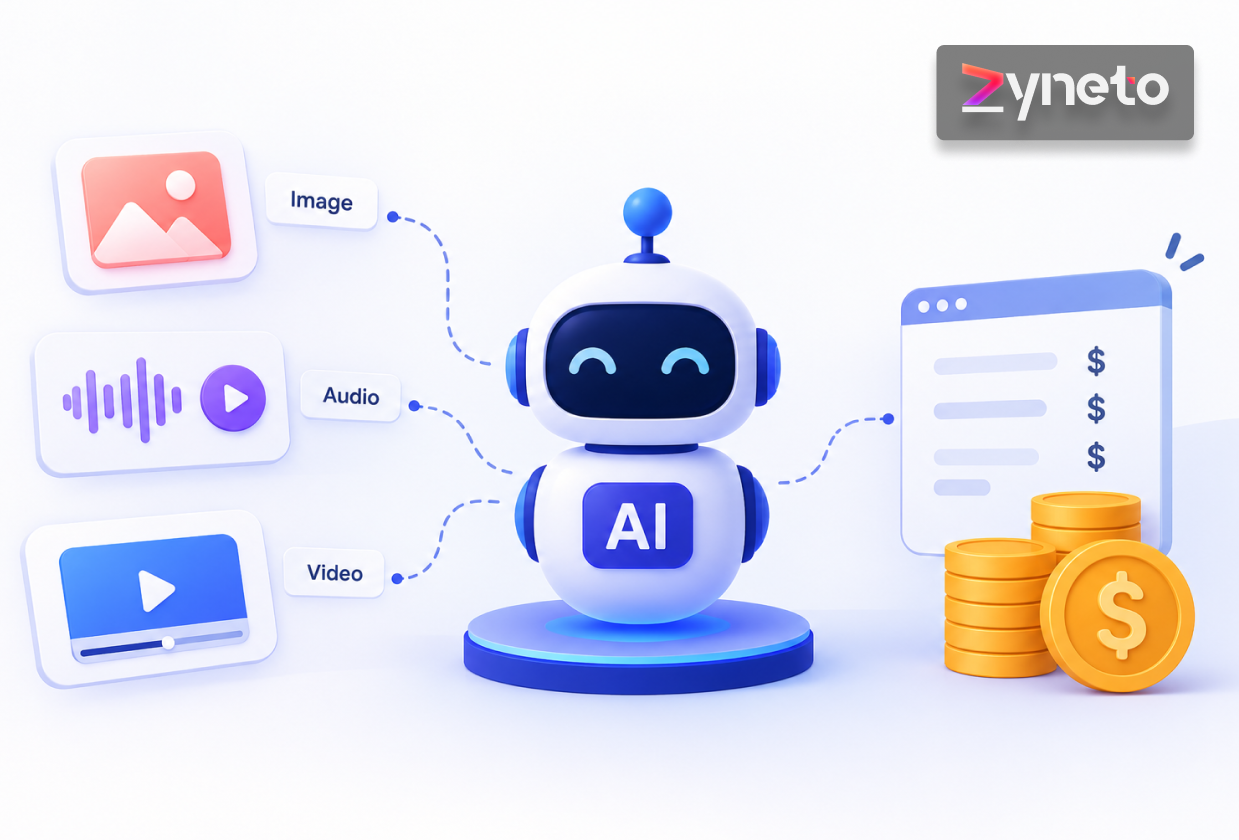
How Much Does it Cost to Develop an App Like Apple Music?


Apple Music is a name that needs little introduction among music lovers.
From discovering new tracks to creating and sharing playlists, the platform has become a go-to destination for millions of listeners.
Its popularity also makes Apple Music an interesting blueprint for investors planning to enter the audio streaming market.
Naturally, one question comes up: How much does it cost to develop an app like Apple Music?
The cost to develop an app like Apple Music typically falls somewhere from $40,000 to $250,000+, depending on how far you want to take it.
Read this blog to explore the key factors that influence development costs and discover practical tips to reduce the overall investment.
Apple Music focuses on high-definition, ad-free music streaming, providing users with access to over 100 million tracks as well as tailored playlists, stations, mixes, and music suggestions.
Users can track exact, line-by-line lyrics along with translations and pronunciations for chosen songs, simplifying the sing-along experience.
The platform additionally allows streaming via Chromecast and provides an immersive listening experience with Spatial Audio and lossless sound.
Apart from music, Apple Music provides exclusive artist content such as detailed interviews, live shows, and original radio programs highlighting some of the most prominent figures in the industry.
For people looking to develop a music streaming application, Apple Music serves as an excellent example of how tailored discovery, high-quality audio, and unique content can enhance the user experience.
The cost to develop a music streaming app like Apple Music can go from $40,000 to $250,000+.
A basic music streaming app with essential features such as user registration, music libraries, playlists, search, and audio playback requires a relatively lower investment.
In contrast, an advanced platform like Apple Music needs sophisticated recommendation engines, high-quality audio streaming, subscription management, content management, and robust backend infrastructure.
Here's a rough breakdown to give you a starting point:
Why such a wide range?
Because so much depends on your feature list, your platform choice, your design ambitions, and where your development team is based.
If you're building exclusively for iPhone users, you'll need reliable iOS app development services to handle Apple's strict guidelines, App Store approval process, and native performance standards.
iOS development tends to be pricier than Android in some regions because of the specialized skill set required and the higher quality bar Apple enforces.
On the flip side, going cross-platform with frameworks like Flutter or React Native can help you launch on both iOS and Android without doubling your budget.
The bottom line?
There's no single number that fits every project.
But understanding where your money goes is the first step toward budgeting smartly and that's exactly what we'll cover next.
Now that you have a ballpark figure, let's talk about what actually moves that number up or down.
Consider these factors to fine-tune your budget:
This is the biggest cost driver, hands down.
Basic music app features like play, pause, skip, and search won't break the bank.
But things get pricier once you add lyrics syncing, offline playback, cross-device sync, and personalized playlists.
Every feature you add means more development hours, more testing, and more potential for bugs to iron out.
So before you finalize your feature list, ask yourself what your users truly need versus what would just be nice to have.
Building for iOS only? Android only? Or both?
Each platform has its own development language, design guidelines, and testing requirements.
Going native on both iOS and Android essentially means building two separate apps, which naturally costs more than a single cross-platform build.
Many startups choose cross-platform frameworks early on to save money, then switch to native development once they've validated their idea and have more funding.
Apple Music didn't get to where it is by accident.
Its clean, intuitive interface is a huge part of why people stick around.
Replicating that level of polish requires skilled designers, multiple rounds of prototyping, and user testing.
Cutting corners here might save you money upfront, but it'll cost you retention in the long run.
Little details like smooth transitions, gesture-based controls, and a well-organized library view make a huge difference in how "premium" your app feels.
The more effort you put into getting these micro-interactions right, the more naturally users will trust and stick with your platform.
Streaming audio isn't like loading a static webpage.
You need robust servers, content delivery networks (CDNs) for fast streaming across regions, and a database architecture that can handle millions of songs and user interactions without lag.
This backend work often gets underestimated, but it's where a huge chunk of your budget will actually go.
Here's something a lot of first-time founders overlook.
You can't just upload music and start streaming it.
Licensing agreements with record labels, distributors, and royalty organizations are legally required and they're not cheap.
Depending on your region and catalog size, licensing costs can range from a few thousand dollars to a significant recurring expense.
This is separate from your development cost but absolutely factors into your overall budget.
Each integration adds development time and, occasionally, licensing fees of its own.
Take payment gateways, for instance supporting multiple currencies, subscription billing cycles, and refund handling aren't plug-and-play affairs.
Social sharing features also need careful handling since every platform (Instagram, WhatsApp, and Facebook) has its own SDK quirks and approval requirements.
And if you're planning to sync playlists or offline downloads across devices using cloud storage, that adds another layer of testing to make sure everything stays in sync without glitches.
AI in music app development has become a genuine differentiator, not just a buzzword.
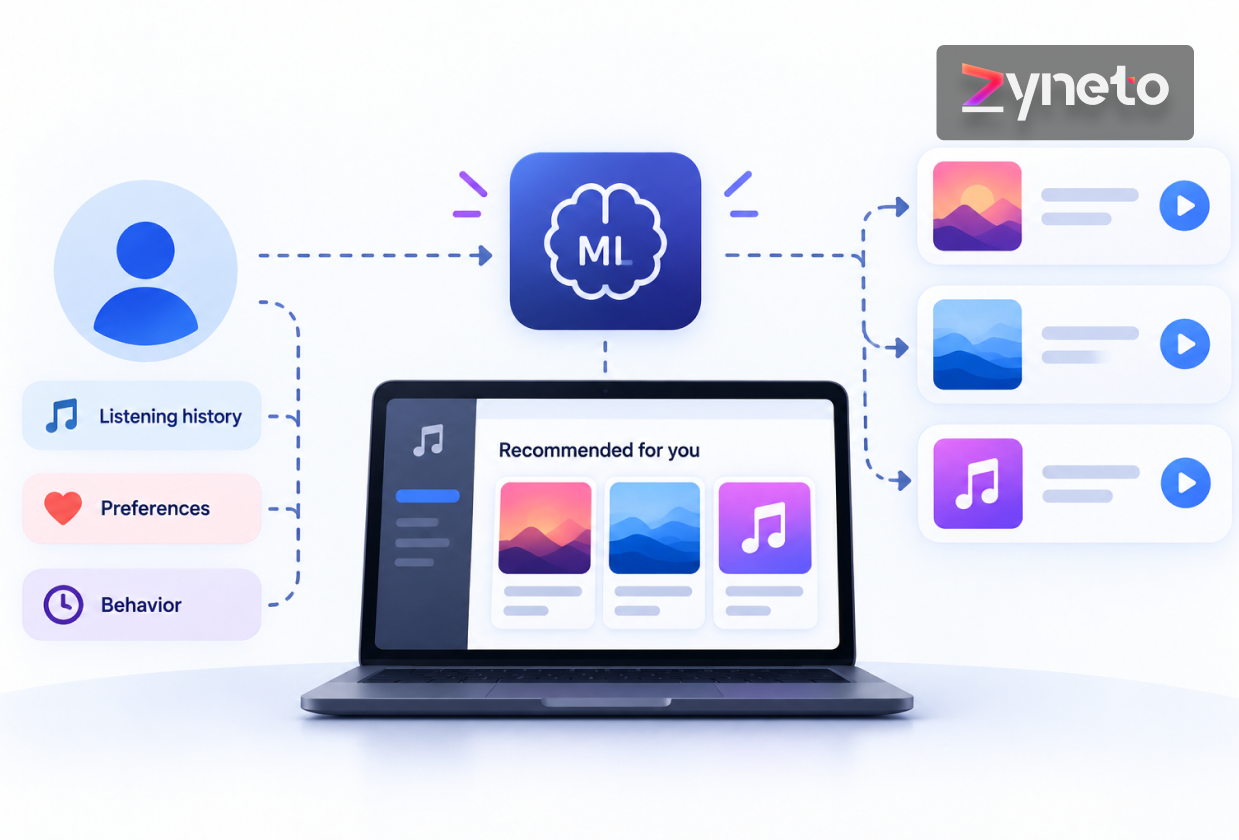
Smart recommendation engines that learn from listening habits can significantly boost user engagement and retention.
But building or licensing that kind of machine learning capability adds real cost, since it requires data scientists, training models, and ongoing refinement.
Beyond recommendations, AI can also power features like mood-based playlists, voice search, and auto-generated mixes based on listening patterns.
The catch is that these models need continuous fine-tuning as user behavior evolves, so factor in ongoing costs, not just a one-time build
Hiring developers from an experienced mobile app development company in North America or Western Europe generally costs more per hour than hiring in South Asia or Eastern Europe.
That doesn't necessarily mean cheaper always means lower quality; plenty of skilled teams operate at competitive rates globally.
It just means location plays a real role in your final number.
When choosing a development partner, balance cost with expertise, communication, and proven experience to get the best long-term value.
Good news you don't have to spend a fortune to get started.
Here are some practical ways to keep your budget in check without sacrificing quality.
Instead of trying to build every feature Apple Music has, launch with the essentials.
Streaming, search, playlists, and basic user profiles are enough to test the waters and gather real user feedback.
You can always scale up once you've validated demand.
If you are building an app like Apple Music and deploy on both iOS & Android with frameworks like Flutter, it can actually reduce the overall cost to develop a music app.
It helps developers maintain a shared codebase across platforms, reducing development time and effort. You can simplify future updates and maintenance while delivering a consistent experience across both platforms.
Rather than building payment processing, cloud storage, or even certain AI recommendation systems from scratch, leverage existing APIs and SDKs.
This can shave weeks off your development timeline and reduce engineering costs substantially.
Partnering with a development team in a region with lower hourly rates doesn't mean compromising on quality.
Just make sure you vet their portfolio, read reviews, and start with a smaller pilot project if you're unsure.
Not every feature deserves equal investment. Choosing basic or advanced features can increase the cost to build an app like Apple Music.
Talk to potential users early, understand what actually matters to them, and allocate your budget accordingly instead of guessing.
Rather than launching everything at once, consider rolling out features in phases.
This spreads out your development costs over time and lets you reinvest revenue from early adoption into building out advanced features later.
Keeping an eye on music app trends, like short-form audio content, AI-curated playlists, or social listening rooms, helps you invest in features that actually resonate with today's users instead of chasing outdated ideas.
This kind of informed planning goes a long way in reducing wasted development spend.
If you're wondering how to create a music app that actually gains traction, studying successful platforms (and their early-stage mistakes) can save you from repeating costly errors.
Sometimes the smartest budget decision is simply avoiding the pitfalls others have already faced.
If Apple Music’s success inspires you to enter the music streaming market, it’s time to turn your idea into a powerful digital product.
Zyneto helps businesses with custom music app development, designed for today’s listeners.
From intuitive interfaces and seamless audio playback to personalized recommendations and secure subscription systems, we build solutions tailored to your business goals.
With the right technology, scalable architecture, and user-focused approach, we help you build a music app that stands out in a competitive market and is ready to grow with your audience.
Building an app like Apple Music is no small feat, but it's far from impossible.
Whether your budget is on the leaner side or you're ready to go all-in with AI-powered personalization and premium design, the key is understanding exactly where your money is going and why.
The Apple Music-like app development cost ultimately comes down to your feature list, platform choice, design ambitions, and the team you choose to build with.
Start smart, prioritize what matters most to your users, and scale thoughtfully as you grow.
With the right planning and the right development partner, your music streaming app doesn't just have to compete it can genuinely stand out.
Ready to turn your idea into something real?
The next step is simply reaching out to a team that understands both the technical and creative sides of building a platform like this.
The Apple Music app development cost can range from $40,000 to $250,000+, depending on features and complexity. A basic MVP for an Apple Music app can cost $40,000-$70,000; a mid-range app with standard streaming features runs $70,000-$150,000. Whereas an advanced app with AI personalization and premium UX is $250,000+.
Key factors include app features and complexity, platform choice (iOS, Android, or cross-platform), UI/UX design quality, backend infrastructure, music licensing and royalties, third-party integrations, AI-driven personalization, and the location of your development team.
Yes. You can't stream music without licensing agreements with record labels, distributors, and royalty organizations. This is a legal requirement separate from development costs, and pricing varies widely from a few thousand dollars to a significant recurring expense depending on your region and catalog size.
Building natively for both platforms essentially means creating two separate apps, which costs more. Using cross-platform frameworks like Flutter or React Native lets you launch on both iOS and Android with a shared codebase, reducing development time, cost, and long-term maintenance effort.
Start with an MVP focused on core features (streaming, search, playlists, profiles), choose cross-platform development, use pre-built APIs for payments and cloud storage instead of building from scratch, outsource strategically to cost-effective regions, prioritize features based on real user needs, and roll out advanced features in phases rather than all at once.
Sudhanshi has several years of experience in digital marketing and now works on growth at Zyneto. Her work covers SEO, content strategy, organic lead generation, social media and paid campaigns across Google, LinkedIn, Instagram and Facebook. She has run B2B technology and SaaS campaigns for international audiences, helping brands get found in search and stay found, and works day to day in Google Analytics, Search Console, Ahrefs, SEMrush, Screaming Frog and Canva. She follows AI driven marketing, changing search behaviour, content automation and social growth closely, and turns audience and search data into plans a team can actually run. She writes about SEO, content strategy and the tactics that still earn traffic as search keeps shifting.
Share your details and we will talk soon.
Be the first to access expert strategies, actionable tips, and the trends actually shaping the digital world. No fluff - just practical insights delivered straight to your inbox.
Dive into our blog and stay ahead of the curve with expert perspectives, future-ready trends, and tech tips written for decision-makers and doers alike.