How to Create an LGBTQ+ Dating App From Scratch?


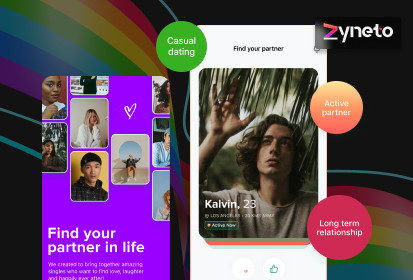
The term LGBTQ+ first came into use in the 1990s, and since then, it's completely reshaped how the dating app market works.
Today, people don't just want a place to swipe; they expect apps built to help them connect with someone who shares their preferences, without having to compromise or explain themselves.
That shift is exactly why this space has become such a leading opportunity for investors and founders alike, and if you’ve been sitting on the idea, now is genuinely a good time to move on it.
Because when you set out to create an LGBTQ+ dating app, you’re not just creating another app in the market. You are building a space where people can finally show up as themselves.
Mainstream dating apps have tried to "add" LGBTQ+ features over the years, but let's be honest, most of them still feel like a second thought.
You already know this. That's probably why you're here.
If you're thinking about how to develop an LGBTQ+ dating app that people genuinely trust and enjoy using, you're in the right place.
Let's get into the blog to know it all:
At its core, an LGBTQ+ dating app is a digital platform built specifically to serve the needs, safety, and social experiences of lesbian, gay, bisexual, transgender, queer, and other gender and other diverse communities.
Some of these apps focus purely on dating.
Others lean into community building, mental health support, event discovery, or even travel and lifestyle recommendations.
What ties them all together is intent.
Unlike a generic app that adds a "gender preference" dropdown as an afterthought, an app built for this community is designed from day one with inclusivity baked into every screen, every flow, every interaction.
There are several apps in the market that offer LGBTQ+ people support, including Grindr, HER, and many others.
Here's the honest answer: because the demand is massive, and it's still underserved.
Millions of LGBTQ+ individuals around the world use dating and social apps every single day, yet most are stuck choosing between apps that weren't designed with them in mind or niche apps that feel outdated, unsafe, or poorly maintained.
That gap is your opportunity.
There's also a deeper reason, and it matters just as much as the business case. And those reasons can be representation. It is not a marketing checkbox; it’s the actual product.
When you build a dating app that takes safety, inclusivity, and authenticity seriously, you're solving a problem that a lot of people deal with every single day: finding connection without having to hide who they are.
That's a powerful thing to build a business around.
And from a pure market timing perspective, right now is a genuinely good moment to enter the space.
More cities and countries are recognizing LGBTQ+ rights than ever before, tech-savvy younger generations are increasingly open about their identities online, and investors are paying closer attention to inclusive tech products that show real traction.
If you've been sitting on the idea to develop an LGBTQ+ dating app, the market conditions are lining up in your favor.
Before you jump into development, it helps to know exactly what kind of app you're building because "LGBTQ+ dating app" is a pretty broad category.
Here are the main types worth considering:
The most common category, and usually the one people mean when they say they want to develop an LGBTQ+ dating app.
These apps focus on connecting users romantically or based on preferences, location, and shared interests.
Not everyone is looking for a date.
Some users just want a place to find friends, join local meetups, or connect with people who share similar experiences.
Given the unique mental health challenges many LGBTQ+ individuals face, apps offering therapy access, peer support groups, or wellness resources are growing fast.
These platforms often become a lifeline for users who don't feel safe discussing their identity with a traditional therapist or support network.
These help users find LGBTQ+-friendly destinations, businesses, events, and safe spaces while traveling.
For a community that still has to think twice about safety in unfamiliar places, this kind of guidance can make the difference between a stressful trip and a genuinely enjoyable one.
Apps built around Pride events, local meetups, professional networking, or nightlife recommendations.
These are especially valuable for users who've just moved to a new city and are looking to build a community from scratch.
A lot of successful platforms today combine elements–dating plus community, or social plus event discovery because users often want more than one type of connection in a single app.
Knowing which lane you're in, or which combination, will shape almost every decision that follows, from your feature list to your tech stack.
Alright, let's get into the actual process.
If you want to build a dating app for LGBTQ+ people that resonates with them, you can't just copy a mainstream app and swap out the logo.
Here's how to approach it properly, step by step.
Before anything else, get specific about who you're building for.
Are you targeting the broader LGBTQ+ community, or focusing on a specific subset. Let’s say, trans and non-binary users, or queer women, or a particular region?
This step alone will save you from months of wasted development later.
You wanted content that shows what your competitors are doing, and honestly, that's exactly the right instinct for this step too.
Look closely at existing platforms.
What do users complain about in app store reviews?
What features get praised again and again?
Where are the gaps?
This research phase shapes your entire product strategy, so don't rush it.
Before investing serious money, validate that people actually want what you're planning to build.
If people are excited enough to sign up before the app even exists, that's a strong signal you're onto something real.
Once you know your audience and you've validated demand, find out how user will move on your app.
It includes:
Sketch this out before you open any design tool. Getting the flow clear now saves you from expensive rework later.
This is where you can avoid the same copy-paste dating app design everyone else uses. Just put in the real work instead of copying others.
Inclusive design isn't a single feature; it's a mindset applied across the entire product.
Get this right, and users will notice immediately. Get it wrong, and they'll notice even faster.
It also helps to remember that inclusivity isn't a static checklist you complete once.
Language around identity shifts over time, new terms emerge, and community expectations evolve.
Building a habit of periodically revisiting your profile fields, terminology, and design choices maybe every 6–12 months keeps your app from feeling stuck in the past.
Don't try to launch with every feature imaginable.
Start with a minimum viable product that nails the core experience, profile creation, matching, and messaging, done really well.
An MVP approach also keeps your initial costs manageable, which matters a lot if you're self-funding or working with a limited budget.
Testing an LGBTQ+ dating app requires more than just checking for bugs.
Once you're confident in the solution, launch, but treat launch day as the beginning, not the finish line.
Building an app for this community is an ongoing relationship, not a one-time project.
Let's talk about dating app features, because this is where your product either wins trust or loses it fast.
Not every app needs all of these on day one, but this list gives you a strong benchmark for where the bar sits in 2026.
When you're prioritizing your build, it helps to rank app features by impact rather than trying to launch with everything at once.
Profile flexibility, safety tools, and reliable messaging tend to matter more to early users than flashy extras like gamified matching or AI-generated icebreakers.
Get the fundamentals rock solid first, then layer in the more advanced features as your user base and budget grow.
A good rule of thumb: if a feature doesn't directly improve trust, connection, or safety, it can probably wait for a later release.
This section deserves extra weight, because for this specific audience, safety isn’t a nice-to-have; it’s the deciding factor between someone trusting your app or deleting it within five minutes.
Many LGBTQ+ individuals face real risks when it comes to being outed, harassed, or even physically endangered because of information shared carelessly online.
That means your responsibility as a builder goes beyond standard app security.
Building trust here isn't optional. But if you get it wrong, word spreads fast within tight-knit communities and not in your favor.
And, if you get it right, you’ll earn a level of loyalty that’s genuinely hard to replicate.
Good design for this space goes beyond aesthetics; it's about making every single user feel like the app was built with them specifically in mind.
A genuinely inclusive design process usually involves the community directly.
Bring in the right designers, testers, and consultants early rather than treating inclusivity as a final review checklist.
AI is quietly becoming one of the most useful tools in this space, and it's worth understanding where it fits.
That said, AI should support human judgment, not replace it, especially around moderation decisions that affect someone's safety or reputation.
The best implementations treat AI as a first line of defense, with real people reviewing edge cases.
There's also a growing use case around accessibility. AI-powered voice-to-text and text-to-speech features are making these apps more usable for people with disabilities, which is another layer of inclusivity worth considering as you plan your roadmap.
As AI tools become cheaper and more accessible, even smaller teams can now afford to build features that used to require large, specialized engineering teams which levels the playing field for newer platforms entering the space.
Your tech stack should be chosen based on scalability, security, and speed to market. Here's a solid starting point:
The exact combination depends on your budget, team expertise, and long-term scalability goals but this gives you a realistic foundation to plan around.
Let's talk numbers, because this is usually the question everyone actually wants answered. The LGBTQ+ dating app development cost can go from $10,000 to $150,000+.
The cost to develop a dating app varies widely depending on complexity, platform choice, and where your development team is based.
It's worth budgeting an additional 15–20% of your development cost annually for maintenance, updates, and scaling infrastructure as your user base grows.
Many founders underestimate this ongoing cost and get caught off guard six months after launch.
If you're working with an agency, ask for a detailed breakdown up front rather than a single lump-sum quote.
That way you know exactly what you're paying for at each stage, and you can make informed decisions about where to cut corners and where not to.
Just building a great product is just half the work; the other half is making sure it's financially sustainable.
The key is balancing monetization with trust.
If you do too much for ads or paywalls, you risk pushing too hard on ads or paywalls, and you risk isolating a community that already deals with enough friction elsewhere.
Every dating app faces obstacles, but building for this community comes with its own specific set of dating app development challenges worth planning for early.
Adding heavy safety features can sometimes make onboarding feel slow or overly cautious.
Finding the right balance between protection and a smooth user experience takes careful iteration and real user testing.
Fake accounts are a problem across all dating platforms, but the trust cost is higher here.
Investing early in verification systems and AI-based detection pays off significantly down the line.
Laws around LGBTQ+ rights vary dramatically by country, and some regions still criminalize identities your app is built to serve.
You'll need region-specific safety features and, in some cases, difficult decisions about market availability.
As your user base grows, moderating harassment, hate speech, and inappropriate content becomes exponentially harder.
A combination of AI tools and a well-trained human moderation team is essential, not optional.
Users can tell the difference between authentic inclusivity and a rainbow logo slapped on for Pride month.
Long-term credibility depends on consistent, year-round commitment to the community not just seasonal branding.
With several established players already in the space, keeping users engaged long-term requires continuous innovation, not a one-and-done launch.
Unlike mainstream apps that can lean on brand recognition, a new platform in this space has to earn trust from scratch.
That means being transparent about how user data is handled, being responsive to early feedback, and being visible and consistent in your community engagement not just during launch week.
Trust, once broken in a close-knit community, is incredibly hard to win back.
That's exactly why so many teams treat every one of these challenges as an ongoing responsibility rather than a box to check off once and forget about.
Compliance isn't the most exciting part of building an app, but skipping it can sink your entire business.
Bring in a legal consultant familiar with both data privacy and LGBTQ+ rights law early in the process this isn't an area where you want to guess and hope for the best.
It's also worth building a clear internal policy for how you respond to government data requests, especially in regions with weaker protections for LGBTQ+ individuals.
Some successful platforms have gone as far as publishing transparency reports, showing users exactly how often data requests happen and how they're handled.
That level of openness goes a long way in an industry where users are understandably cautious about who has access to their information.
You've built the app - now people need to actually find it and trust it enough to sign up.
Authenticity is your biggest marketing asset here lean into it hard.
One thing worth remembering: this community has seen plenty of brands show up with rainbow logos every June and disappear by July.
If your marketing feels consistent, respectful, and present year-round, people notice and that consistency does more for your growth than any single campaign ever could.
Consider building a content calendar around community milestones, not just Pride month, so your presence feels genuine rather than seasonal.
Keeping an eye on dating app trends helps you build something that feels current rather than dated on arrival.
Staying ahead of these shifts now will save you from a costly redesign later.
The apps that tend to win long-term aren't necessarily the ones with the flashiest new feature, they're the ones that adapt quickly to how their users actually behave.
Keep a close eye on your own usage data alongside broader industry trends, since your specific community's habits might shift faster or slower than the market as a whole.
Looking to launch an LGBTQ+ dating app, it takes real understanding of the community you’re serving.
That's where Zyneto comes in.
With hands-on experience in dating app development services, Zyneto helps you turn your idea into a fully functional, safe, and inclusive platform from the ground up.
From defining your niche and mapping user flows to building robust safety features, smart matching algorithms, and scalable infrastructure, the team works with you at every stage.
They also bring in AI-driven moderation, secure data handling, and inclusive UX practices, so your app doesn't just launch it earns trust from day one.
Whether you're starting with an MVP or planning a full-featured launch, Zyneto's development approach is built around getting the details right, not just getting it done fast.
Building an app for this community is genuinely one of the more meaningful projects you can take on as a founder or developer.
It's not just about code and features it's about creating a space where people can connect without compromise.
If you approach it with real intention, solid research, and a genuine commitment to safety and inclusivity, you're setting yourself up for something that goes beyond just another app in the store.
Take your time, involve the community every step of the way, and build something people actually need.
A basic MVP typically takes 3–5 months, while a full-featured platform can take 8–12 months depending on complexity and team size.
It's not mandatory, but it's highly recommended. A team familiar with the community's specific needs will save you time and help you avoid costly design mistakes.
Outing prevention and data privacy should be top priorities, followed closely by robust reporting and moderation tools.
Yes starting with a lean MVP focused on core features lets you validate the idea and grow the app gradually as revenue comes in.
Involve LGBTQ+ voices throughout the entire process, from design to testing to ongoing feature decisions, not just during marketing campaigns.
A freemium model with optional subscription tiers tends to work well, as it keeps the app accessible while still generating sustainable revenue.
Not necessarily at launch, but planning your architecture to support multi-language expansion early will save significant rework later.
Work with legal counsel to understand region-specific requirements, and consider limiting availability in regions where user safety can't be guaranteed.
Sudhanshi has several years of experience in digital marketing and now works on growth at Zyneto. Her work covers SEO, content strategy, organic lead generation, social media and paid campaigns across Google, LinkedIn, Instagram and Facebook. She has run B2B technology and SaaS campaigns for international audiences, helping brands get found in search and stay found, and works day to day in Google Analytics, Search Console, Ahrefs, SEMrush, Screaming Frog and Canva. She follows AI driven marketing, changing search behaviour, content automation and social growth closely, and turns audience and search data into plans a team can actually run. She writes about SEO, content strategy and the tactics that still earn traffic as search keeps shifting.
Share your details and we will talk soon.
Be the first to access expert strategies, actionable tips, and the trends actually shaping the digital world. No fluff - just practical insights delivered straight to your inbox.
Dive into our blog and stay ahead of the curve with expert perspectives, future-ready trends, and tech tips written for decision-makers and doers alike.