Complete Guide to Create a Classified App


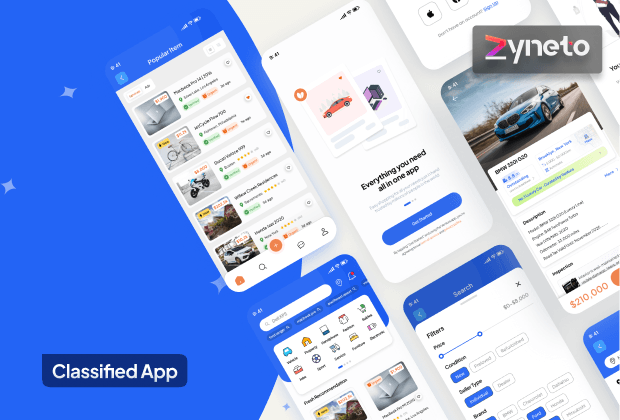
Craigslist launched in 1995.
Yet in 2026, millions of people still use it, with an ugly interface, zero AI, and all. That's the quiet power of classifieds: they solve a timeless human need to connect buyers and sellers locally.
But here's what's changed. Today's users expect instant search, AI-suggested pricing, verified profiles, and in-app payments, not a wall of blue hyperlinks.
The gap between what legacy platforms offer and what modern users demand has never been wider.
This is your opportunity to create a classified app in 2026.
Be it building a hyperlocal goods marketplace, a niche service platform, or the next OfferUp, this guide walks you through every step of classified app development.
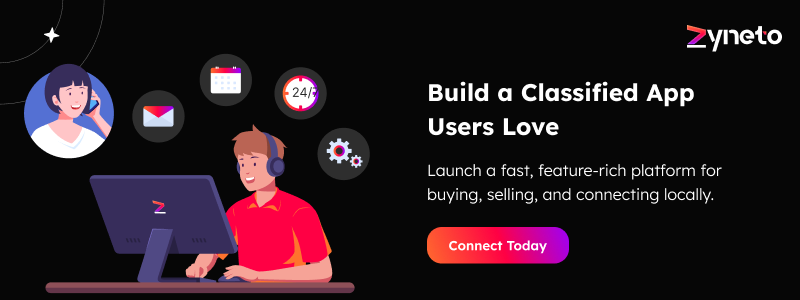
A classified app is a mobile marketplace where people buy, sell, rent or trade goods and services directly with each other, no middleman, no storefront, just peer-to-peer commerce at your fingertips.
Think OfferUp, OLX, or Facebook Marketplace. Simple concept. Massive scale.
So why is the market exploding in 2026? Three forces are driving it: the secondhand economy is now mainstream, hyperlocal shopping is replacing long delivery waits, and mobile-first generations expect a seamless app experience over desktop classifieds.
The global online classifieds advertising services market is projected to reach $1400.50 bn by 2035, with emerging markets in Asia, Africa, and Latin America leading growth.
If you’re looking to understand how to develop a classified app that captures this momentum, the timing has never been better.
The time is now, the demand is proven, and the niches are wide open.
The demand is real, the technology is ready, and the window is open. Before diving into this classified app development guide, here's exactly why smart entrepreneurs are betting on this market right now.
Unlike e-commerce, you never hold stock.
Your users supply the inventory; you supply the platform and charge for visibility, boosts, and premium features.
It's one of the leanest business models in tech with margins that would make a SaaS founder jealous.
Resale, re-commerce, and "buy local" aren't trends anymore; they're permanent consumer behaviors.
Gen Z and millennials actively prefer secondhand over new.
You're not building a marketplace; you're riding a cultural shift worth billions.
A few years ago, building smart search, fraud detection, and auto-categorization required a dedicated ML team.
In 2026, it's API calls. Smaller teams can now build smarter platforms than those that billion-dollar companies launched a decade ago.
Features make or break a classified app. Get them right, and users stay, post, and transact. Get them wrong, and they're on a competitor's app before your onboarding flow even finishes.
Here's what your platform absolutely cannot launch without.
Users are the heartbeat of your classified app. Every feature in this panel exists to make buying, browsing, and connecting as effortless and trustworthy as possible.
The admin panel is your command center. It gives you complete visibility and control over every listing, user, transaction, and piece of content published across your entire platform.
Sellers are your supply engine. Without enough quality listings, buyers leave and never return. This panel gives sellers everything they need to list fast, sell confidently, and grow their presence.
Basic features get you launched. Advanced features get you chosen. So, here are some advanced features to help you create a mobile app successfully:
Mobile classified apps now account for more than 64% of total platform traffic globally, which clearly shows why businesses are focusing on understanding how to create a successful classified app that’s successful in the market.
This section is all you need to understand that:
Before writing a single line of code, understanding your market is non-negotiable. The classified space is broad: real estate, jobs, vehicles, services, and local goods. Choosing the wrong niche without data behind it is the fastest path to a failed launch.
When you decide to create a classified app, your first investment should be in research, not development.
One of the most common mistakes teams make when they develop a classified app is trying to build everything at once. Start lean.
An MVP (Minimum Viable Product) lets you test assumptions fast, gather real feedback, and avoid building features nobody asked for. Draw a hard line between "must-have" and "nice-to-have."
Your tech decisions here ripple through everything: performance, scalability, hiring, and cost. There's no universally "correct" stack, but there are wrong choices for your context.
Consider your team's expertise, your budget, and whether you're going native, cross-platform, or web-first.
In classified platforms, design isn't just aesthetics; it's a trust signal. A cluttered, confusing UI makes users question whether a listing is legitimate.
When you make a classified app, the experience of browsing, posting, and transacting needs to feel frictionless and safe at every touchpoint.
This is where the product comes to life. Agile sprints (2-week cycles) work best; they keep the team focused and allow rapid course correction.
As you actively develop a classified app in this phase, the backend architecture deserves as much attention as the screens users see. Poor API design early creates enormous technical debt later.
A soft launch beats a loud, buggy one every time. Release to a small beta group first, gather data, fix the critical pain points, and then scale your marketing.
Post-launch is where most apps actually win or lose; it's not a finish line, it's mile one.
Launching a classified platform sounds straightforward until you’re deep in it.
It is not as easy as it sounds; there are several challenges you can face:
Unverified users flood platforms with fraudulent ads, eroding trust fast and driving genuine buyers away before they even transact.
Solution: Implement phone/email verification, AI-based listing moderation, and user reporting systems to catch and remove bad actors automatically.
Convincing two unknown people to exchange money or goods requires more than good design; it demands credible, visible safety signals.
Solution: Add seller ratings, verified badges, secure in-app chat, and transaction history so users feel protected before engaging with anyone.
As inventory grows into millions of listings, search performance degrades, databases slow down, and the whole user experience quietly falls apart.
Solution: Use Elasticsearch for fast queries, database indexing, and CDN-backed image delivery to keep performance smooth at any scale.
Aggressive ads and paywalls push free users away, but a completely free platform burns cash and becomes financially unsustainable very quickly.
Solution: Offer freemium tiers, free basic listings, paid promotions, and featured slots, so revenue grows without alienating your core user base.
Most classified app users browse once, find nothing immediately useful, and never return, making early retention the platform's most critical metric.
Solution: Send personalized push alerts for new matching listings, enable saved searches, and gamify profile completion to pull users back consistently.
Launching is the easy part; staying relevant after launch is where most platforms struggle. These practices separate the apps that scale from the ones that stall.
1] Start With a Focused Niche: Don't try to serve everyone on day one. Dominate one category or city before expanding, and focused platforms always out-retain generalist ones early.
2] Prioritize Mobile-First Design: Over 64% of classified traffic comes from mobile. Every screen, button, and flow must be designed for thumbs before anything else.
3] Make Onboarding Frictionless: Users abandon apps within the first 60 seconds if setup feels heavy. Keep registration to under three steps with social login options.
4] Build Trust Into Every Feature: When you build a classified app, verified profiles, seller ratings, and secure messaging aren't add-ons — they're the foundation users decide to stay for.
5] Optimize Search & Filtering Early: A classified app lives and dies by its search. Fast, accurate, filter-rich search keeps users engaged instead of bouncing to a competitor.
6] Launch With Real Listings, Not Empty Pages: Seed your platform before public launch. Partner with local sellers or businesses so new users land on an active, believable marketplace immediately.
7] Set Up Analytics Before Day One: You can't improve what you don't measure. Track drop-offs, listing clicks, and session depth from the very first day of launch.
8] Keep the Feedback Loop Short: Release updates every two weeks minimum. Users who see their complaints addressed quickly become your most loyal advocates and word-of-mouth promoters.
AI is no longer a luxury feature reserved for tech giants; it's becoming the backbone of competitive classified platforms.
Using AI smartly in your classified app development process can mean the difference between a platform users tolerate and one they genuinely love.
Here’s how AI can be of help:
Forget keyword-only search. AI understands intent; a user typing "cheap SUV under 5 lakhs" gets exactly that, not a flood of irrelevant, unfiltered vehicle listings cluttering their screen.
AI scans every new listing in milliseconds, flagging fake photos, duplicate posts, prohibited content, and pricing anomalies before they ever reach real users and damage platform trust.
The more a user browses, the smarter your app gets. AI maps behavior patterns and surfaces listings they didn't search for but almost certainly want to see next.
AI analyzes thousands of similar listings in real time and suggests optimal pricing to sellers, helping them close faster while keeping your marketplace competitively and accurately priced throughout.
AI monitors user behavior, messaging patterns, and account activity simultaneously. Suspicious accounts get flagged or blocked automatically, long before a real user falls victim to any scam.
An AI chatbot handles listing queries, account issues, and buyer-seller disputes around the clock, reducing support costs dramatically while keeping users helped, happy, and inside your app longer.
Sellers upload a photo, and AI identifies the product, suggests a category, fills in attributes, and even recommends a title, cutting listing time from minutes down to seconds.
Your app is only as good as the team that builds it.
The classified marketplace is competitive, which is why you need the right development partner for your business.
Here’s exactly what to look for before signing any contract:
The global classified ads market is projected to cross $1.4 billion by 2031, and the window to claim your share is open right now, not later.
But capitalizing on that opportunity demands more than a good idea; it demands the right execution partner.
Zyneto's classified app development services are built specifically for entrepreneurs and businesses who are serious about launching platforms that perform, scale, and retain users long-term.
From architecture decisions to post-launch support, every stage is handled with precision, transparency, and a product mindset, so you ship something the market actually responds to.
The classified ads market isn't slowing down; it's accelerating, and the platforms built today will define who dominates the next decade.
Whether you're targeting a hyperlocal niche or building the next global marketplace, the fundamentals remain the same: strong features, smart technology, and an experience users actually trust.
The opportunity is real, the tools are available, and the demand is already there waiting to be captured. What separates successful platforms from abandoned ones isn't the idea; it's execution.
With the right strategy, the right tech stack, and the right development partner beside you, building a classified app that genuinely competes in 2026 is absolutely within reach.
The cost typically ranges from $10,000 to $80,000+, depending on features, platform (iOS/Android/both), and the development team you choose. A basic MVP costs significantly less than a full-featured platform with AI integrations.
A well-scoped MVP takes roughly 3 to 5 months to develop. A fully featured platform with advanced capabilities like AI moderation, escrow payments, and analytics dashboards can take 6 to 9 months from kickoff to launch.
Cross-platform frameworks like Flutter or React Native work well for most classified apps, delivering faster timelines and lower costs. Native development makes sense only when you need maximum performance or platform-specific features at scale.
The most common monetization models include featured listing fees, subscription plans for power sellers, pay-per-boost promotions, in-app advertising, and transaction-based commissions. Most successful platforms combine two or three of these revenue streams simultaneously.
Absolutely. AI can be integrated at any stage — from smart search and automated moderation to dynamic pricing suggestions and fraud detection. In 2026, most AI capabilities are accessible via APIs, making them affordable even for early-stage classified platforms.

Vikas has around fifteen years of experience building software and now builds generative AI systems at Zyneto. His work covers retrieval augmented generation, agentic AI, knowledge graphs, AI memory, and the evaluation and guardrails that decide whether any of it is safe to put in front of customers. He has shipped enterprise copilots, document AI, chatbots and predictive analytics for e-commerce, fintech and marketing teams, and works day to day in Python, JavaScript and SQL. He follows multimodal models, business process automation and enterprise AI security closely, and mentors engineers moving into AI. He writes about architecture, inference cost and the failure modes that only show up at production scale.
Share your details and we will talk soon.
Be the first to access expert strategies, actionable tips, and the trends actually shaping the digital world. No fluff - just practical insights delivered straight to your inbox.
Dive into our blog and stay ahead of the curve with expert perspectives, future-ready trends, and tech tips written for decision-makers and doers alike.