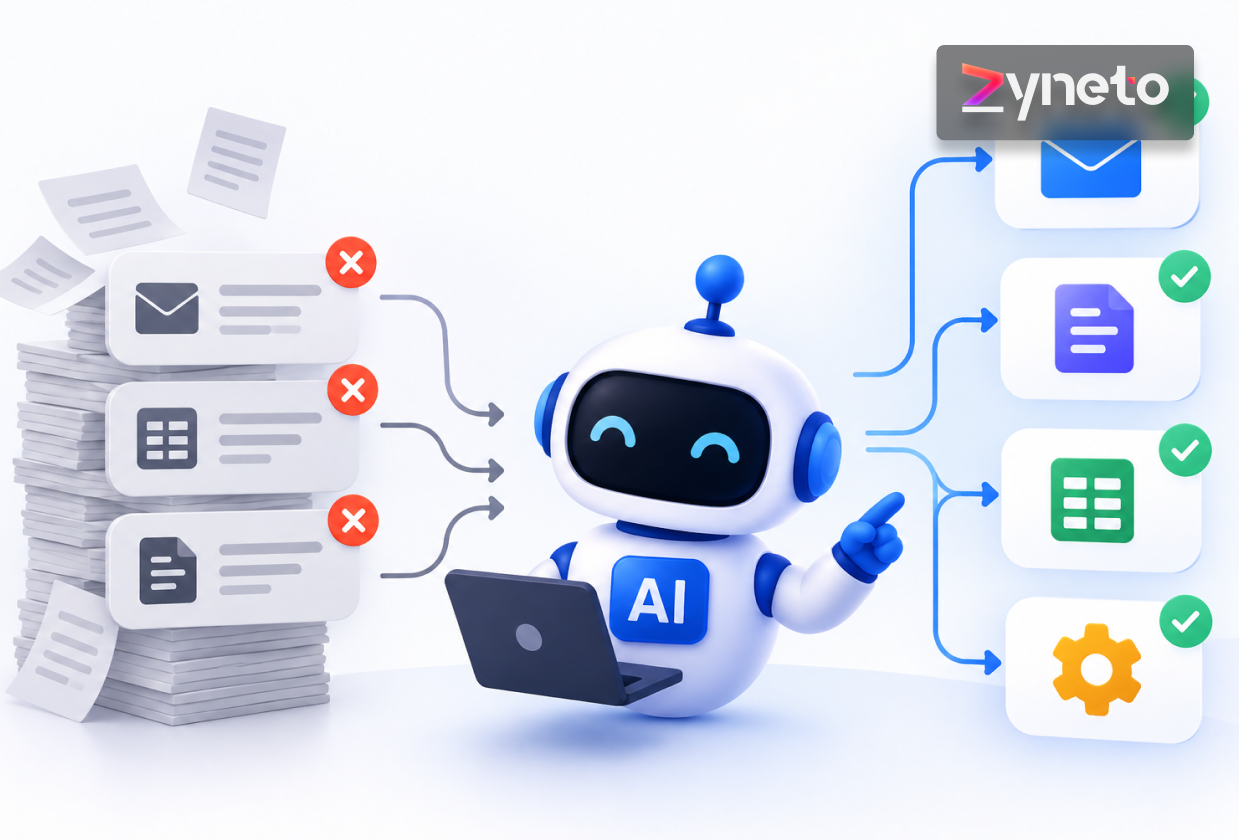
Top 15+ Examples of AI Being Integrated in the Real World


Let's be honest a few years ago, "AI" felt like something out of a sci-fi movie.
Something distant. Something for tech giants and research labs.
But today? You're probably interacting with it before you've even finished your morning coffee.
Your phone unlocks with your face. Your email sorts out spam before you see it. Your playlist somehow knows exactly what mood you're in.
That's not a coincidence. That's AI, quietly working in the background of your everyday life.
And if you're a business owner, a marketer, or just someone curious about where technology is headed, you've probably found yourself asking the same question a lot of people are asking right now: how exactly is this stuff being used, and where does it actually make a difference?
That's exactly what we're going to unpack today.
We're going to walk through some of the most compelling examples of AI being integrated in the real world not the theoretical, "someday this might happen" kind of AI, but the stuff that's already changing industries, saving companies money, and making everyday tasks easier.
Grab a coffee. Let's dive in.
Before we jump into the examples, let's talk about why this topic is such a big deal.
AI isn't a trend anymore. It's infrastructure.
Businesses that ignore it aren't just missing out on "cool tech" they're falling behind competitors who are using it to move faster, serve customers better, and cut costs.
That's why looking at real examples of AI integration matters so much. It's not about hype. It's about proof.
When you see AI Integration examples across industries as different as healthcare, farming, and finance, you start to realize this isn't a niche trend. It's a fundamental shift in how work gets done.
So let's get into it starting with the industries you probably interact with every single day.
Doctors are brilliant. But they're also human, which means they get tired, they miss things, and they can only be in one place at a time.
AI doesn't replace that expertise it supports it.
Hospitals are now using AI-powered imaging tools to detect tumors, fractures, and early signs of disease in X-rays and MRIs, often faster and more accurately than the human eye alone.
This is one of the clearest examples of AI integration you'll find, because the stakes are so high. A missed diagnosis can cost a life. A faster one can save it.
Beyond imaging, AI is also being used to predict patient risk. Hospitals can flag patients who are likely to be readmitted or who might develop complications, allowing doctors to intervene earlier.
It's not flashy. But it's saving lives quietly, every single day.
Ever notice how online shopping just... knows you?
You browse a pair of shoes, and suddenly your homepage is full of similar styles. You add something to your cart, and you get a gentle nudge reminding you it's still there.
That's AI working behind the scenes, analyzing your behavior and predicting what you're likely to want next.
This is one of the most relatable examples of ai being integrated in real world scenarios, because almost everyone has experienced it firsthand.
Retailers use AI to manage inventory too, predicting what products will sell out and when to restock, so you're not left disappointed by an "out of stock" message.
For businesses, this means less wasted inventory and higher customer satisfaction. For you as a shopper, it means a smoother, more intuitive experience.
Here's a scenario you've probably experienced: you get a text from your bank asking if you really made that purchase in another city.
That quick alert? It's AI, scanning thousands of transactions in real time, looking for patterns that don't match your normal spending behavior.
Banks have been early adopters when it comes to AI Integration examples, mainly because fraud costs them (and you) real money.
AI models can flag suspicious activity within seconds something that would take a human analyst hours, if not days, to catch manually.
Beyond fraud detection, banks use AI for credit scoring, customer service chatbots, and even personalized financial advice. It's making the entire industry faster and, in many ways, safer for the average customer.
Let's talk about chatbots for a second.
A few years ago, chatbots were... rough. You'd type a question, and you'd get some generic, unhelpful response that made you want to throw your phone across the room.
That's changed dramatically.
Modern AI-powered chatbots can understand context, tone, and intent. They can handle complex customer service issues, answer questions accurately, and even hand off to a human agent seamlessly when needed.
This is one of the most visible examples of AI integration for businesses, because it directly impacts customer experience and customer experience directly impacts revenue.
Companies are using AI chatbots to handle everything from order tracking to technical support, freeing up human agents to focus on more complicated, high-value conversations.
The result? Faster response times for customers and lower support costs for businesses. It's a win-win, and it's one of the reasons this use case gets brought up so often.
Here's where it gets tricky.
Customers still want to feel heard. Nobody enjoys talking to a chatbot that clearly doesn't understand what they're asking.
The challenge for businesses is figuring out where AI should step in, and where a human needs to take over.
Get this balance wrong, and you risk frustrating your customers instead of helping them. Get it right, and you create a support experience that feels fast, smart, and still human when it needs to be.
You might not think of farming as a tech-heavy industry, but it's quietly become one of the most fascinating spaces for AI adoption.
Farmers are using AI-powered drones and sensors to monitor crop health, soil conditions, and water levels in real time.
Instead of guessing when to water or fertilize, AI systems analyze data and tell farmers exactly what their fields need, and when.
This is a powerful example of how examples of AI integration go far beyond tech offices and into fields, quite literally.
The impact here is huge. Less water waste. Higher crop yields. Lower costs. And in a world dealing with food security concerns, that matters more than ever.
Imagine a factory machine breaking down in the middle of a production run. That's expensive. That's time lost. That's frustrated customers waiting on delayed orders.
AI is helping manufacturers avoid exactly that scenario through something called predictive maintenance.
Sensors on equipment feed data into AI systems that can predict when a machine is likely to fail, often days or weeks before it actually happens.
This gives companies time to fix the issue on their own schedule, instead of dealing with a costly, unexpected breakdown.
It's one of those examples of ai being integrated in real world settings that doesn't get talked about enough, but it's saving manufacturers millions of dollars every year.
Not every factory floor is running the latest tech. A lot of manufacturing equipment has been around for decades.
The challenge here is retrofitting older machines with sensors and systems that can actually "talk" to AI software.
It's not impossible, but it takes investment, planning, and a willingness to modernize infrastructure that's been working "just fine" for years. That resistance to change is often the biggest barrier, more than the technology itself.
Ever used a navigation app that reroutes you around traffic before you even see the jam?
That's AI, constantly analyzing traffic patterns, weather, and historical data to suggest the fastest route.
On a larger scale, logistics companies use AI to optimize entire delivery networks. They predict demand, plan efficient routes, and even anticipate delays caused by weather or traffic congestion.
This is one of the most practical examples of AI integration you interact with regularly, especially if you've ever ordered something online and been surprised by how accurate the delivery estimate was.
Self-driving vehicle technology also falls into this category, though it's still evolving. But the logistics side of things? That's already delivering real, measurable results.
Marketing teams used to rely heavily on gut instinct and slow, manual A/B testing.
Now, AI tools can analyze campaign performance in real time and adjust bidding, targeting, and even ad creative automatically.
This means ads get shown to the right people, at the right time, without a marketer manually tweaking every setting.
It's a great example of AI Integration examples working hand-in-hand with human creativity rather than replacing it. The strategy still comes from people. The optimization? That's where AI shines.
Content creation tools are also helping marketers brainstorm ideas, draft copy, and analyze what messaging resonates most with different audiences.
Every student learns differently. Some need more time on certain topics. Others get bored if things move too slowly.
AI-powered learning platforms are adapting to individual students, adjusting difficulty levels and recommending resources based on how each student is actually performing.
This is a meaningful shift, because for years, education has largely been "one size fits all," even though we all know that's not how learning really works.
Teachers are also using AI to automate grading for objective assessments, freeing up time to focus on actual teaching and mentorship instead of paperwork.
There's a real concern here worth addressing honestly.
If students (or even teachers) lean too heavily on AI tools, there's a risk of losing critical thinking skills or genuine engagement with the material.
The challenge isn't whether to use AI in education it's making sure it enhances learning rather than becoming a shortcut that skips the learning altogether.
You know that feeling when a streaming platform recommends a show, and it ends up being exactly what you wanted to watch?
That's not luck. That's an AI recommendation engine analyzing your watch history, ratings, and even how long you watched something before clicking away.
This is one of the examples of ai being integrated in real world entertainment that most people interact with daily without even thinking about it.
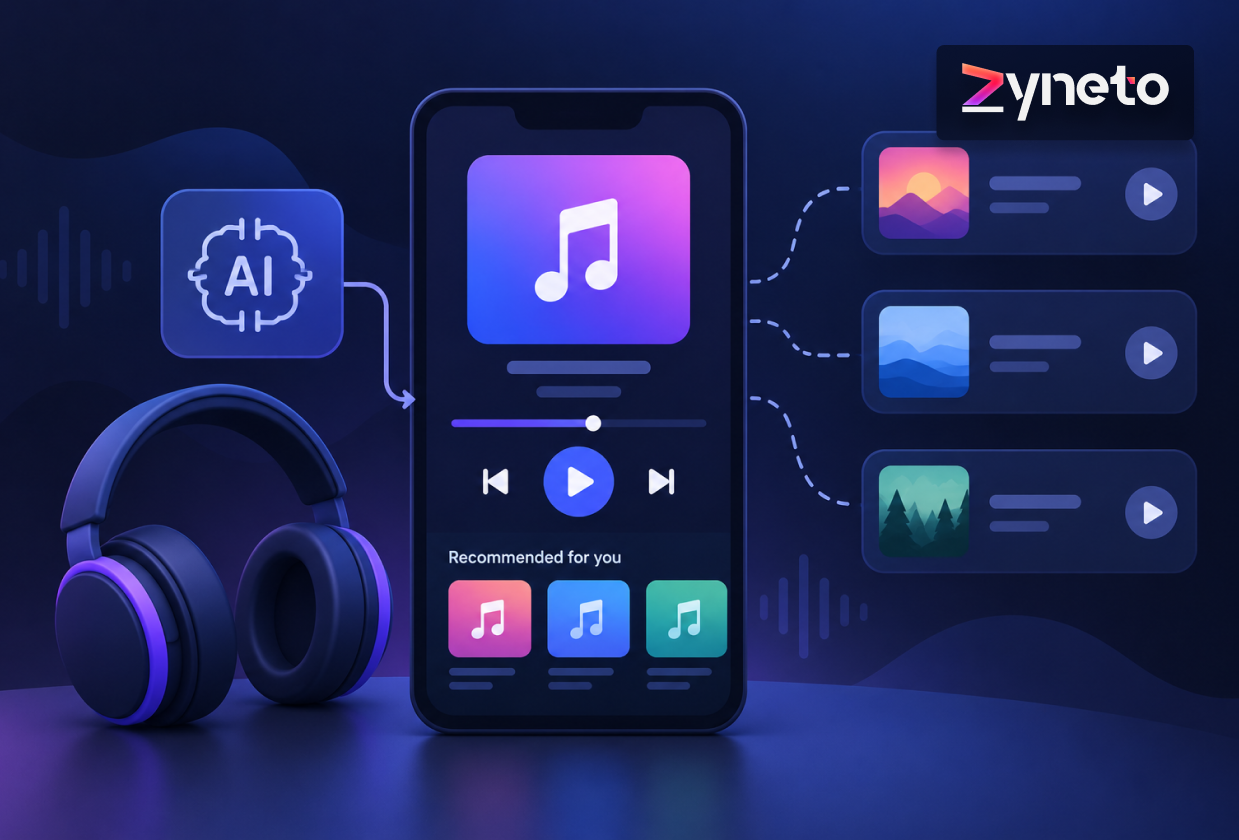
Music platforms do the same thing, building playlists based on your listening habits, discovering new artists you're likely to enjoy based on patterns from millions of other users.
It feels personal because, in a way, it is. The algorithm has essentially built a profile of your taste, and it keeps refining it every time you interact with the platform.
Hiring used to mean sorting through hundreds of resumes by hand. Exhausting, time-consuming, and honestly, prone to human bias.
AI recruiting tools now help HR teams screen resumes, identify top candidates based on job requirements, and even schedule interviews automatically.
This speeds up the hiring process significantly, which matters a lot when top candidates often accept offers within days, not weeks.
Some companies are also using AI to analyze employee sentiment and engagement, helping HR teams catch potential retention issues before they turn into resignations.
Here's the tricky part. AI systems learn from historical data, and if that data reflects biased hiring patterns from the past, the AI can unintentionally repeat those same biases.
Companies need to actively audit their AI hiring tools to make sure they're promoting fairness, not just efficiency.
This is one of the more sensitive examples of AI integration, because getting it wrong doesn't just cost money, it can genuinely harm people's careers and opportunities.
Buying or selling a home is stressful enough without guessing at the right price.
AI-powered valuation tools now analyze recent sales, neighborhood trends, and property features to estimate home values with impressive accuracy.
On the buyer side, AI helps match people with properties based on their preferences, search history, and even lifestyle needs, rather than just filtering by basic criteria like bedrooms and square footage.
This makes the entire process faster and less overwhelming, especially for first-time buyers who don't know exactly what they're looking for yet.
Cyberattacks happen fast. Faster than any human security team could realistically respond to on their own.
AI systems monitor network traffic continuously, looking for unusual patterns that might indicate a breach or attack in progress.
Because AI can process massive amounts of data instantly, it can flag and respond to threats within seconds, something that used to take security teams hours or even days to identify.
This is a critical example of examples of AI integration where speed genuinely determines outcomes. A slow response to a cyberattack can mean stolen data, financial loss, or reputational damage that takes years to recover from.
Lawyers spend an enormous amount of time reviewing contracts and legal documents. It's necessary, but it's also incredibly time-consuming.
AI tools now help legal teams scan through thousands of documents, flagging relevant clauses, inconsistencies, or potential risks far faster than manual review ever could.
This doesn't replace lawyers it gives them more time to focus on strategy, negotiation, and actually advising their clients, instead of drowning in paperwork.
Law firms adopting this technology are seeing real efficiency gains, which ultimately benefits clients through faster turnaround times and often lower costs.
Every business generates data. Sales numbers, website traffic, customer feedback, support tickets. The list goes on.
The problem has never been a lack of data. It's making sense of it fast enough to actually act on it.
AI-powered analytics tools now process this data continuously, identifying trends and patterns that would take human analysts weeks to uncover manually.
This helps businesses make faster, smarter decisions, whether that's adjusting pricing, launching a new product, or identifying an underserved customer segment.
Here's one that doesn't get talked about enough.
Power grids are using AI to predict energy demand and adjust distribution in real time, reducing waste and preventing outages.
Utility companies can forecast spikes in usage, like during a heatwave, and proactively manage supply instead of scrambling to react after the fact.
This is one of the quieter but genuinely impactful examples of AI integration, because it affects infrastructure that millions of people depend on daily, even if they never think about it.
Filing an insurance claim used to mean waiting days, sometimes weeks, for a resolution.
AI is speeding this up significantly. Image recognition tools can assess damage from photos submitted after an accident, helping insurers process claims faster and more consistently.
This benefits customers directly, because who actually enjoys waiting around for a claim to be approved during an already stressful situation?
Insurers are also using AI to detect fraudulent claims, protecting honest customers from the higher premiums that fraud often causes across the board.
Here's the thing.
Looking at these examples of ai being integrated in real world industries isn't just an interesting exercise. It's a signal.
AI isn't coming. It's already here, and it's already reshaping how businesses operate and how customers experience products and services.
If you're running a business, the question isn't really "should we use AI?" anymore. It's "where can AI make the biggest difference for us, right now?"
Because here's what we've seen across every single one of these examples of AI integration: the businesses seeing real results aren't the ones chasing hype.
They're the ones solving specific, practical problems. Faster fraud detection. Smarter inventory management. More personalized customer experiences. Fewer equipment breakdowns.
That's the real story behind all of this. It's not about flashy technology for its own sake. It's about using the right tools to solve real problems, faster and smarter than before.
If you're new to this, all these possibilities can feel a little overwhelming. Where do you even begin?
The honest answer is, you don't need to do everything at once.
Start by looking at where your business loses the most time, money, or customer satisfaction. That's usually where AI can make the fastest, most noticeable impact.
Whether that's automating customer support, improving your data analysis, or streamlining internal operations, the goal isn't to adopt AI for the sake of it. It's to use it where it genuinely moves the needle for your business and your customers.
Reading about AI integration is one thing. Actually pulling it off is another story entirely.
That's where Zyneto comes in.
As a dedicated AI app development company, Zyneto works closely with businesses to figure out exactly where AI can make the biggest impact, without the guesswork or the jargon-heavy sales pitch.
Whether you need a custom AI-powered application, a smarter customer support system, or predictive tools built around your own data, the team builds solutions tailored to how your business actually operates.
No cookie-cutter templates. No forcing you into tech you don't need.
Zyneto takes the time to understand your goals first, then builds AI systems that solve real problems, not just impressive-sounding ones.
If you're ready to move from "thinking about AI" to actually using it, Zyneto can help you get there, one practical solution at a time.
We've covered a lot of ground here, from hospitals to farms, from banks to streaming platforms.
And honestly, this list could keep going. Every month brings new examples of AI integration popping up in industries you wouldn't necessarily expect.
But the throughline across all of it stays the same: AI works best when it's solving a real problem for real people.
That's the lens worth keeping as you think about your own business or industry. Not "how do we use AI," but "where does AI genuinely make things better for the people we serve?"
Because at the end of the day, that's what separates a gimmick from a genuine competitive advantage.
And if these examples have shown you anything, it's that the businesses figuring this out now are the ones setting themselves up to lead their industries for years to come.
Zyneto designs, builds, and integrates custom AI-powered applications tailored to your business needs, from automation tools to predictive analytics and intelligent customer-facing systems.
Not necessarily. Zyneto works with businesses of different sizes and typically starts with a focused, high-impact use case, so you see real value before scaling further.
Timelines vary based on complexity, but most projects move from initial consultation to a working solution within a few weeks to a few months, depending on scope.
Not necessarily. Zyneto builds solutions with usability in mind and offers ongoing support, so your team doesn't need deep technical expertise to use or maintain them.
If you're dealing with repetitive manual tasks, slow decision-making, or scattered data, you're likely a great candidate. Zyneto can assess your workflows and pinpoint where AI adds the most value.
Sudhanshi has several years of experience in digital marketing and now works on growth at Zyneto. Her work covers SEO, content strategy, organic lead generation, social media and paid campaigns across Google, LinkedIn, Instagram and Facebook. She has run B2B technology and SaaS campaigns for international audiences, helping brands get found in search and stay found, and works day to day in Google Analytics, Search Console, Ahrefs, SEMrush, Screaming Frog and Canva. She follows AI driven marketing, changing search behaviour, content automation and social growth closely, and turns audience and search data into plans a team can actually run. She writes about SEO, content strategy and the tactics that still earn traffic as search keeps shifting.
Share your details and we will talk soon.
Be the first to access expert strategies, actionable tips, and the trends actually shaping the digital world. No fluff - just practical insights delivered straight to your inbox.
Dive into our blog and stay ahead of the curve with expert perspectives, future-ready trends, and tech tips written for decision-makers and doers alike.