Build a Restaurant Website From Scratch: A Complete Guide


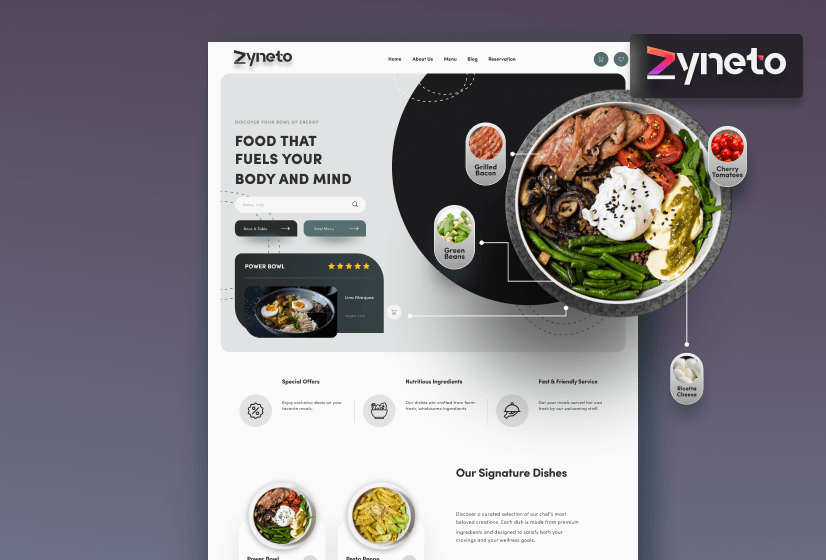
If you own a restaurant, having a website is no longer optional; it's a powerful business tool.
Today's customers search online before deciding where to eat, place an order, or book a table. If they can't find your restaurant online, they may choose a competitor instead.
A restaurant website helps you showcase your menu, location, special offers, photos, and customer reviews in one place.
It also gives you more control over your brand and customer experience.
Unlike third-party delivery platforms, your website can generate direct orders and reservations, helping you reduce commission costs and increase profits.
Most importantly, a professional website builds trust, improves online visibility, attracts new customers, and keeps existing ones engaged, helping your restaurant grow consistently over time.
In this guide, you should know how to build a restaurant website from scratch. We are going to do it all from start to end.

Most restaurant owners know they need an online presence, but many still rely only on social media or third-party apps.
In 2026, that approach leaves money on the table. Here’s why a dedicated website matters more than ever:
Social media platforms can change algorithms overnight, but your website is fully under your control.
Customers can view your menu, place orders, and make reservations without distractions from competitors or platform restrictions.
Every order placed through delivery apps comes with a commission.
A website allows customers to order directly from you, helping you make money from your restaurant website while building stronger relationships with repeat customers.
When people discover a restaurant, they immediately look for a website.
A professional site with menus, photos, reviews, and contact details creates confidence and makes customers more likely to choose your restaurant over others.
Restaurants investing in their online presence are attracting more customers than those relying solely on traditional methods.
That's why considering how to build a restaurant website has become an important step for restaurant owners looking to grow their business.
There are so many amazing features on the restaurant websites. All you need to do is pick the right ones.
Here is a list of functionalities to explore:
Your menu is often the first thing customers look for.
A well-organized online menu helps them explore dishes, pricing, ingredients, and special offers before visiting, making it easier to decide and increasing the likelihood of an order.
Nobody likes waiting for a table during busy hours.
An online reservation feature allows customers to book in advance within seconds, improving convenience while helping your restaurant manage seating efficiently and reduce no-shows.
Online ordering gives customers the freedom to place orders directly from your website.
It creates a smoother experience, speeds up the ordering process, and helps you reduce dependency on third-party delivery platforms and their commission fees.
Customers should never struggle to find your phone number, address, business hours, or email.
Clear contact information makes it easy for them to reach out, ask questions, get directions, or make inquiries without frustration.
Positive reviews can influence purchasing decisions more than advertisements.
Displaying genuine customer feedback on your website builds credibility, reassures first-time visitors, and helps potential customers feel confident about choosing your restaurant.
So, these are the features you must have; other than that, you can consult with a website development company for your needs.
So, how to build a restaurant website that makes users keep coming back? Well, in this development journey, we are going to know about that:
Before you develop a restaurant website, define what the business needs it to achieve more reservations, online orders, or brand visibility.
Identify the target customer base: their demographics, dining preferences, and search behavior.
These insights shape every design and content decision that follows. A goal-driven foundation ensures the website serves the business, not just looks good.
For efficient restaurant website development, choosing the right platform is critical.
Custom development with frameworks like Next.js offers full control and performance.
For businesses needing easier content management, WordPress or Squarespace are reliable options.
The decision should factor in update frequency, budget, technical resources, and whether booking or ordering systems need direct integration from the start.
When businesses create a restaurant website, the design must accurately reflect the brand.
The visual language, color palette, typography, and photography style communicate positioning before a word is read. High-quality food photography is non-negotiable; it directly impacts conversion.
Every design element should be intentional, consistent, and crafted to attract the right audience and differentiate the restaurant from competitors.
A restaurant website needs five essential pages: Home, Menu, About, Contact, and Reservations.
Each must be structured to guide visitors toward a clear action, booking a table, placing an order, or making contact.
Menus should be mobile-friendly and text-based, not PDFs. Contact pages must display address, hours, and phone number with a live map for immediate usability.
Understanding how to create a restaurant website that generates revenue means getting integrations right.
A reservation system like OpenTable or Resy reduces front-desk load and captures bookings around the clock.
A direct online ordering system cuts dependency on third-party delivery platforms.
Google Maps, newsletter sign-ups, and social feeds further connect the website to the restaurant's broader operational and marketing ecosystem.
Visibility drives footfall.
The website must be optimized for local SEO Google Business Profile, location-based keywords, and structured schema markup for hours, menu, and reviews.
Mobile performance is equally critical; over 70% of restaurant searches happen on phones.
Pages should load within 3 seconds, images must be compressed, and the experience must be seamless across all screen sizes.
Post-launch, the website becomes a business asset that requires active management.
Google Analytics should be configured to track page performance, reservation clicks, and drop-off points.
Regular audits via PageSpeed Insights keep performance sharp.
Menu updates, seasonal photography, and event listings signal an active, credible business to both visitors and search engines, sustaining long-term visibility and converting new visitors into returning guests.
Knowing how to develop a restaurant website is only half the battle; knowing what not to do is where most businesses actually lose.
These are the mistakes that quietly cost restaurants traffic, trust, and revenue every single day.
Here are some mistakes to avoid:
PDF menus don't load well on mobile and can't be indexed by search engines. A structured HTML menu page is faster, SEO-friendly, and far easier to update when dishes or pricing change.
Over 70% of restaurant searches happen on smartphones. A site that isn't mobile-optimized loses those visitors before they reach the menu, and that's a direct hit to revenue.
Incorrect hours, wrong addresses, or disconnected phone numbers damage credibility instantly. Business information must be accurate, easy to find, and consistent across the website and all third-party listings.
Without prominent CTAs, visitors browse but don't convert. Every page needs one clear next step: book a table, view the menu, or place an order, placed where it's impossible to miss.
Low-resolution food images signal poor quality before a word is read. Professional photography is one of the highest-impact investments a restaurant website can make visuals drive first impressions and bookings.
Without Google Business Profile optimization, location keywords, and schema markup, the restaurant stays invisible to nearby customers actively searching. Local SEO is an ongoing priority, not a one-time setup.
Outdated menus, stale photography, and old events erode trust and search engines penalize inactive sites. The website needs consistent updates to stay credible, competitive, and visible long-term.
The cost to make a restaurant website depends entirely on what the business needs: simplicity, scale, or something in between.
Built on platforms like Wix or Squarespace with essential pages and minimal integrations. Ideal for new restaurants needing a credible online presence on a limited budget.
Custom layouts, reservation integration, online ordering, and local SEO setup. Built by a freelancer or small agency, suited for growing restaurants ready to drive real revenue online.
A fully customized design, using AI in restaurant solutions, multi-location support, and ongoing optimization. Delivered by an experienced agency for established restaurants treating digital presence as a core business asset.
The digital dining experience is evolving fast. Staying on top of restaurant website trends is no longer optional; it directly impacts visibility, customer experience, and revenue.
Here is what forward-thinking restaurants are prioritizing right now:
Websites are now serving personalized menu recommendations based on user behavior and past orders.
When businesses consider restaurant website development today, AI-driven personalization is becoming a baseline expectation, not a premium feature.
Third-party delivery platforms are losing ground.
Restaurants are bringing ordering directly onto their websites, keeping margins intact and owning the full customer relationship from first click to final bite.
Static photography is being replaced by short, high-quality video content, kitchen walkthroughs, chef introductions, and dish preparations. Video builds trust faster than any written copy and keeps visitors on the page significantly longer.
Ranking for neighborhood-specific searches is becoming a key competitive advantage. Restaurants that create a restaurant website with location-based content, structured data, and Google Business Profile alignment are consistently outperforming those that don't.
ADA-compliant websites are becoming the industry standard. Readable fonts, screen-reader compatibility, and keyboard-friendly navigation are no longer optional they expand the customer base and protect the business legally.
Page speed is now a direct ranking factor and a conversion driver. Restaurants are moving away from bloated, plugin-heavy builds toward lean, fast-loading websites that perform equally well on every device and connection speed.
Your restaurant deserves more than a generic template and a contact form.
Zyneto is a dedicated restaurant website and app development company that builds digital experiences as carefully crafted as the food on your menu.
From strategy and design to development and SEO, every solution is built around what the business actually needs, not a one-size-fits-all package.
Zyneto brings the technical expertise and industry understanding to deliver a website that attracts the right audience, drives reservations, and converts visitors into loyal, returning customers.
This is where great restaurants meet great digital presence.
Launching a strong digital presence is no longer a luxury for restaurants; it's a business necessity.
A well-structured, professionally developed website drives reservations, builds credibility, attracts new customers, and reduces dependency on third-party platforms.
From defining goals and choosing the right platform to optimizing for local search and staying ahead of emerging trends, every decision contributes to long-term growth.
Restaurants that invest in their website today are the ones filling tables tomorrow.
If you are starting fresh or upgrading an existing site, the right development partner makes all the difference.
Zyneto is here to make that happen, strategically, professionally, and with results that speak for themselves.
A basic website can be ready in 1 to 2 weeks. A mid-level or custom-built site typically takes 4 to 8 weeks, depending on the complexity of features, integrations, and design requirements.
Not necessarily. Platforms like WordPress or Squarespace allow easy content updates without coding knowledge. For custom-built websites, a development partner like Zyneto can provide ongoing support and maintenance.
Start by defining your goals, designing key pages, adding menus and ordering features, optimizing for mobile users, and launching with SEO.
It depends on the development package. At Zyneto, local SEO setup, including Google Business Profile optimization, schema markup, and keyword integration, is built into the development process, not added as an afterthought.
While every feature serves a purpose, mobile optimization and a live, searchable menu are the most critical. They directly impact how customers find the restaurant, engage with the content, and ultimately decide to place an order or book a table.

Vikas has around fifteen years of experience building software and now builds generative AI systems at Zyneto. His work covers retrieval augmented generation, agentic AI, knowledge graphs, AI memory, and the evaluation and guardrails that decide whether any of it is safe to put in front of customers. He has shipped enterprise copilots, document AI, chatbots and predictive analytics for e-commerce, fintech and marketing teams, and works day to day in Python, JavaScript and SQL. He follows multimodal models, business process automation and enterprise AI security closely, and mentors engineers moving into AI. He writes about architecture, inference cost and the failure modes that only show up at production scale.
Share your details and we will talk soon.
Be the first to access expert strategies, actionable tips, and the trends actually shaping the digital world. No fluff - just practical insights delivered straight to your inbox.
Dive into our blog and stay ahead of the curve with expert perspectives, future-ready trends, and tech tips written for decision-makers and doers alike.