How to Create a Music App like Deezer?


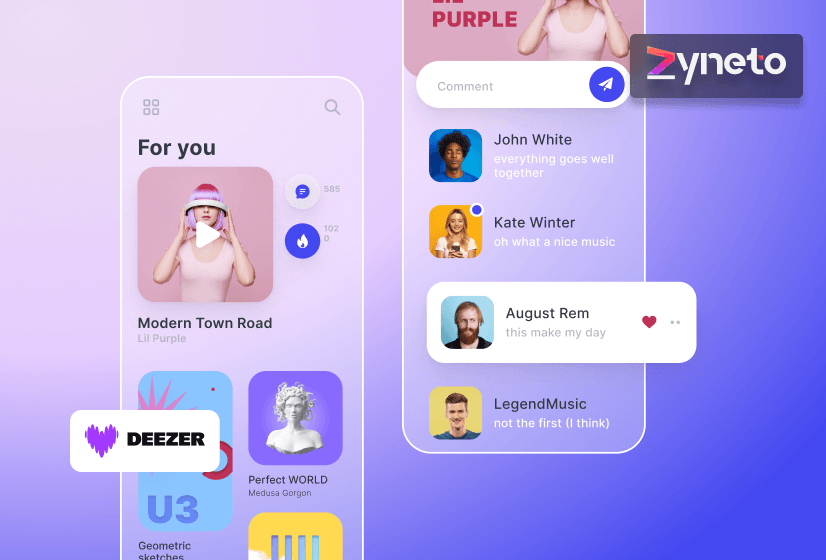
If you've ever thought about jumping into the music streaming space, now is a great time to do it.
The global music streaming market is booming, and users are always looking for something fresh.
To build a music app like Deezer, you need more than just a playlist feature and a play button. You need smart architecture, a seamless user experience, and a solid monetization plan baked in from day one.
Deezer has over 90 million tracks, podcast support, personalized radio, and a HiFi audio tier; that's the bar you're working with.
But here's the thing: you don't need to copy Deezer. You need to understand what makes it work, then build something that fits your audience even better.
This guide breaks down exactly how to do that.
Deezer is a France-based music streaming platform launched in 2007 , and it's still one of the top players globally.
What makes it stand out isn't just its library size. It's the combination of features working together: personalized recommendations, offline listening, podcast integration, lyrics sync, and lossless audio quality.
The app serves both free and premium users, with a freemium model that drives upgrades naturally.
It's available on mobile, desktop, smart TVs, and even wearables , making it truly cross-platform.
At its core, Deezer is built on a powerful content delivery system, a smart recommendation engine, and a clean UI that keeps users coming back.
Whether you're building for a niche audience or going broad, understanding this structure is the first step when you decide to create a music app.
Before you write a single line of code, you need a clear roadmap.
The Deezer app development process isn't something you wing; it's a structured journey from idea validation to launch and beyond.
Here's how you break it down when you want to create a music app like Deezer that actually competes.
Don't try to build for everyone; that's how you end up building for no one.
Ask yourself: Are you targeting indie music lovers? Regional language listeners? Podcast-first users?
Defining your niche sharpens every decision that follows, from features to UI to monetization.
Your audience shapes your product. Know them well before you start.
Your tech stack determines your app's speed, scalability, and how much it costs to maintain.
For the frontend, React Native or Flutter works well for cross-platform mobile apps.
On the backend, Node.js or Python with Django handles heavy traffic efficiently.
For streaming, you'll need a CDN (Content Delivery Network) to deliver audio fast without buffering headaches.
This is the step most people underestimate, and it's non-negotiable.
To legally stream music, you need licenses from rights holders: record labels, publishers, and performing rights organizations.
You can work directly with labels or use a music licensing aggregator to simplify the process.
Skip this, and you're one DMCA notice away from shutting down.
When you create an app like Deezer, your feature set is your selling point.
At minimum, you need: user profiles, search, playlists, personalized recommendations, offline mode, and a clean audio player.
Don't overload version one; focus on doing the essentials really well before adding more.
A smooth, fast, intuitive experience beats a feature-heavy one every time.
This is what keeps users on your app instead of leaving after one session.
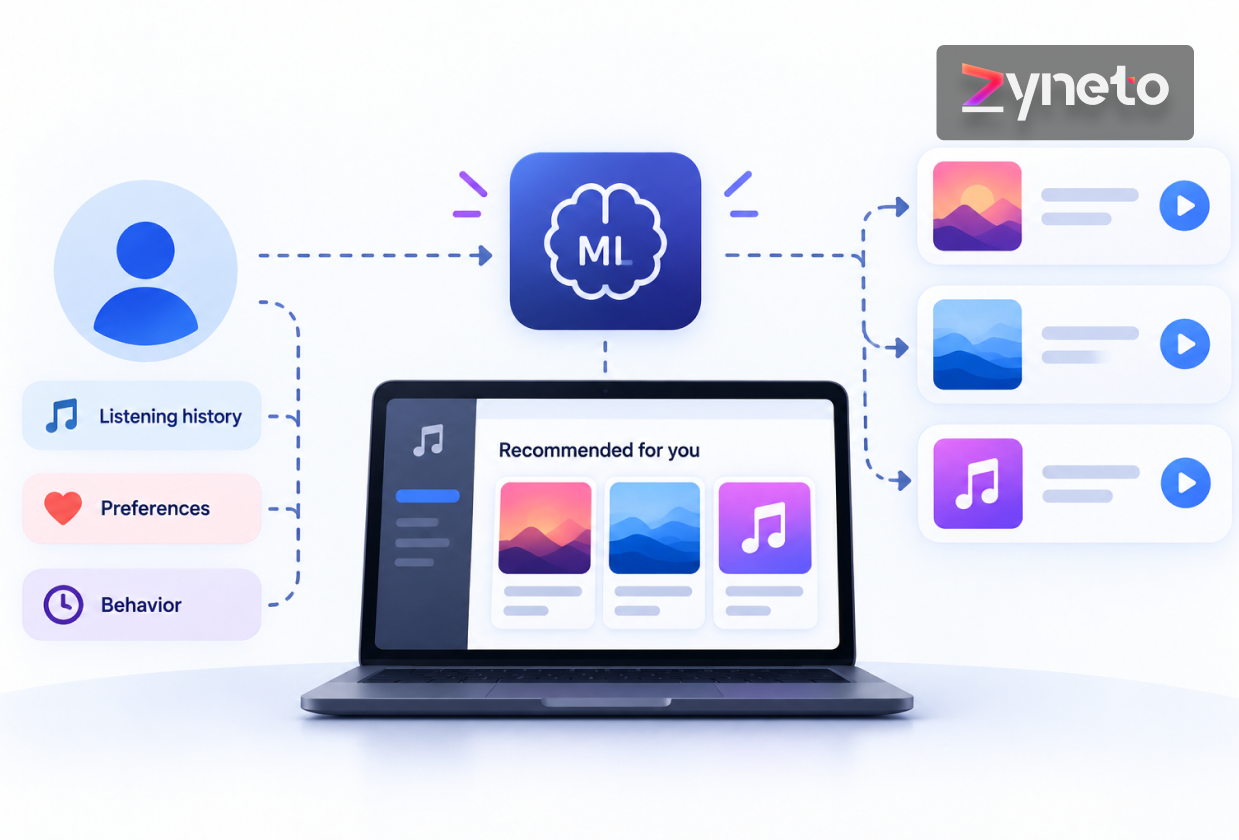
Deezer uses Flow, an AI-powered feature that generates an endless personalized radio based on listening habits.
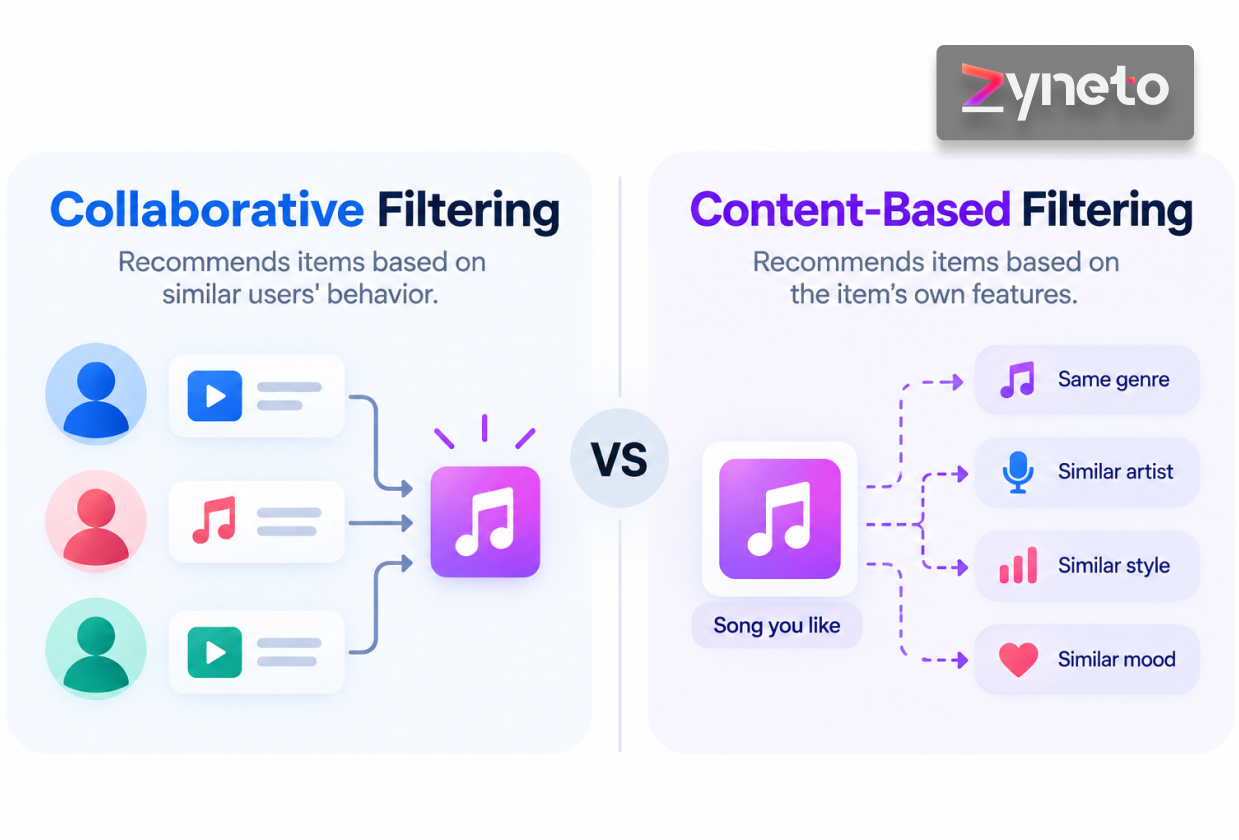
You can start with collaborative filtering and content-based filtering to power your recommendations.
As you gather more data, your engine gets smarter. That's your long-term retention strategy.
Free users grow your user base. Premium users pay the bills.
Structure your tiers clearly: free with ads, premium without ads, and optionally a HiFi or family plan.
In-app purchases, artist subscriptions, and brand partnerships are additional revenue streams worth exploring.
When you build an app like Deezer, monetization isn't an afterthought; it's part of the product design.
Before going live, run thorough QA testing, audio playback, buffering under low connectivity, payment flows, and cross-device syncing.
Soft-launch to a small group first. Collect feedback. Fix what's broken.
Then launch, monitor your analytics, and keep iterating based on what real users actually do in the app.
Understanding how to build an app like Deezer means knowing that launch is the beginning, not the end.
This being aside, let’s get to know the features of an app like Deezer.
If you want users to stick around, you can't just offer a basic play-pause experience.
The right music app features are what separate a forgettable app from one people open every single day.
Here's what you need to build in from the start.
Every user wants the app to feel like it was built just for them.
Let users create profiles, set music preferences, follow artists, and build their own libraries.
The more personalized the experience, the longer they stay, and the more likely they are to upgrade to premium.
Users should find any song, artist, album, or podcast in seconds, not after scrolling through five menus.
Build a powerful search engine with filters, autocomplete, and mood-based or genre-based discovery sections.
Great discovery keeps users exploring instead of leaving.
Not everyone streams on a perfect Wi-Fi connection, and your app shouldn't punish them for it.
Let premium users download tracks and playlists for offline playback.
This single feature is one of the biggest reasons people convert from free to paid. Don't skip it.
Audio quality matters, especially to serious music listeners who can tell the difference.
You should offer multiple quality tiers: standard, high, and lossless HiFi audio.
Deezer built a loyal fanbase partly because of its HiFi offering. Give your users the same option and watch engagement climb.
This is where AI in music app development becomes a game-changer. Smart recommendations keep users engaged and make your platform feel more personal from the very first session.
By analyzing listening history, skipped tracks, liked songs, moods, and even time-of-day behavior, your app can deliver playlists and stations users genuinely enjoy.
The stronger your recommendation engine becomes, the longer users stay.
Not every user wants to build their own playlist from scratch; most don't.
Offer editorial playlists, mood-based mixes, genre stations, and artist radio to keep content fresh without the user lifting a finger.
This is how you fill listening sessions that would otherwise go empty.
Real-time lyrics turn passive listening into an active, immersive experience.
Display lyrics that scroll in sync with the track, line by line, just like karaoke.
It sounds simple, but users love it. Apps with lyrics sync consistently show higher session lengths and better retention numbers.
Your users don't live on one device; they jump between phone, tablet, desktop, smart TV, and even smartwatch.
Your app needs to sync seamlessly across all of them: same queue, same history, same playlists, everywhere.
If a user has to start over every time they switch devices, they'll switch apps instead.
The approximate price for a Deezer clone can range from $10,000 to $90,000+. The cost of music app development can increase or decrease as per the changing demands, complexity in your project, and much more.
Covers core features like music playback, user profiles, basic search, and a simple playlist manager for early-stage launches. Typically built for a single platform, either iOS or Android, to keep initial development costs manageable.
Includes cross-platform development, offline listening, improved UI/UX design, and a basic AI-powered recommendation system. This range covers integration with third-party music APIs, podcast support, and a more polished, market-ready product overall.
Full-featured build with HiFi audio, an advanced recommendation engine, multi-device sync, and a robust content delivery network. Covers complex licensing integrations, admin dashboards, analytics tools, and scalable cloud infrastructure for high-traffic environments.
The music streaming market isn't slowing down it's accelerating.
With over 700 million music streaming subscribers globally and revenue projected to cross $10 billion, the opportunity is real, and it's right now.
If you build a music app like Deezer, here's exactly why it makes business sense:
Music streaming adoption is climbing across every region, especially in emerging markets like India, Southeast Asia, and Latin America, where smartphone penetration is skyrocketing.
Users in these regions are actively looking for localized, affordable alternatives to global giants.
That's a gap you can fill.
You're not betting on a single income source.
A music app generates revenue through premium subscriptions, in-app ads, brand partnerships, artist promotions, and even data licensing.
That kind of diversified monetization makes it a resilient business, one that can weather market shifts without falling apart at the first sign of trouble.
People listen to music every single day: while commuting, working, working out, and unwinding.
That daily habit translates into one of the highest app retention rates across any category.
Once a user builds their playlists and the app learns their taste, switching to a competitor becomes genuinely inconvenient, and that's exactly the kind of loyalty every investor wants to see.
Launching a music streaming app isn't just about writing clean code and shipping fast.
The decisions you make during development directly impact how your app performs, scales, and retains users over time.
When you develop an app like Deezer, these are the best practices that separate apps people love from apps people delete:
Buffering kills user experience faster than any other issue no one tolerates a song that keeps stopping mid-chorus.
Invest in a reliable CDN, adaptive bitrate streaming, and pre-loading logic from day one.
When you build an app like Deezer, smooth, uninterrupted audio isn't a nice-to-have it's the baseline expectation every single user walks in with.
Your architecture needs to handle 100 users and 100,000 users without a complete rebuild.
Use microservices, cloud-based infrastructure, and load balancing from the start.
Retrofitting scalability into a poorly structured app later costs far more, in time, money, and user trust than getting it right during the initial development phase.
When you create an app like Deezer, protecting both user data and content rights is critical.
Implement end-to-end encryption, secure payment gateways, and DRM (Digital Rights Management) for all streamed content.
One licensing violation or data breach can shut your platform down faster than any competitor ever could. Don't let compliance be an afterthought.
A cluttered interface with 20 features no one uses is worse than a clean app with 5 that work perfectly.
Run usability testing early and often with real users, not just your internal team.
Every screen, every tap, every transition should feel natural and effortless, because users make the decision to stay or leave within the first few sessions.
Your users aren't all on the latest iPhone with 5G; some are on mid-range Android phones with patchy connectivity.
Test your app across multiple devices, screen sizes, and network speeds before every release.
This is one of the most overlooked steps when teams rush to launch, and it's exactly what separates a polished product from a buggy one.
Launching a music app, something similar to Deezer, comes with a list of technical, design, and legal challenges; trying to figure it all out alone is where most projects fail.
That's where Zyneto comes in.
As an experienced music streaming app development company, Zyneto brings together the right mix of technical expertise, industry knowledge, and experience of more than 10 years.
From the first line of code to the day your users hit play for the first time, Zyneto is with you every step of the way.
To create a music app like Deezer is one of the most exciting and rewarding products you can invest in right now.
The market is growing, user demand is strong, and there's still plenty of room for platforms that do things differently.
But getting it right takes more than a great idea.
It takes the right features, a solid technical foundation, smart monetization, and a development partner who actually understands what it takes to compete in this space.
Whether you're starting with an MVP or going straight for a full-featured platform, every step you take from defining your niche to launching and iterating matters.
The opportunity is there. The question is whether you're ready to build for it.
And if you are, Zyneto is ready to help you make it happen, from the first line of code to the day your first users hit play.
A basic MVP takes 3–5 months, while advanced music streaming apps may require 10–14 months for complete development.
Yes, music licenses are essential before streaming songs legally on your platform and should be arranged early in development.
Choose Android for a wider reach in Asia, while iOS works better for premium audiences in Western markets initially.
Yes, starting with an MVP helps validate your idea while keeping initial development costs affordable and manageable for startups.
Strong personalization, smooth performance, daily engagement features, quality content, and smart monetization strategies ensure long-term app success.

Vikas has around fifteen years of experience building software and now builds generative AI systems at Zyneto. His work covers retrieval augmented generation, agentic AI, knowledge graphs, AI memory, and the evaluation and guardrails that decide whether any of it is safe to put in front of customers. He has shipped enterprise copilots, document AI, chatbots and predictive analytics for e-commerce, fintech and marketing teams, and works day to day in Python, JavaScript and SQL. He follows multimodal models, business process automation and enterprise AI security closely, and mentors engineers moving into AI. He writes about architecture, inference cost and the failure modes that only show up at production scale.
Share your details and we will talk soon.
Be the first to access expert strategies, actionable tips, and the trends actually shaping the digital world. No fluff - just practical insights delivered straight to your inbox.
Dive into our blog and stay ahead of the curve with expert perspectives, future-ready trends, and tech tips written for decision-makers and doers alike.