AI in Customer Experience: Why It's Changing the Game


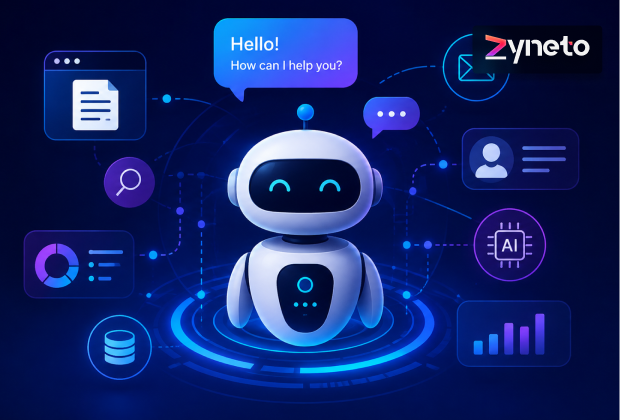
Customer expectations have changed a lot in the last few years.
Now, it is not just price or product; you’re competing on how fast you respond, how well you understand what someone needs, and how the whole experience feels from start to finish.
That’s a tall order if you’re doing it all manually. And this is where AI comes to save your day.
It’s not some far-off, futuristic concept anymore; it’s already changing how businesses talk to their customers, solve their problems, and keep them coming back.
And the numbers back it up: the global customer experience management market is expected to reach $64.5 billion by the early-to-mid 2030s.
It is a small shift that's an industry-wide bet on AI-powered customer experience.
If you’ve been wondering whether AI in customer experience is worth paying attention to, then the answer is yes.
Let’s break down what it actually means and why it’s becoming such a big deal.
Artificial intelligence sounds like a modern technology, but it roots go back several decades. The idea of creating a machine that could mimic human intelligence gained serious attention in the 1950s.
Researchers began exploring whether computers could solve problems, understand languages, and make decisions, and they found it to be true.
Over time, advancements in machine learning, natural language processing, neural networks, and generative AI changed that.
This evolution completely changed what businesses could do with customer data.
Instead of simply answering a predefined question, AI can now understand what a customer is asking. Analyze interactions and offer them products relevant to their needs.
And that is where AI in customer experience comes in.
Businesses are no longer using AI only to automate repetitive tasks. They are using it to make every interaction feel more personalized, predictive, responsive, and convenient.
So why now?
Why is everyone suddenly talking about AI-powered customer experience like it's the next big thing?
A few reasons, actually.
AI in everyday business has moved from being an experimental add-on to becoming a core part of how companies operate. Let’s get to know about it:
People don't want to wait.
If your competitor responds in seconds and you take hours, guess who's winning that customer over.
AI helps you meet that expectation without burning out your support team.
Generic, one-size-fits-all responses don't cut it anymore.
Customers want to feel like you actually know them their history, their preferences, their pain points.
AI makes that kind of personalization possible at scale, something that's nearly impossible to do manually once you're dealing with thousands of customers.
Businesses that ignore AI in customer experience risk falling behind fast.
Your competitors are already using it to respond quicker, resolve issues faster, and keep customers happier.
If you're not investing in this space, you're basically handing them an advantage.
Every click, every support ticket, every review it's all data.
But raw data doesn't mean much unless you can turn it into insight.
AI is what connects the dots, helping you understand not just what customers are doing, but why.
You can hire more support staff, sure.
But AI lets you scale customer experience without a proportional increase in cost or headcount.
That means better service, even during your busiest seasons, without stretching your team too thin.
Artificial intelligence in customer experience isn’t just a buzzword anymore; it’s quietly changing how businesses talk to their users, help them, and understand what they actually need.
And, you know, in current times, a business stays in business if it is offering what the user needs.
Here's what that actually means for you.
You’re looking at a market that’s compounding fast, and companies deploying AI-driven CX tools are seeing huge jumps in retention.
When retention goes up, lifetime customer value goes up too, and that’s a metric every investor tracks closely when sizing up long-term growth potential.
Operational costs shrink dramatically once AI takes over repetitive support tasks like ticket routing, FAQs, and basic troubleshooting.
For you, that translates into healthier margins for the businesses you back, since less money gets burned on scaling human support teams line by line.
Data is the real asset here, and AI systems built for customer experience generate mountains of it: behavioral patterns, sentiment trends, and purchase triggers.
You get a business that isn't guessing anymore; it's making decisions backed by real usage signals, which lowers risk and sharpens forecasting.
Personalization at scale used to be a future dream, but AI has made it possible even for mid-sized companies.
And this is truly commendable because personalized experiences drive conversion and reduce churn, two of the most important elements, easily impacting revenue growth and improving valuation over time.
Round-the-clock availability through AI chat and voice systems means companies can serve customers worldwide without hiring at the same pace.
This is a scalability element worth watching, since it lets a business expand into new markets and time zones without the usual cost curve tied to traditional hiring.
AI in user experience isn’t powered by one single tool, it’s mix of technologies working together behind the scenes to make every interaction faster, smarter and more personal.
If you’re wondering what’s actually driving this shift, here is the breakdown:
These are usually your first point of contact, and for good reason.
Chatbots and virtual assistants handle everything from answering FAQs to guiding you through a purchase, all without making you wait on hold.
They're available 24/7, which means help is always just a message away.
NLP is what lets machines actually understand what you're saying, not just match keywords.
It picks up on context, intent, and even tone, so conversations with AI feel less robotic and more like talking to someone who actually gets you.
This is the technology quietly working in the background, learning from past behavior to predict what you'll need next.
It powers everything from smarter search results to proactive support, catching issues before you even notice them.
Generative AI takes things a step further by creating responses, content, and solutions on the fly instead of pulling from pre-set scripts.
That means more natural conversations and answers tailored specifically to your question, not a generic one.
Ever felt like a brand "gets" your mood? That's sentiment analysis at work.
It reads tone, word choice, and context to gauge how you're feeling happy, frustrated, or confused so businesses can respond in a way that actually fits the moment.
AI in customer experience isn't just theory anymore; it's already running behind the scenes in almost every interaction you have with a brand today.
Let's break down exactly where and how it shows up:
You've probably chatted with a bot before even realizing it was one.
AI-powered support handles routine queries instantly, freeing up human agents for the trickier, more emotional, or high-stakes conversations that actually need a human touch.
It works around the clock, so you're never stuck waiting for business hours to get an answer, whether it's a busy weekday afternoon or the middle of the night on a weekend.
Many systems today can also escalate seamlessly to a live agent if the bot senses the issue is too complex, so you're not stuck in a frustrating loop.
Why it matters: Faster resolutions mean you stay happy, and businesses save massively on support costs while still keeping service quality high.
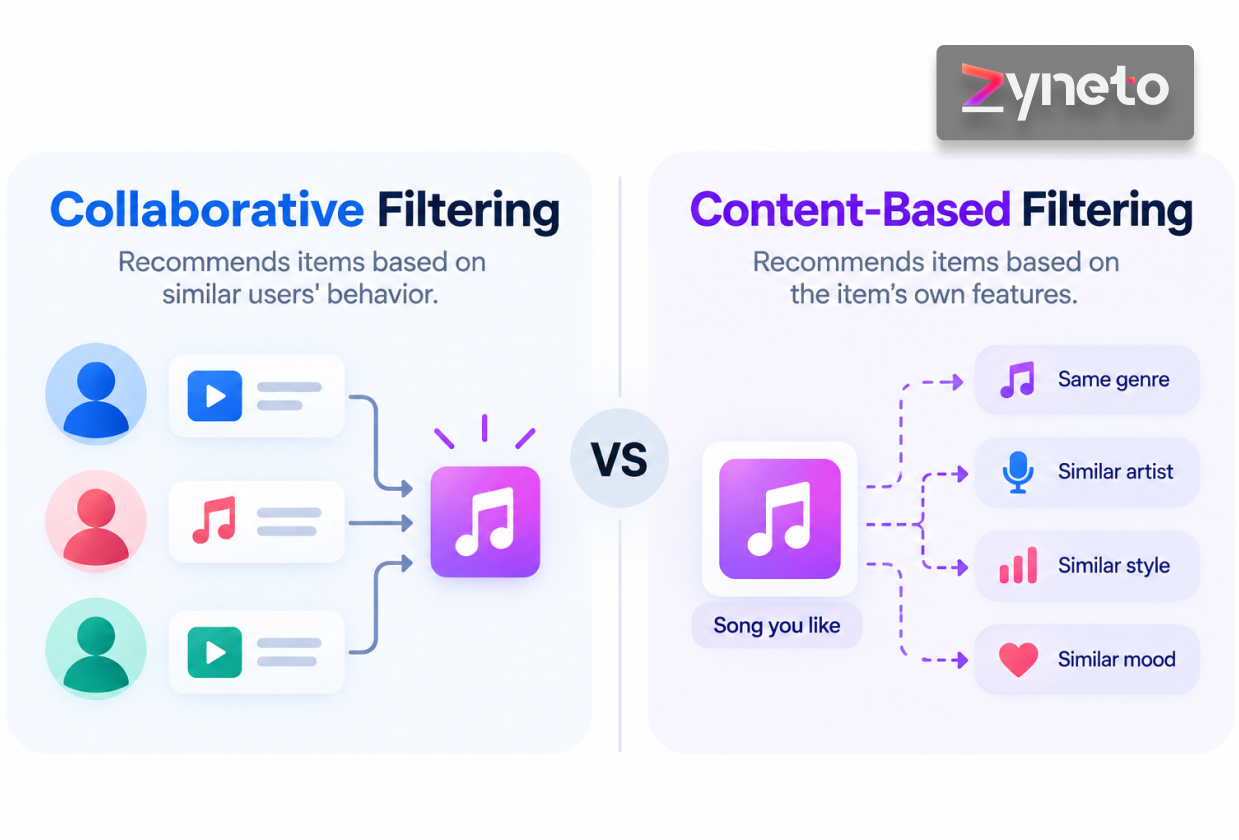
Ever notice how the "you might also like" section feels oddly accurate?
That's AI studying your browsing and purchase history, comparing it against millions of other shoppers, to predict what you'll actually want next.
It's not guesswork anymore it's pattern recognition working in real time, adjusting recommendations the moment your behavior changes.
Even small signals, like how long you hover on a product or what you add to your cart and remove, feed into these predictions.
Why it matters: You discover relevant products faster without endless scrolling, and businesses see noticeably higher conversion rates as a result.
Generic mass emails are fading out, and personalized ones are taking over fast.
AI segments audiences based on behavior, preferences, purchase stage, and even timing, so the message you receive actually feels relevant to where you are in your journey.
No more one-size-fits-all campaigns landing in your inbox at the wrong moment with the wrong offer.
Instead, you might get a reminder about an abandoned cart, or a special offer right when you're most likely to act on it.
Why it matters: Higher engagement and loyalty for brands, less noise and more relevance for you.
Instead of waiting for something to break, AI flags issues before you even notice them.
It analyzes usage patterns, past complaints, and historical data to predict when you might run into a problem, whether that's a delayed shipment or a subscription about to lapse.
This shifts support from reactive to proactive, which changes the entire tone of the customer relationship.
Some businesses even reach out to you first with a solution, before you've had the chance to get frustrated.
Why it matters: Problems get solved before they disrupt your experience, saving you the hassle of chasing support.
Typing isn't always the fastest or most convenient way to get things done.
Voice assistants let you simply speak your request, whether it's tracking an order, checking a balance, or asking a quick product question while your hands are full.
Conversational AI makes these interactions feel natural, not robotic, picking up on context so you don't have to repeat yourself.
This is especially useful on the go, when opening an app or typing a message just isn't practical.
Why it matters: You get help hands-free, on your own terms, wherever you happen to be.
Brands are getting a lot better at reading the room, even digitally.
AI analyzes tone, word choice, punctuation, and context to understand whether you're satisfied, confused, or genuinely frustrated, sometimes even before a human agent joins the conversation.
This lets support teams respond with the right approach and the right urgency, instead of relying on a generic script that ignores how you're actually feeling.
It's also used to flag high-risk conversations early, so upset customers don't get left waiting.
Why it matters: You feel heard and understood, not just processed like a ticket number.
Search bars have gotten a serious upgrade in the last few years.
AI understands the intent behind your search, not just exact keywords, so results feel accurate even when your query is vague, misspelled, or oddly phrased.
It learns from what you click, what you ignore, and what you eventually buy, refining results a little more with every search.
This is especially powerful for large catalogs, where finding the right item manually would take forever.
Why it matters: You find exactly what you need faster, with far less scrolling and guesswork.
Reading thousands of reviews and survey responses manually just isn't realistic anymore.
AI scans feedback at scale, across reviews, support tickets, and social media, spotting recurring themes, complaints, and praise points that businesses might otherwise completely miss.
This turns raw, scattered opinions into clear, actionable insight that product and support teams can actually act on.
It can even track how sentiment shifts over time, showing whether a recent change made things better or worse.
Why it matters: Your feedback actually drives real change, faster and more accurately than before.
Sometimes you just want to solve things yourself, without waiting on hold for twenty minutes.
AI-powered self-service portals guide you step-by-step, using smart search and contextual suggestions based on what similar users have needed in the past.
They adapt in real time, surfacing the most relevant help article or troubleshooting step depending on exactly what you typed or clicked.
This means less digging through irrelevant FAQs and more direct answers.
Why it matters: You get instant answers on your own schedule, without needing to talk to anyone at all.
No two customers are the same, and AI finally treats it that way.
It maps out your entire journey from first visit to browsing to purchase to post-sale support, and tailors offers based on exactly where you are in that journey.
The result feels less like generic marketing and more like a conversation that actually understands your needs and timing.
Over time, this personalization compounds, making every future interaction feel a little more tailored than the last.
Why it matters: You get deals and experiences that actually make sense for you, not random, one-size-fits-all discounts.
AI in customer experience isn't just a nice-to-have anymore; it's turning into the deciding factor between businesses that keep customers coming back and ones that quietly lose them to competitors.
Here's what's actually on the table when you bring AI into the mix.
You don't have to choose between personal service and reaching thousands of customers anymore.
AI lets businesses tailor every interaction, from product suggestions to messaging, without manually customizing anything for each individual.
This used to be impossible beyond a small customer base, but now it scales effortlessly, no matter how big the audience gets.
Waiting on hold is quickly becoming a thing of the past.
AI handles routine queries instantly and routes complex ones to the right agent immediately, cutting down response times dramatically.
You get quicker resolutions, and support teams spend less time on repetitive tasks and more time solving real problems.
When responses are fast, relevant, and available whenever you need them, satisfaction naturally goes up.
AI removes a lot of the friction that usually frustrates customers, like long wait times or being passed between departments.
The result is smoother interactions that leave you feeling genuinely taken care of, not just processed.
Running large support teams around the clock gets expensive fast.
AI takes over repetitive, high-volume tasks, which means businesses need fewer resources to handle the same, or even a larger, volume of customer interactions.
Those savings can then get reinvested into better products, better service, or more competitive pricing that benefits you directly.
Keeping an existing customer is far cheaper than acquiring a new one, and AI plays a huge role in making that happen.
By predicting issues before they escalate and personalizing every touchpoint, AI helps businesses catch problems before customers walk away frustrated.
You end up sticking with brands that consistently get things right, and that loyalty compounds over time.
Rolling out AI is not about buying a tool and hoping for the best; it takes a clear, step-by-step approach to actually get it right:
Start by figuring out exactly where your customers are struggling, whether it's slow response times, confusing navigation, long hold times, or repetitive issues that keep popping up in support tickets.
Talk to your support team, dig through customer feedback, and look at where drop-offs or complaints cluster the most.
This gives you a clear target instead of adopting AI just because it's trendy, and it ensures every dollar spent on AI is actually solving a real problem, not just adding shiny new tech for its own sake.
Not every problem needs AI, so pick use cases where it'll genuinely make a difference, like support automation, personalized recommendations, or predictive alerts for at-risk customers.
Think in terms of impact versus effort some use cases are quick wins, while others take longer to show real results.
Starting small with high-impact areas usually works better than trying to overhaul everything at once, since it lets you prove value early and build internal confidence before scaling AI across the entire customer journey.
AI is only as good as the data it learns from, so clean, organized, and accurate data is non-negotiable.
That means auditing where your customer data lives, removing duplicates, filling in gaps, and making sure information from different systems, like your CRM, support platform, and website, is actually consistent with each other.
This step often gets skipped because it's less exciting than picking a shiny new AI tool, but messy data leads directly to messy, unreliable AI outputs, no matter how advanced the technology behind it is.
Getting this right early also helps keep your overall AI development cost in check, since fixing bad data after the fact is far more expensive than cleaning it up upfront.
From chatbots to predictive analytics to sentiment analysis tools, there's a wide range of AI technology out there, and the right one depends entirely on your specific goals, budget, and the complexity of the problems you're solving.
Sometimes off-the-shelf tools aren't enough, and that's when businesses choose to create an AI app built specifically around their own customer data and workflows, instead of forcing a generic tool to fit.
Look closely at scalability, ease of integration, and vendor support, not just flashy features or marketing claims.
Take the time to evaluate multiple options, request demos, and even run small pilots rather than defaulting to whatever's most popular or heavily advertised at the moment.
Your AI solution needs to talk to your CRM, support platform, e-commerce backend, and other existing tools smoothly, without creating new data silos or workflow gaps.
This often involves working closely with your IT or development team to map out how data flows between systems before, during, and after the AI kicks in.
Poor integration here is one of the biggest reasons AI projects underperform, so don't rush this part, since a disconnected system can undo all the benefits AI is supposed to bring.
Before rolling it out fully, test extensively and train the AI on real scenarios your customers actually face, not just idealized, best-case examples.
Run it through edge cases, unusual phrasing, and even frustrated or confusing customer messages to see how it holds up under real-world pressure.
This helps catch errors and awkward responses before they ever reach you, protecting both customer trust and your brand's reputation right from launch.
Once live, keep a close eye on how the AI is performing and how customers are actually responding to it, using both hard metrics and direct feedback.
Set up regular check-ins to review conversations, flag recurring issues, and identify moments where the AI clearly needs improvement or additional training.
AI isn't a set-it-and-forget-it solution; it needs ongoing tweaks based on real-world feedback, and the businesses that treat it as an evolving system, rather than a one-time setup, are the ones that see the strongest long-term results.
AI brings a lot to the table, but it's not without its rough edges, and it's worth knowing these before diving in headfirst.
Let’s explore the challenges & solutions:
AI systems run on data, and that data usually includes sensitive customer information.
Businesses have to be extremely careful about how that data is stored, used, and protected, especially with privacy regulations getting stricter every year.
AI in cybersecurity is playing a growing role here, helping catch threats before they turn into breaches.
One breach or misuse can undo years of trust in a matter of hours.
AI is smart, but it's not infallible, and sometimes it gets things wrong.
A chatbot confidently giving you incorrect information can be more damaging than no response at all, since it erodes confidence in the entire system.
Getting this right requires constant monitoring, regular updates, and clear fallback options when AI isn't sure.
Every brand has a tone, whether it's playful, formal, or somewhere in between, and AI needs to match it convincingly.
If your AI sounds robotic or inconsistent compared to your human team, the experience feels disjointed and impersonal.
Getting this balance right takes careful tuning, not just plugging in an off-the-shelf model.
AI is great at routine, repetitive tasks, but it can genuinely struggle with nuanced or emotionally charged situations.
You don't want to be stuck arguing with a bot when you have a serious complaint or an unusual problem that doesn't fit a script.
Knowing exactly when to hand off to a human is one of the trickiest parts of getting AI CX right.
Not everyone is comfortable talking to a machine, and some customers actively distrust AI-driven interactions.
Businesses need to be transparent about when AI is involved and always offer a clear path to a human if that's what you'd prefer.
Trust, once lost here, is hard to rebuild.
Integrating AI with existing systems
Plugging AI into old, fragmented, or outdated systems isn't always as simple as flipping a switch.
Data silos, incompatible software, and legacy infrastructure can all slow down or limit how effectively AI actually works.
Without smooth integration, even the best AI tool ends up underdelivering on its promise.
Knowing AI can transform your customer experience is one thing actually implementing it well is another. That's where having the right partner makes all the difference.
As an experienced AI development company, Zyneto helps you move from idea to execution without the usual guesswork. We start by understanding your specific pain points, then build AI solutions tailored to your business, whether that's intelligent chatbots, predictive analytics, or personalized recommendation systems.
You won't get a generic, one-size-fits-all tool. Every solution is designed to integrate smoothly with your existing systems, trained on your real customer scenarios, and refined based on actual performance data.
From strategy and development to testing and ongoing optimization, Zyneto stays with you at every step, making sure AI genuinely improves your customer experience instead of complicating it.
AI in customer experience isn't a far-off trend anymore; it's already reshaping how businesses talk to you, support you, and anticipate your needs before you even ask.
From faster support and smarter recommendations to predictive service and hyper-personalized journeys, the shift is happening right now, not somewhere down the line.
For businesses, ignoring this shift means falling behind competitors who are already using AI to build stronger, more loyal customer relationships. For you, it means better, faster, more relevant experiences with every brand that gets it right.
The good news is getting started doesn't have to be overwhelming. With the right strategy, the right use cases, and the right partner by your side, AI can genuinely simplify customer experience instead of complicating it.
At the end of the day, this isn't about chasing technology for its own sake. It's about using AI to solve real problems, remove real friction, and build experiences that actually feel like they were made with you in mind.
AI in customer experience refers to the use of artificial intelligence, like chatbots, predictive analytics, and sentiment analysis, to make your interactions with a business faster, smarter, and more personalized. Instead of relying purely on human effort, businesses use AI to understand your needs, anticipate problems, and respond in real time, often before you even ask.
AI improves your experience by handling routine queries instantly, personalizing recommendations based on your behavior, and predicting issues before they escalate. It also analyzes feedback and sentiment at scale, helping businesses understand what's actually working and what isn't. The result is quicker resolutions, more relevant interactions, and support that feels tailored to you specifically.
Not entirely, and that's actually a good thing. AI is excellent at handling repetitive, high-volume tasks, but complex, emotional, or unusual situations still need a human touch. The most effective setups use AI to handle the routine work, freeing up human agents to focus on the moments that genuinely need empathy and judgment.
Some common hurdles include protecting customer data privacy, avoiding inaccurate AI responses, and maintaining a consistent brand voice across automated interactions. Businesses also need to manage customer trust carefully and ensure AI integrates smoothly with existing systems, since a clunky setup can undo the benefits AI is supposed to bring.
The future points toward hyper-personalized journeys, AI agents capable of handling complex conversations, and proactive support that solves problems before you even notice them. Expect more multimodal interactions, blending text, voice, and visuals, along with AI that's increasingly aware of your emotions and tone, working alongside human teams rather than replacing them.

Vikas has around fifteen years of experience building software and now builds generative AI systems at Zyneto. His work covers retrieval augmented generation, agentic AI, knowledge graphs, AI memory, and the evaluation and guardrails that decide whether any of it is safe to put in front of customers. He has shipped enterprise copilots, document AI, chatbots and predictive analytics for e-commerce, fintech and marketing teams, and works day to day in Python, JavaScript and SQL. He follows multimodal models, business process automation and enterprise AI security closely, and mentors engineers moving into AI. He writes about architecture, inference cost and the failure modes that only show up at production scale.
Share your details and we will talk soon.
Be the first to access expert strategies, actionable tips, and the trends actually shaping the digital world. No fluff - just practical insights delivered straight to your inbox.
Dive into our blog and stay ahead of the curve with expert perspectives, future-ready trends, and tech tips written for decision-makers and doers alike.