Matrimony App Development Cost: What Actually Drives the Number


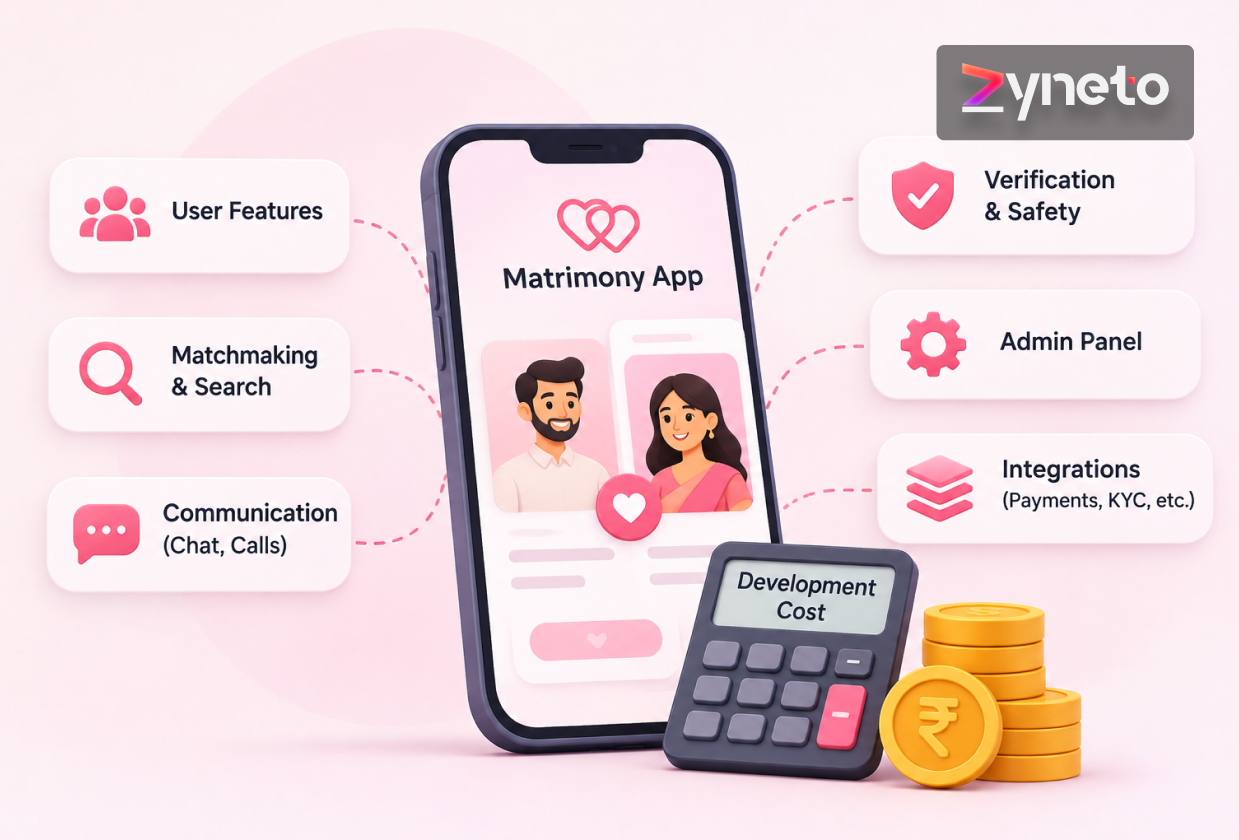
A matrimony app is quoted at $10,000 to $100,000 and the spread is not really about scope. It is about whether the quote includes horoscope matching that an Indian family will accept, and almost none of them say either way. Our rates are published: $40 to $100 an hour by role, blending to $60 to $70, and we do not put a fixed price on a build like this before a discovery that establishes the calculation scope and which chart formats are in play. That second clause is the whole post.
Three questions decide what you pay. Does the product compute charts or buy them from an API? Does it draw one regional chart format or both? And does a wrong chart have to be defensible two years after launch, or only look right on launch day? Everything else is a known quantity that a competent team has built before and can price from memory: profiles, search filters, chat, subscriptions, verification.
Most founders start by listing the dating-app features and adding "kundli matching" at the end. That is backwards. The profile and messaging half is the cheap, commoditised half. The matching engine is astronomical computation that fails silently, and it is the only part of the product your users will check against a piece of paper they already own.
Here is the ordinary failure. A user in Pune enters her birth details. Your app draws her chart. Her ascendant sits one sign off from the kundali her family astrologer wrote out in 1997. She does not file a bug. She tells her mother the app is wrong, and that is the end of your product in that household. Nothing crashed. Nothing logged an error. Your monitoring is green.
Published tiers put a matrimony app at $10,000 to $80,000, but none of them says whether horoscope matching is computed or bought from an API, and that single question moves the number by a factor of three. Our rates are published: $40 to $100 an hour by role, blending to $60 to $70.
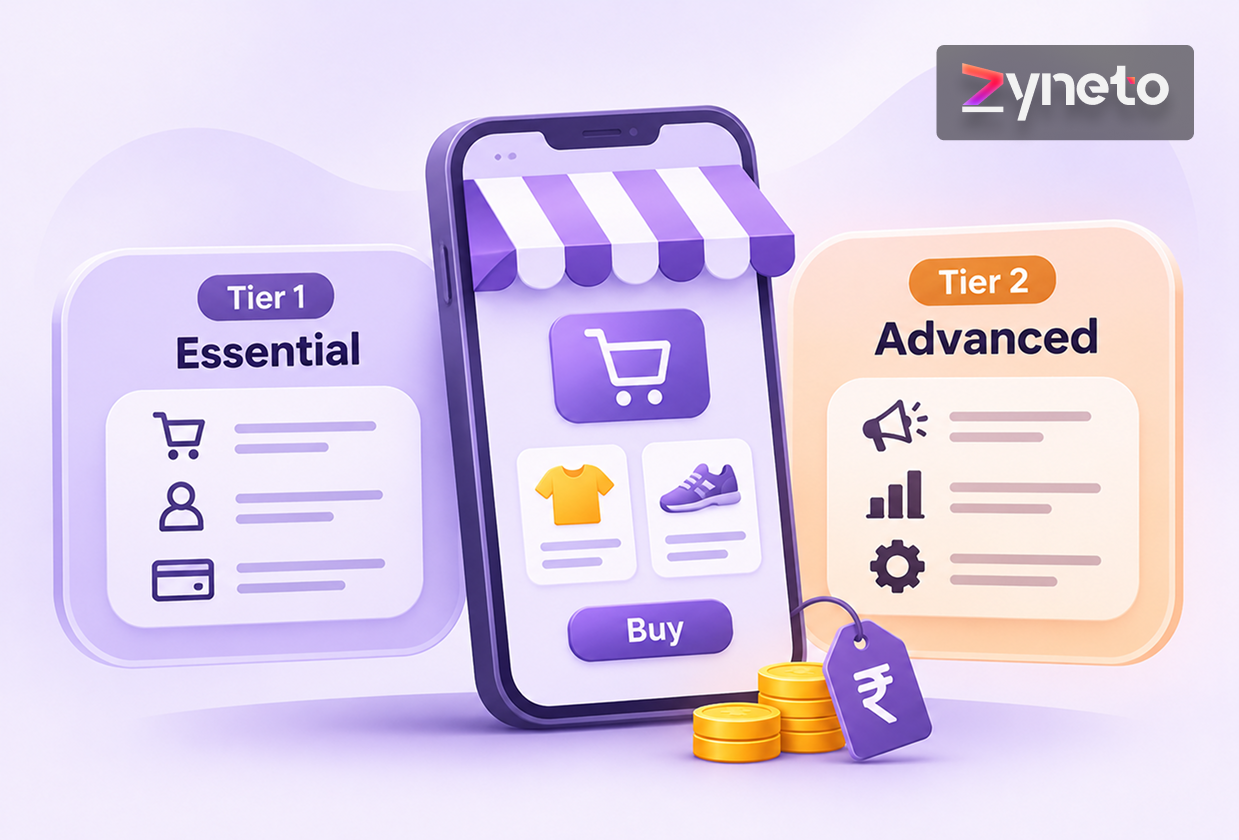
Search "matrimony app development cost" and you get a tier table. Basic $10,000 to $25,000. Mid-tier $20,000 to $45,000. Full-scale $30,000 to $80,000 and up. Those numbers come from agency blogs: Apptunix, Matellio, Devtechnosys, Aalpha and a dozen more. Every one of them publishes a total with no hours behind it.
A total with no hours is not a price, it is a posture. You cannot argue with it, you cannot compare two of them, and you cannot tell which one quietly excluded the hard part. Ask any of those tiers a single question, "does that include computing a chart, or calling someone else's API?", and the number moves by a factor of three.
The honest version of the tier table has a column nobody prints: what happens when the chart disagrees with the family astrologer. If the answer is "we call an API and show what it returns", you have bought a product you cannot debug and cannot defend. If the answer is "we compute it", you have bought a recurring data obligation. Both are legitimate. They cost very different amounts and they fail in different ways, and the quote should say which one you are getting.
Ashtakoota (guna milan, the 36-point match) scores two charts across eight factors. Varna, Vashya, Tara, Yoni, Graha Maitri, Gana, Bhakoot and Nadi, weighted 1 through 8, summing to 36. Eighteen is the figure commonly treated as the minimum viable score, and Bhakoot and Nadi carry enough weight to block a match that otherwise totals well.
Read what that scoring actually depends on. The comparison runs mainly off the Moon's nakshatra and Moon sign in each chart. Not the Sun sign a Western app would use. The Moon's position in its nakshatra, to a precision fine enough to land in one of 27 divisions.
So the matching engine is not a scoring function bolted onto a profile database. It is a consumer of chart state, and it inherits every error in the chart. Get the Moon's nakshatra wrong by one division and a 30-point match becomes a 24-point match, or a Nadi block appears that was never there. The score is the output your users screenshot and send to their parents. It is the most load-bearing number in the product and it sits at the end of the longest chain of calculation in it.
This is why "add kundli matching" is the most expensive three words in a matrimony brief. You are not adding a feature. You are declaring that everything upstream of it has to be right.
We built the calculation layer behind Tvam, a Vedic astrology product on iOS, Android and the web: the chart engine, both regional renderers, the dasha timeline that drives its notifications, and Ashtakoota comparison between saved charts. The most useful thing that work produced is not code. It is a list of where wrong charts actually come from.
Most reported "wrong chart" complaints trace back to one of five inputs, not to the ephemeris.
|
Input |
Error to expect |
What it moves |
Visible to the user |
|---|---|---|---|
|
Clock time of birth |
Minutes, from memory or a handwritten record |
The ascendant, a degree per four minutes |
Yes, layout shifts at a sign boundary |
|
Timezone rule for that date |
A full hour, when wartime or pre-standard rules are missed |
The instant, so everything downstream |
Yes, and it reads as a bug |
|
Ayanamsa selection |
About a degree between common variants |
Sign placement near a cusp |
Yes, users compare against other software |
|
Birth coordinates |
A few kilometres, when a locality resolves to a city centre |
Ascendant and house cusps, slightly |
Rarely, except near a boundary |
|
Day-length constant in dasha maths |
Fractions of a day, compounding down levels |
Dasha start and end dates |
Yes, notifications fire on the wrong day |
The ayanamsa row is the one that catches products built by teams new to this. Sidereal systems subtract an ayanamsa from the tropical longitude, and the common variants, Lahiri, Raman, Krishnamurti among them, disagree by around a degree. That is enough to move a planet across a sign boundary. Lahiri is what the Indian government's Rashtriya Panchang follows, which is why it is the one most Indian users are implicitly comparing you against. The ayanamsa is a stored input, never a constant in the code.
The engineering conclusion from that table is one sentence: store the inputs and settings that produced a chart, not only the output. Every row above can be corrected later. A chart you cannot recompute is a chart you cannot defend, and in this product being able to say *why* a chart reads the way it does is the difference between a support reply and a lost family.
The ascendant travels the whole zodiac in a day, roughly a degree every four minutes, and unevenly. Minutes of clock error reorder houses. Not nudge them. Reorder them.
Then the offset that turns a local clock reading into an actual instant is itself historical. India ran a wartime offset in the 1940s and local mean time before standardisation. Apply today's +05:30 to a birth from that period and you can be a full hour out, which is plenty to change the ascendant. The offset has to come from historical timezone data keyed on date and place, not from a constant.
That has a design consequence most briefs get wrong. Normalise to UTC at capture and you freeze whichever timezone rules were current when you captured it. Timezone history gets revised; the IANA database ships corrections. So the birth event gets stored as date, clock time and place, and the instant is derived on read. The cost is resolution work on every read and place records nobody can quietly edit, because editing one invalidates everything derived from it.
And here is the thing nobody building a matrimony product plans for: plenty of your users do not know their birth time to the minute. They know "morning", or what an aunt remembers. On Tvam we treated birth time as given, and that is the decision we would change. A chart drawn from an approximate time looks exactly as confident as one drawn from a hospital record. There is no visual difference, no asterisk, nothing in the interface that says *this ascendant is a guess*.
If you are commissioning this now, carry an uncertainty flag on the birth event from capture. Let the interface show which parts of a chart hold steady across a plus-or-minus window and which do not. For a matrimony product that matters more than it does for a personal astrology app, because the output is not a reading someone enjoys. It is a 36-point score two families are going to make a decision on. Retrofitting it touches every screen that reads a house, which is why it belongs in the first brief rather than the second phase.
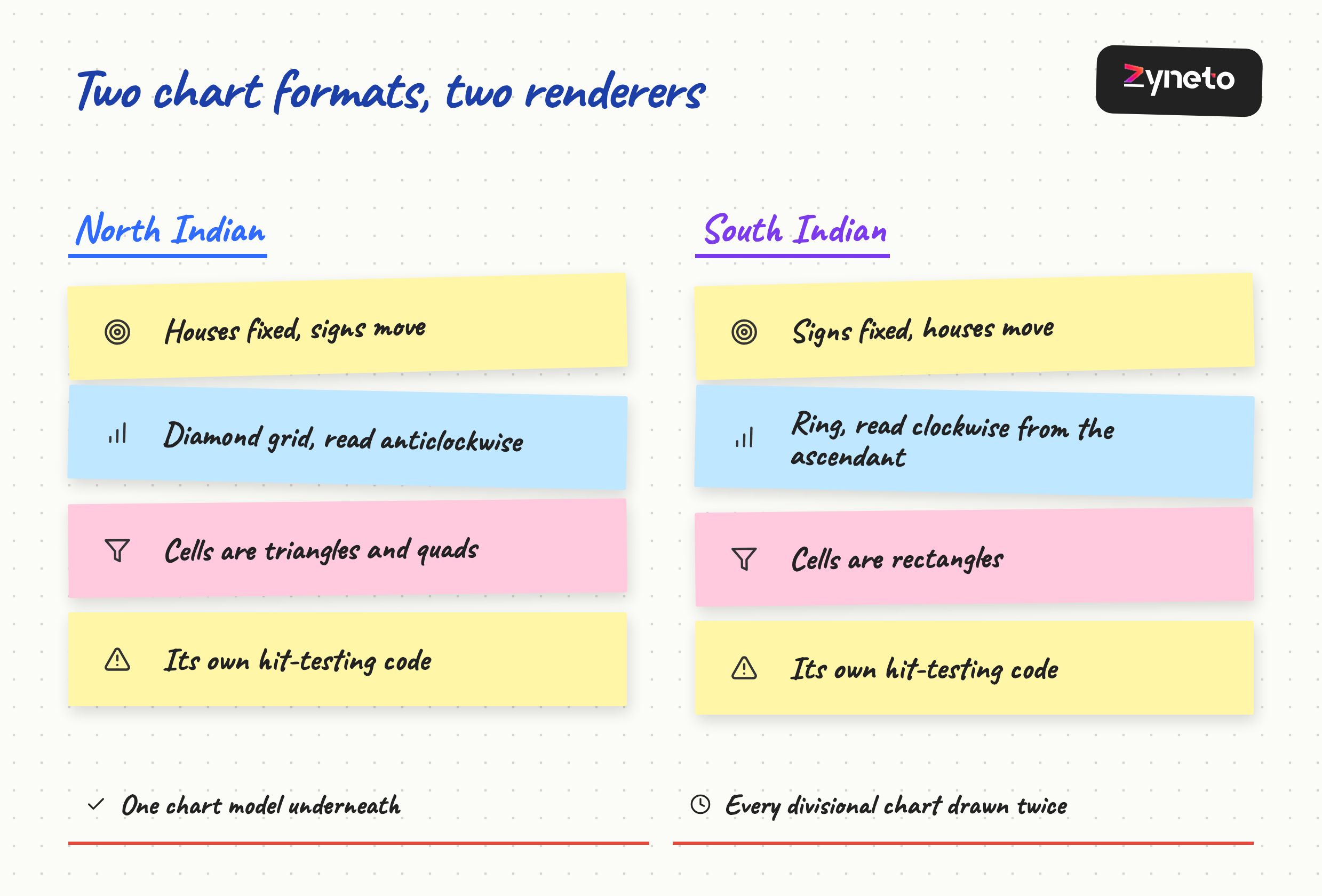
The North Indian chart fixes the houses and moves the sign numbers between them. The South Indian chart fixes the signs in a ring and moves the houses. Same data, incompatible geometry: one reads anticlockwise from a diamond at top centre, the other clockwise from the ascendant's cell. In one, cells are triangles and quadrilaterals. In the other, rectangles.
So hit-testing a tapped planet is different code per format. Every divisional chart gets drawn twice and checked twice.
The right structure is one chart model and two renderers, because the conventions disagree about layout, not about content. The computation emits a single structure of planets, signs and houses, and the clients draw it twice. The trade-off is real and worth knowing before you sign: the renderers absorb every difference, so each new chart type is two pieces of drawing work, not one.
For a matrimony product this is a market question, not a technical one. Ask which format your users grew up reading. If your signups come from the north and the south, you are buying both, and a brief that says "show the kundli" has not answered the question that doubles the rendering work.
Plenty of matrimony products add a dasha or transit feature, usually as a retention hook. It is worth understanding what you are commissioning.
Vimshottari splits a 120-year cycle into periods, then subdivides each one proportionally, several levels deep. The entry point is a fraction set by the Moon's position in its nakshatra, the same input the matching score depends on. Every level inherits its parent's rounding. Choose the wrong day-length constant and the top level drifts by days while the fourth level lands on an entirely wrong date.
The part that surprises people is the notification architecture. Each user's next period boundary is a distinct future timestamp computed from their own chart. There is no shared schedule to fire from, no "every Monday at 9am" job. You are scheduling per user, per boundary, into the future, and when a timezone correction or a data update changes a boundary you are rescheduling. That is a queue, not a cron entry, and it is a line item.
Correctness here is a regression problem, not a launch problem. Astronomical code fails silently. A wrong chart never looks like a crash — no exception, no 500, no alert. It renders beautifully and it is wrong.
The only practical defence is a fixed set of birth data with known expected output, run on every change. That suite is not a nice-to-have you add in month six; it is the thing that lets you ship a correction without breaking three charts to fix one. Budget it as part of the calculation layer, not as QA.
Two more obligations that belong in the quote and usually are not:
The data ages, so somebody owns the updates. Timezone databases and ephemeris data get revised. Owning a product like this means owning a recurring data update, not only a codebase. If your agency has not mentioned this, they have either not built one before or they are planning to be gone.
Nothing in the calculation layer should be locked to the team that wrote it. Ephemeris data, ayanamsa selection and dasha rules are configuration and documented arithmetic. Any competent team should be able to verify your numbers independently of who built them. That is the practical test of whether you own what you paid for.
One architectural decision follows from all of this: compute on the server, not on the device. Two native codebases would have to agree numerically with each other forever, and every data correction would ship at app-store review speed. The cost of computing server-side is that your core screen depends on connectivity and on your latency, so offline behaviour needs deliberate caching rather than hope.
None of the above applies to most of your product, and it would be dishonest to imply otherwise.
Profiles, partner preferences, search filters, shortlists, chat, photo privacy, subscription tiers and payments are solved work. They are the same components a dating product uses, a competent team has shipped them repeatedly, and they should be priced from experience rather than discovery. If an agency wants discovery time to scope a profile schema, that is a flag.
Three things we have written up separately rather than repeat here. The economics and feature scope of the dating side of this is in dating app development cost. How compatibility ranking works once you are past guna milan and into behavioural signals is in how dating app algorithms work. And moderation, verification and the regulatory side, which a matrimony product carries just as a dating product does, is in dating app trust and safety.
Two differences from a dating app are worth pricing deliberately, though, because they are structural rather than cosmetic. Ask whether a parent or sibling will create and operate profiles on your platform. If they will, the account model is not one person to one profile and the permission logic is genuinely different. We have not built that model, so treat it as a question for your market rather than a finding of ours. And the biodata document, the PDF a family circulates, is a real artifact with a real layout, not a web profile printed badly.
Answer these before you ask anyone for a number, and the numbers you get back become comparable.
Which chart formats? North Indian, South Indian, or both. Both means two renderers and roughly double the drawing work for every chart type.
Compute or consume? Your own calculation layer, or a third-party chart API. Consuming is cheaper to start and leaves you unable to explain or correct a disputed chart. Computing is a build plus a recurring data obligation.
Which ayanamsa, and is it fixed or selectable? If your users compare against other software, and they will, selectable is a feature, not an indulgence.
How far does matching go? Ashtakoota alone, or Ashtakoota plus Mangal Dosha, Dasha Sandhi and the rest. Each addition is a scoring rule with its own edge cases and its own regression tests.
Does anything fire a notification? If yes, you are buying per-user scheduling into the future, not a daily job.
What happens when a user does not know their birth time? If the answer is "we assume noon", say so in the interface. If the answer is an uncertainty flag, that is a first-phase decision because it touches every screen that reads a house.
A quote that answers those six is a quote you can argue with line by line. At $40 to $100 an hour by role, blending to $60 to $70, the arithmetic is yours to check. The reason we will not put a fixed number on this page is that the honest answer to "what does a matrimony app cost" is a different number depending on how you answered question two, and anybody who tells you otherwise has not asked it.
Agency estimates cluster between $10,000 and $100,000, and the spread is driven mostly by one decision: whether the product computes birth charts itself or calls a third-party chart API. Our published rates are $40 to $100 an hour by role, blending to $60 to $70, and we do not quote a fixed price before a discovery that establishes the calculation scope and which chart formats are in play. A tier table with no hours behind it cannot be compared against another tier table.
Because Ashtakoota scoring runs off the Moon's nakshatra and Moon sign, so it inherits every error in the underlying chart. The score is the number two families make a decision on, and it sits at the end of the longest calculation chain in the product. Profiles, search, chat and subscriptions are commoditised work a competent team prices from memory; the chart engine is astronomical computation that fails silently.
Accurate to minutes. The ascendant travels the whole zodiac in a day, roughly a degree every four minutes, so a few minutes of clock error can reorder every house. Sign placements other than the Moon's move far less over the same window. Since Ashtakoota depends on the Moon's nakshatra, which is one of 27 divisions, birth-time error hits the matching score directly.
Almost always the ayanamsa. A sidereal longitude is the tropical longitude minus that offset, and the common variants, Lahiri, Raman and Krishnamurti among them, differ by around a degree, so a planet near a cusp lands in different signs. Lahiri is what the Indian government's Rashtriya Panchang follows, which is why it is the comparison most Indian users are implicitly making.
It depends entirely on where your users come from, and it is a market question rather than a technical one. The two conventions disagree about layout, not content: North fixes the houses and moves the sign numbers, South fixes the signs and moves the houses, and the cell shapes differ, so hit-testing a tapped planet is separate code per format. Commissioning both roughly doubles the drawing and checking work for every chart type.
On the server. Two native codebases would have to agree numerically with each other indefinitely, and every data correction would ship at app-store review speed instead of immediately. The trade-off is that the core screen then depends on connectivity and on your backend latency, so offline behaviour needs deliberate caching rather than being assumed.
Beyond hosting and app-store upkeep, two obligations are specific to this product. Timezone databases and ephemeris data get revised, so somebody owns a recurring data update rather than just a codebase. And because astronomical code fails silently, you need a fixed set of birth data with known expected output running on every change — a wrong chart renders perfectly and never looks like a crash.

Vikas has around fifteen years of experience building software and now builds generative AI systems at Zyneto. His work covers retrieval augmented generation, agentic AI, knowledge graphs, AI memory, and the evaluation and guardrails that decide whether any of it is safe to put in front of customers. He has shipped enterprise copilots, document AI, chatbots and predictive analytics for e-commerce, fintech and marketing teams, and works day to day in Python, JavaScript and SQL. He follows multimodal models, business process automation and enterprise AI security closely, and mentors engineers moving into AI. He writes about architecture, inference cost and the failure modes that only show up at production scale.
Share your details and we will talk soon.
Be the first to access expert strategies, actionable tips, and the trends actually shaping the digital world. No fluff - just practical insights delivered straight to your inbox.
Dive into our blog and stay ahead of the curve with expert perspectives, future-ready trends, and tech tips written for decision-makers and doers alike.